Bold Opinions on AI Content Revolution
💡Provocative predictions on AI commoditizing content—key for creators & founders
⚡ 30-Second TL;DR
What Changed
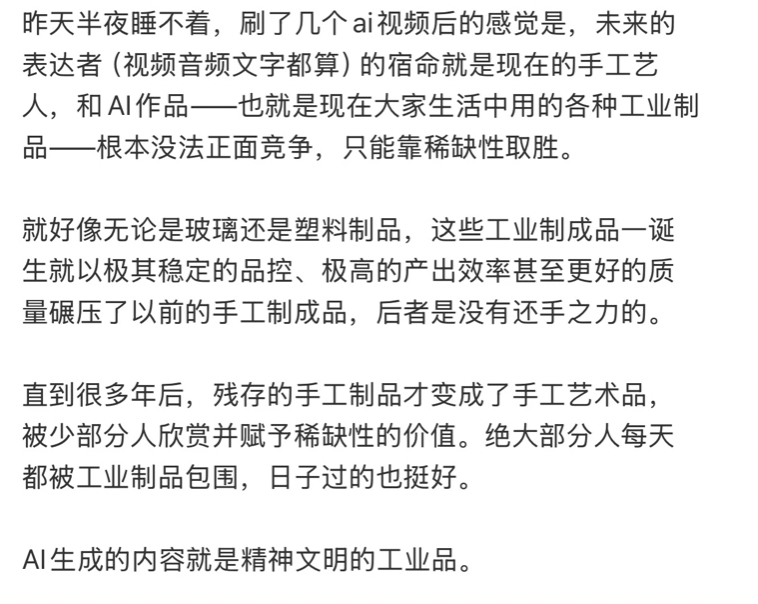
AI makes high-quality content accessible to all, like industrial products.
Why It Matters
Shifts content industry toward mass production, challenging mid-tier creators and favoring innovative elites or tech gatekeepers.
What To Do Next
Audit your content workflow to identify AI automation opportunities for premium output.
Key Points
- •AI makes high-quality content accessible to all, like industrial products.
- •Only ultra-premium content stays scarce; average floods market.
- •Top creators gain efficiency; mediocre ones risk obsolescence.
- •New AI-era capitalists likely model firms or data platforms.
🧠 Deep Insight
Background and context from public sources — not the original article. 6 sources cited.
🔑 Enhanced Key Takeaways
- •AI democratizes content creation tools: Over 1 million YouTube channels used AI creation tools daily in December 2025, enabling smaller creators to compete with established studios[3]
- •Consumer skepticism about AI content is rising: 52% of consumers report lower engagement with suspected AI-generated content, and 57% demand visible labeling of AI involvement[1]
- •Market bifurcation emerging: High-quality, original content commands premium value while commoditized AI-generated content floods the market, creating a quality chasm[1]
- •Economic redistribution underway: AI could redistribute up to $60 billion in annual revenue within five years, with approximately $10 billion of US original content spend addressable by AI by 2030[2]
- •New intermediaries gaining power: Platform providers (YouTube, Google) and AI model vendors are positioning themselves as primary beneficiaries through AI tools, citation systems, and search integration[1][3]
🛠️ Technical Deep Dive
• YouTube's AI creation tools enable Shorts generation using creator likenesses, text-to-game production, and music experimentation[3] • Google's AI Overviews now appear in nearly 30% of all AI search results, with YouTube citations in approximately 30% of AI Overviews due to deep platform integration[1] • Content ID system being expanded to manage AI-generated use of creator likenesses, protecting creative integrity[3] • AI search engines prioritize properly annotated images, audio explanations, and video scripts as clear signals for topic and context interpretation[1] • Real-time speech-to-speech translation model supports over 70 languages including 10 Indic languages, enabling multilingual content discovery[5] • Autodubbing technology averaged 6 million daily viewers watching at least 10 minutes of content in December 2025[3]
🔮 Future ImplicationsAI analysis grounded in cited sources
The content market is experiencing structural transformation where traditional gatekeepers (studios, publishers) face pressure from AI-enabled democratization, while platform operators and model vendors consolidate economic value. Content creators face a bifurcated future: elite creators gain efficiency multipliers through AI tools, while mid-tier creators risk commoditization as AI-generated alternatives flood the market. Consumer demand for authenticity and transparency creates opportunities for creators emphasizing original, human-generated content. The $60 billion revenue redistribution suggests significant wealth transfer from traditional content producers to AI infrastructure providers and platforms. Regulatory frameworks (like the NO FAKES Act) will likely shape competitive dynamics around synthetic media disclosure and creator rights protection.
⏳ Timeline
📎 Sources (6)
Factual claims are grounded in the sources below. Forward-looking analysis is AI-generated interpretation.
- wordstream.com — 2026 Content Marketing Trends
- mckinsey.com — What AI Could Mean for Film and Tv Production and the Industrys Future
- blog.youtube — The Future of Youtube 2026
- hiilite.com — AI Overview Aio in 2026 What It Is How It Impacts Click Through Rate and How to Rank
- Google Blog — AI Impact Summit 2026 India
- deloitte.com — State of AI in Enterprise
Weekly AI Recap
Read this week's curated digest of top AI events →
👉Related Updates

AI-curated news aggregator. All content rights belong to original publishers.
Original source: 虎嗅 ↗
This is a summary, not the original. Read the source, or get the weekly briefing.
Weekly AI briefing
One email a week. Unsubscribe anytime.