OpenClaw Ignites Cheap AI Hardware Frenzy
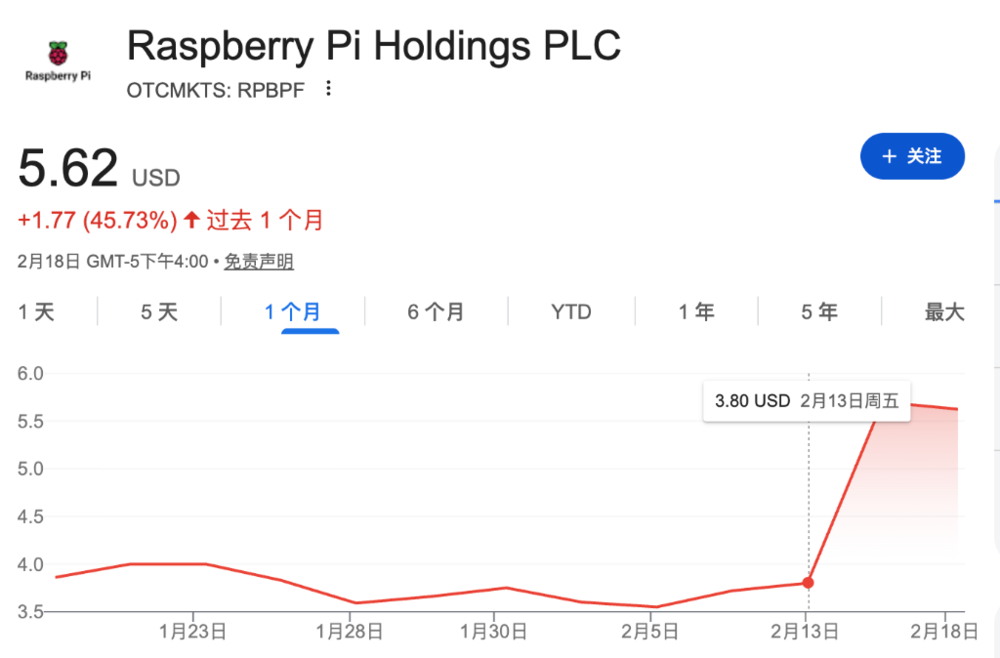
💡OpenClaw on $100 Pi sparks edge AI hardware boom—prototype local agents today.
⚡ 30-Second TL;DR
What Changed
OpenClaw enables local AI agents on $100 Raspberry Pi, slashing costs from $600 Macs
Why It Matters
Boosts demand for low-cost edge devices; warns of AI agents disrupting white-collar jobs via local deployment.
What To Do Next
Install OpenClaw on a Raspberry Pi to test local agent concurrency and security.
Key Points
- •OpenClaw enables local AI agents on $100 Raspberry Pi, slashing costs from $600 Macs
- •Founder joins OpenAI; social buzz claims bulk buys for concurrent agent swarms
- •Stock volatility as meme play amid DRAM shortages; signals edge AI hardware boom
🧠 Deep Insight
Background and context from public sources — not the original article. 5 sources cited.
🔑 Enhanced Key Takeaways
- •Raspberry Pi shares surged 90% in a week and doubled from recent lows to a £1 billion valuation, driven by social media buzz around OpenClaw AI agents boosting demand for its low-cost single-board computers[2].
- •OpenClaw, a local AI agent runner formerly known as Clawdbot or Moltbot, enables autonomous tasks like clearing inboxes, booking reservations, and flight check-ins on cheap hardware such as $100 Raspberry Pi for secure, always-on edge computing[1][2][3].
- •It runs on Raspberry Pi for low-power, stable automation like scheduled tasks and lightweight agent workflows, but not for big local models; alternatives like mini PCs or VPS are better for performance[1].
- •Security risks include critical vulnerabilities like misconfigured interfaces exposing private keys and API tokens to remote code execution, prompting recommendations to run on isolated devices like Pi instead of main machines[3][4].
- •Launched in November 2025, OpenClaw gained viral traction with integrations for messaging apps (WhatsApp, Telegram, Slack) and support for cloud models like Anthropic or local ones, amid DRAM shortages and stock volatility[2][3][5].
📊 Competitor Analysis▸ Show
| Feature | OpenClaw on Raspberry Pi | Mac Mini (Typical Setup) | Mini PC / VPS |
|---|---|---|---|
| Pricing | ~$100 hardware + model sub | ~$600+ | Varies (~$200+ or sub) |
| Power Use | Low-power, always-on | Higher power | Varies, often higher |
| Use Case | Edge automation, cron tasks | Full desktop tasks | Performance, scalability |
| Security | Isolated, but vuln risks | Ecosystem integration | Configurable |
| Benchmarks | Lightweight agents; not for big models | Seamless Apple AI | Faster for heavy loads |
🛠️ Technical Deep Dive
- OpenClaw is an open-source AI agent with full computer access on Mac, Windows, Linux, or Raspberry Pi; uses persistent memory, multi-step reasoning, tool use, and 'heartbeat' for proactive behavior[3][5].
- Integrates with messaging apps (WhatsApp, Telegram, Discord, Slack, Signal, iMessage) for control; supports Anthropic, OpenAI, or local models like MiniMax 2.1; data stays local by default[3][5].
- On Raspberry Pi: Ideal for always-on, low-power infrastructure (scheduled tasks, summaries, agent runner workflows); not suited for big local models or high-speed tasks[1].
- Vulnerabilities: Default trusts 127.0.0.1/localhost, leading to exposed admin interfaces via misconfigured proxies; requires total OS/command line access, risking data leaks or system bricking[4].
- Capabilities: Writes/executes code/scripts autonomously, manages APIs/tokens, handles tasks like email/calendar/flight check-ins[2][3][5].
🔮 Future ImplicationsAI analysis grounded in cited sources
OpenClaw's hype signals a shift toward distributed edge AI inference on cheap hardware like Raspberry Pi, reducing reliance on cloud or expensive Macs, but highlights risks from security flaws and supply issues like DRAM shortages that could temper the edge AI hardware boom.
⏳ Timeline
📎 Sources (5)
Factual claims are grounded in the sources below. Forward-looking analysis is AI-generated interpretation.
Weekly AI Recap
Read this week's curated digest of top AI events →
👉Related Updates
AI-curated news aggregator. All content rights belong to original publishers.
Original source: 虎嗅 ↗
This is a summary, not the original. Read the source, or get the weekly briefing.
Weekly AI briefing
One email a week. Unsubscribe anytime.