Giants Splash 45B on 2026 CNY AI Payments
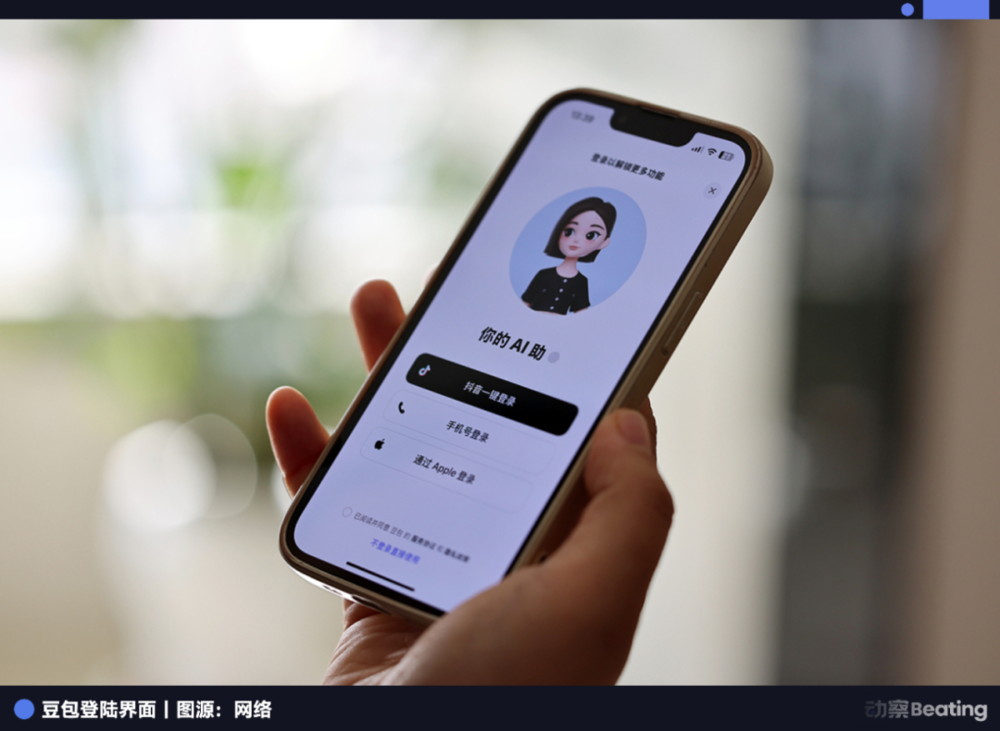
💡45B subsidies reveal AI agents' intent wars in China super-apps; closed ecosystems crush challengers like Doubao.
⚡ 30-Second TL;DR
What Changed
Giants' 45B subsidies exceed past wars, pushing voice-activated AI payments.
Why It Matters
Intensifies AI agent ecosystem battles; closed super-apps like Alibaba gain edge over cross-platform plays, reshaping commerce via intent pricing.
What To Do Next
Prototype voice AI agent with Alipay API to test intent-to-payment flows.
Key Points
- •Giants' 45B subsidies exceed past wars, pushing voice-activated AI payments.
- •Doubao phone blocked by WeChat logins, Ali apps, banks for crossing ecosystems.
- •Qwen handles 1.2B orders in 6 days via Alibaba-internal agent orchestration.
- •AI shifts competition from app time to intent capture and decision proxy.
🧠 Deep Insight
Background and context from public sources — not the original article. 6 sources cited.
🔑 Enhanced Key Takeaways
- •Chinese tech giants (Alibaba, Tencent, Baidu, ByteDance) deployed over 45 billion RMB in subsidies during 2026 Lunar New Year to drive AI adoption, with Alibaba's 3 billion RMB Qwen campaign and Tencent's 1 billion RMB Yuanbao red packet initiative leading the charge[1][2]
- •The subsidy campaigns represent a strategic shift from user growth metrics to intent capture and decision proxy control, with market analysis indicating that genuine frontier capability rather than subsidized user acquisition is driving long-term value[4]
- •Alibaba's Qwen achieved rapid transaction volume through closed-loop ecosystem integration across Taobao, Fliggy, and other platforms, demonstrating the competitive advantage of vertically integrated AI services[2][4]
- •Chinese government policy under Xi Jinping and Premier Li Qiang emphasizes 'AI Plus' commercialization with near-term economic returns, suggesting an implicit timeline for measurable productivity gains by 2027[1]
- •Despite aggressive domestic competition and subsidy wars, Chinese AI companies face structural challenges including U.S. chip export controls, with the H200 chips approved for export already considered insufficient for state-of-the-art AI training by Chinese tech representatives[3]
📊 Competitor Analysis▸ Show
| Company | Campaign | Investment | Strategy | Key Metric |
|---|---|---|---|---|
| Alibaba (Qwen) | Milk tea subsidies + Taobao integration | 3 billion RMB | Closed-loop ecosystem, cross-platform incentives | Top iOS chart ranking, rapid order volume |
| Tencent (Yuanbao) | Red packet campaign via WeChat | 1 billion RMB | WeChat Pay replication model | Temporary service outage from traffic surge |
| Baidu (Wenxin) | Direct subsidies | 500 million RMB | Traditional subsidy approach | Lower visibility in market reports |
| ByteDance (Doubao) | Phone hardware + AI integration | Undisclosed | Hardware-software convergence | Blocked by rival ecosystems (WeChat, Alibaba apps) |
🛠️ Technical Deep Dive
- Voice-activated AI payment integration represents shift from text-based chatbots to multimodal agent orchestration across payment rails
- Alibaba's closed-loop architecture enables real-time transaction processing through Qwen agents across Taobao marketplace, Fliggy travel, and Shangou instant commerce platforms
- ByteDance's Doubao phone strategy attempts hardware-software convergence but faces ecosystem fragmentation due to WeChat login restrictions and third-party app blocking
- Chinese AI models (Qwen, Yuanbao, Wenxin, Doubao) operate under content enforcement and sovereignty constraints that differ from Western deployment models
- Chip constraints: H200 chips (two generations behind Nvidia's Rubin series) approved for export but already considered insufficient for training state-of-the-art models by Chinese developers[3]
🔮 Future ImplicationsAI analysis grounded in cited sources
The 45 billion RMB subsidy war signals that Chinese AI competition is transitioning from model capability races to user intent capture and payment proxy control. By end of 2026, majority of urban Chinese consumers likely to complete at least one AI agent transaction[4]. However, sustainability concerns exist: market sentiment increasingly discounts user growth achieved through subsidies rather than genuine technological breakthroughs[4]. Government's implicit 2027 productivity timeline may trigger policy recalibration if measurable economic returns fail to materialize[1]. The ecosystem fragmentation (Doubao phone blocked by rivals) suggests winner-take-most dynamics favoring vertically integrated players like Alibaba. Long-term competitive advantage will depend on resolving chip supply constraints and developing independent semiconductor capabilities rather than relying on U.S. export-controlled components[3].
⏳ Timeline
📎 Sources (6)
Factual claims are grounded in the sources below. Forward-looking analysis is AI-generated interpretation.
Weekly AI Recap
Read this week's curated digest of top AI events →
👉Related Updates

AI-curated news aggregator. All content rights belong to original publishers.
Original source: 虎嗅 ↗
This is a summary, not the original. Read the source, or get the weekly briefing.
Weekly AI briefing
One email a week. Unsubscribe anytime.