BlackRock Eyes Multi-Billion Investment in SpaceX IPO
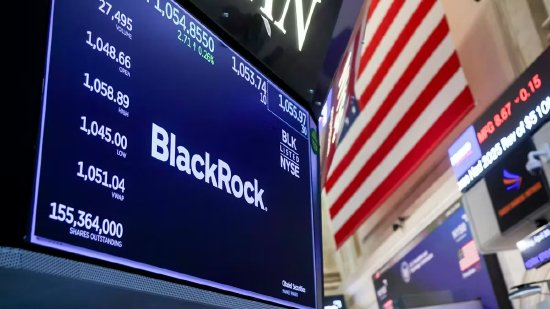
SpaceX's massive capital injection could accelerate the satellite infrastructure powering future global AI networks.
30-Second TL;DR
What Changed
BlackRock considering $5B-$10B investment in SpaceX IPO
Why It Matters
A successful IPO of this scale would provide massive capital for SpaceX to accelerate Starlink and Starship development, which are critical infrastructure for global AI and edge computing connectivity.
What To Do Next
Monitor SpaceX Starlink API updates, as increased funding often leads to faster deployment of satellite-based edge computing capabilities.
Key Points
- •BlackRock considering $5B-$10B investment in SpaceX IPO
- •Potential IPO valuation could reach $75B
- •Significant institutional backing for Musk's aerospace ventures
Deep Insight
Background and context from public sources — not the original article. 23 sources cited.
Enhanced Key Takeaways
- •SpaceX's Initial Public Offering (IPO) is reportedly targeting a June 12 debut on Nasdaq under the ticker symbol "SPCX", aiming to raise $75 billion at an approximate valuation of $1.75 trillion.
- •Ahead of the IPO, SpaceX shareholders have approved a 5-for-1 stock split, which adjusted the fair market value per share from $526.59 to $105.32.
- •The IPO timeline has reportedly accelerated due to a quicker-than-anticipated review of SpaceX's filings by the SEC, with Nasdaq's new "fast entry" rules potentially aiding quicker inclusion in the Nasdaq-100 index.
- •In February 2026, SpaceX acquired Elon Musk's artificial intelligence startup xAI in an all-stock deal, valuing the combined entity at approximately $1.25 trillion at the time of the transaction.
Competitor Analysis
- Starlink (SpaceX)
- LEO Satellite Internet
- Starlink (SpaceX)
- Over 10,020 (March 2026)
- Starlink (SpaceX)
- Approximately 150 countries and territories
- Starlink (SpaceX)
- Typically 45-280 Mbps
- Starlink (SpaceX)
- Typically 10-30 Mbps
- Starlink (SpaceX)
- 25-60 ms (on land)
- Starlink (SpaceX)
- Standard Kit (dish, router, power supply, mount); Business antenna: $2500
- Starlink (SpaceX)
- Varies by plan; Business: $500/month
- Starlink (SpaceX)
- Established global network, high satellite count, full reusability of launch vehicles.
- Starlink (SpaceX)
- Amazon Leo (formerly Project Kuiper)
- Starlink (SpaceX)
- Starlink (SpaceX)
- LEO Satellite Internet
- Starlink (SpaceX)
- 27 launched (April 2025), planning 3,236
- Starlink (SpaceX)
- Commercial service targeted Q1 2026 (US, Canada, UK, France, Germany)
- Starlink (SpaceX)
- Not specified yet, aims for "fast, affordable broadband"
- Starlink (SpaceX)
- Not specified yet
- Starlink (SpaceX)
- Aims for low latency
- Starlink (SpaceX)
- Projected sub-$400 for terminals
- Starlink (SpaceX)
- Not specified yet
- Starlink (SpaceX)
- AWS integration, backed by Amazon's $10 billion investment.
| Feature/Pricing/Benchmarks | Starlink (SpaceX) |
|---|---|
| Service Type | LEO Satellite Internet |
| Current Satellites | Over 10,020 (March 2026) |
| Availability | Approximately 150 countries and territories |
| Download Speed | Typically 45-280 Mbps |
| Upload Speed | Typically 10-30 Mbps |
| Latency | 25-60 ms (on land) |
| Hardware Cost | Standard Kit (dish, router, power supply, mount); Business antenna: $2500 |
| Monthly Service Fee | Varies by plan; Business: $500/month |
| Key Differentiator | Established global network, high satellite count, full reusability of launch vehicles. |
| Feature/Pricing/Benchmarks | Amazon Leo (formerly Project Kuiper) |
| Service Type | LEO Satellite Internet |
| Current Satellites | 27 launched (April 2025), planning 3,236 |
| Availability | Commercial service targeted Q1 2026 (US, Canada, UK, France, Germany) |
| Download Speed | Not specified yet, aims for "fast, affordable broadband" |
| Upload Speed | Not specified yet |
| Latency | Aims for low latency |
| Hardware Cost | Projected sub-$400 for terminals |
| Monthly Service Fee | Not specified yet |
| Key Differentiator | AWS integration, backed by Amazon's $10 billion investment. |
Technical Deep Dive
-
Starship (Spacecraft and Super Heavy Rocket):
- Design: Fully reusable transportation system for crew and cargo to Earth orbit, the Moon, Mars, and beyond.
- Height: 124 meters (407 feet) when fully stacked with Super Heavy.
- Diameter: 9 meters (30 feet).
- Propellant: Sub-cooled liquid methane (CH4) and liquid oxygen (LOX).
- Engines: Powered by reusable Raptor engines.
- Starship (upper stage): 6 Raptor engines (3 sea-level optimized, 3 vacuum-optimized).
- Super Heavy (booster): 33 Raptor engines (13 maneuverable in the center, 20 around the perimeter).
- Payload Capacity: 100-150 metric tonnes to Low Earth Orbit (LEO) in a fully reusable configuration, up to 250 tons expendable.
- Material: Constructed from stainless steel.
- Reentry Control: Utilizes four flaps for atmospheric reentry.
- Landing: Super Heavy is designed to return to the launch site for a midair catch by the Mechazilla launch tower.
-
Starlink Satellites:
- Orbit: Low Earth Orbit (LEO) at approximately 550 km.
- Design: Compact, flat-panel design for dense launch stacking.
- Antennas: Each satellite features 5 advanced Ku-band phased array antennas and 3 dual-band (Ka-band and E-band) antennas.
- Inter-satellite Links: Equipped with 3 space lasers (Optical Intersatellite Links or ISLs) per satellite, capable of operating up to 200 Gbps, forming a global internet mesh.
- Propulsion: Utilizes efficient argon thrusters for orbit raising, maneuvering, and deorbiting.
- Power: Features a dual solar array and high-capacity battery.
- Navigation: Custom-built navigation sensors and four reaction wheels for agile attitude control.
- Satellite Versions: Various versions exist, with masses ranging from v0.9 (227 kg) to v3 (~1900 kg).
- V3 Satellites: Designed for 1 Tbps downlink, 160 Gbps uplink, and nearly 4 Tbps combined RF and laser backhaul capacity.
Future ImplicationsAI analysis grounded in cited sources
Timeline
- 2002SpaceX founded by Elon Musk.
- 2008NASA's $1.6 billion contract saved SpaceX from bankruptcy.
- 2015Google and Fidelity invested $1 billion, valuing SpaceX at $10-$12 billion.
- 2023-01Raised $750 million in a Series J round, reaching a post-money valuation of $137 billion.
- 2025-12Elon Musk confirmed IPO expected in mid-2026; valuation reached $800 billion through an insider share sale.
- 2026-02SpaceX acquired xAI, valuing the combined entity at $1.25 trillion.
Sources (23)
Factual claims are grounded in the sources below. Forward-looking analysis is AI-generated interpretation.
Weekly AI Recap
Read this week's curated digest of top AI events →
Related Updates
AI-curated news aggregator. All content rights belong to original publishers.
Original source: cnBeta (Full RSS) ↗
This is a summary, not the original. Read the source, or get the weekly briefing.
The weekly digest
One email a week. Unsubscribe anytime.