Bitcoin Miners Pivot to HPC as Yields Drop Below 3¢
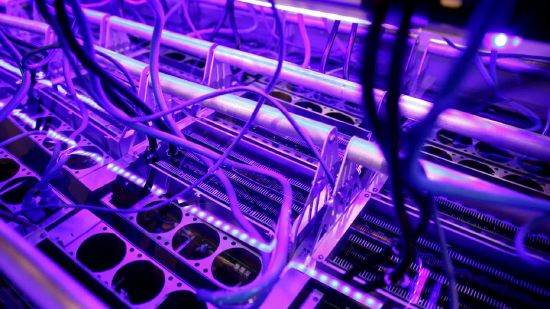
💡Crypto crash floods market with cheap ex-mining GPUs for AI HPC—secure capacity now.
⚡ 30-Second TL;DR
What Changed
Mining daily yields under 3 US cents
Why It Matters
Shift redirects GPU-heavy mining hardware to HPC, boosting supply for AI training and inference. Could lower compute costs for AI practitioners amid data center demand surge.
What To Do Next
Contact ex-mining operators like Core Scientific for discounted GPU clusters for AI workloads.
Key Points
- •Mining daily yields under 3 US cents
- •Bitcoin crash renders most operations unprofitable
- •Miners collectively shifting rigs to HPC workloads
- •Rosenblatt Securities analyst report highlights trend
🧠 Deep Insight
Background and context from public sources — not the original article. 8 sources cited.
🔑 Enhanced Key Takeaways
- •Bitcoin mining hashprice reached a record low of $27.58 in late February 2026, with mining daily yields dropping below 3 cents per terahash per second, representing the worst profitability conditions since the network's inception[8].
- •Large-scale industrial miners are pivoting infrastructure toward high-performance computing (HPC) and AI workloads as a survival strategy, with publicly traded firms like Bitfarms and Bit Digital completely winding down Bitcoin mining operations to pursue more profitable business models[1].
- •The global average cost to mine one Bitcoin has exceeded $80,000 when factoring in hardware depreciation, electricity, and operational overhead, while Bitcoin's price dropped below $63,000 on February 24, 2026—creating a structural unprofitability crisis across the industry[4][8].
- •Despite individual miner distress, the Bitcoin network remains secure with hash rate near all-time highs and approximately 54% of mining now powered by renewable energy sources, indicating industry consolidation toward efficient, large-scale operations[5].
- •A winter storm across the eastern United States in late January 2026 exacerbated profitability collapse by reducing hash rate and dropping daily mining revenues to a yearly low of $28 million, demonstrating the industry's vulnerability to external supply shocks[1].
🛠️ Technical Deep Dive
- •Mining reward structure: Each 10-minute block currently generates 3.125 BTC (post-2024 halving), totaling approximately 450 BTC per day or 164,000 BTC annually[5].
- •Network difficulty: Despite five consecutive epochs of hash rate decline to September 2025 lows, the Proof-of-Work difficulty mechanism continues to adjust to maintain ~10-minute block intervals, compressing miner margins[1][2].
- •ASIC hardware economics: Modern Bitcoin ASICs cost $3,000–$15,000 per unit with efficiency measured in terahashes per second (TH/s); at ~$106,000 BTC price, 1 TH/s generates approximately $0.0456 per day (~428 satoshis)[7].
- •Energy cost baseline: Miners require electricity below $0.05 per kilowatt-hour to achieve profitability; global average mining cost per Bitcoin now exceeds $80,000 including hardware depreciation, cooling, and maintenance[4].
- •Hash rate composition: Approximately 54% of Bitcoin mining now relies on renewable energy (hydro, wind), with miners strategically locating in regions with excess energy supply to convert otherwise wasted power into economic value[5].
🔮 Future ImplicationsAI analysis grounded in cited sources
⏳ Timeline
📎 Sources (8)
Factual claims are grounded in the sources below. Forward-looking analysis is AI-generated interpretation.
- indexbox.io — Bitcoin Mining Profitability Hits 14 Month Low Amid Price Drop and Winter Storm
- rootdata.com — 528356
- bitbo.io — Mining Profitable
- nexo.com — Is Bitcoin Mining Profitable 2026
- bleap.finance — How Many Bitcoins Are Left to Mine
- nicehash.com — How Bitcoin Miners Can Stay Profitable in 2026
- coincub.com — Bitcoin Mining 2026
- mlq.ai — Bitcoin Miners Pivot to AI Amid Crushing Profit Margins and Price Plunge
Weekly AI Recap
Read this week's curated digest of top AI events →
👉Related Updates



AI-curated news aggregator. All content rights belong to original publishers.
Original source: cnBeta (Full RSS) ↗
This is a summary, not the original. Read the source, or get the weekly briefing.
Weekly AI briefing
One email a week. Unsubscribe anytime.