Big Tech is betting on cute mascots for engagement
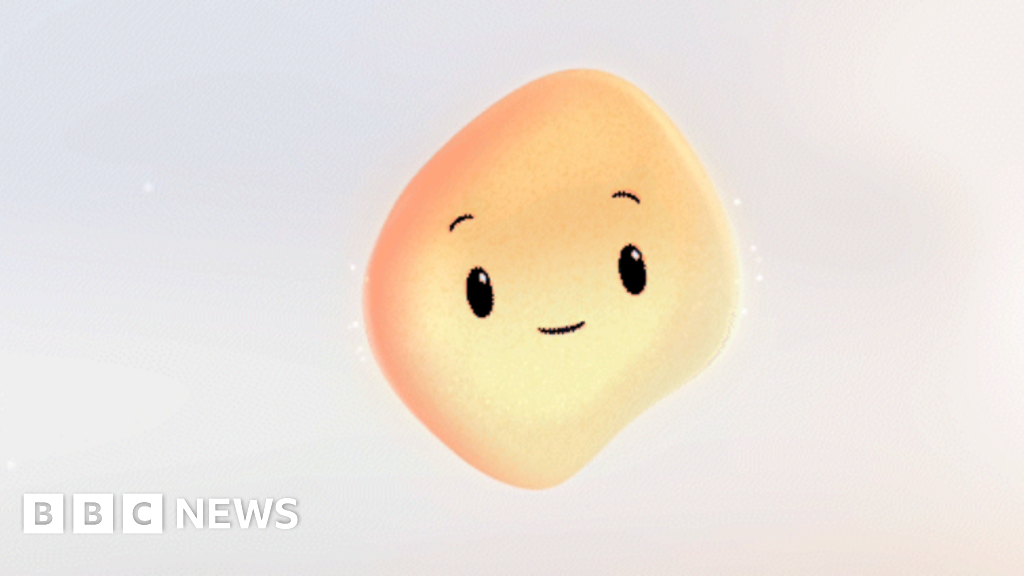
Understand how Big Tech uses character design to humanize AI and improve user adoption rates.
30-Second TL;DR
What Changed
Tech giants are shifting toward mascot-led branding strategies.
Why It Matters
The use of mascots signals a shift in UI/UX design where personality-driven interfaces are becoming a competitive advantage. Practitioners should consider how character design impacts user trust and long-term retention in AI agents.
What To Do Next
Analyze your current AI agent's persona and consider if a visual avatar or mascot could improve user engagement metrics.
Key Points
- •Tech giants are shifting toward mascot-led branding strategies.
- •Mascots serve to make abstract AI technologies feel more approachable and friendly.
- •The trend reflects a broader industry move to reduce the 'uncanny valley' effect in AI interaction.
Deep Insight
Background and context from public sources — not the original article. 28 sources cited.
Enhanced Key Takeaways
- •The historical precedent for AI mascots dates back to Microsoft's Clippy (Clippit) in 1996, which, despite initial user frustration and eventual retirement in 2007, has seen a nostalgic resurgence in Microsoft 365 and Teams, influencing current AI mascot strategies.
- •The 'uncanny valley' effect is a critical design challenge for AI interaction, with research indicating that stylized, cartoonish mascots are often more effective and less unsettling than hyper-realistic human-like avatars for fostering user comfort and trust.
- •Artificial intelligence is increasingly being used as a tool to generate and customize mascots, enabling brands to create personalized, animated characters that can adapt to specific brand personalities and user interactions.
- •Mascots are evolving beyond static branding elements into dynamic 'virtual beings' or 'brand companions' powered by AI, capable of real-time, personalized, and adaptive engagement across various digital platforms.
- •The trend of using visual avatars for personality-driven digital experiences was notably pioneered by Chinese EV brands, such as NIO with its Nomi assistant, demonstrating the potential for strong emotional bonds between brands and customers through emotive AI interactions.
Technical Deep Dive
- **AI-Powered Generation:** Mascots are generated using advanced AI models like Google's Imagen 4 and Gemini Flash, which can create custom images and themes based on textual prompts and reference images.
- **Interactive Animation Platforms:** Platforms such as Rive are utilized to animate these characters, allowing for interactive motion graphics where AI states can be tweaked programmatically, enabling dynamic expressions and reactions.
- **Core AI Capabilities:** AI mascots leverage Natural Language Processing (NLP) for understanding user input, machine learning for adaptive responses, and emotion recognition to tailor interactions based on user sentiment.
- **Backend Integration:** Implementation often involves integrating AI models with cloud services like Firebase AI Logic and Google's Vertex AI for efficient backend processing and scalability.
- **Uncanny Valley Mitigation:** Design strategies to avoid the uncanny valley include prioritizing stylization over realism, focusing on functional design, and ensuring consistent tone and behavior in AI responses to build user trust.
Future ImplicationsAI analysis grounded in cited sources
Timeline
- 1995-03Microsoft Bob, featuring anthropomorphic assistants like Rover, is launched to make computing friendlier.
- 1996-11Microsoft introduces Clippit (later known as Clippy) as the default Office Assistant in Microsoft Word.
- 2007-01Clippy is officially retired from Microsoft Office due to widespread user frustration.
- 2011-10Apple launches Siri, a voice-only digital assistant, spearheading widespread adoption of such services.
- 2021-07Microsoft reintroduces Clippy as an emoji in Microsoft 365 and as stickers in Teams, signaling a nostalgic revival.
- 2025-10Microsoft unveils Mico, a new sunshine-hued, expressive mascot for its AI assistant, Copilot.
Sources (28)
Factual claims are grounded in the sources below. Forward-looking analysis is AI-generated interpretation.
Weekly AI Recap
Read this week's curated digest of top AI events →
Related Updates


AI-curated news aggregator. All content rights belong to original publishers.
Original source: BBC Technology ↗
This is a summary, not the original. Read the source, or get the weekly briefing.
The weekly digest
One email a week. Unsubscribe anytime.