Bentley Prices Plummet Amidst Luxury Market Downturn
💡A case study on how software-defined vehicles are disrupting even the most prestigious traditional luxury brands.
⚡ 30-Second TL;DR
What Changed
Bentley sales in China have been cut in half since their 2021 peak.
Why It Matters
The decline of traditional ultra-luxury brands signals a fundamental shift in the Chinese market where 'tech-intelligence' is replacing 'brand heritage' as the primary value driver.
What To Do Next
Analyze the 'tech-first' consumer behavior in the luxury sector to inform your product's feature prioritization.
Key Points
- •Bentley sales in China have been cut in half since their 2021 peak.
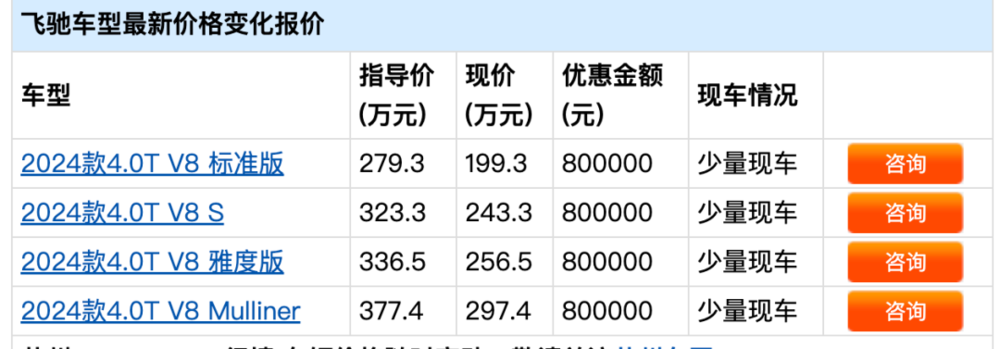
- •Terminal discounts for new models are reaching 500,000 RMB, with significant depreciation in the secondary market.
- •Younger consumers are shifting toward tech-forward brands like Tesla, NIO, and Huawei-backed vehicles.
- •The brand suffers from a lack of intelligent cockpit features and high maintenance costs compared to modern EVs.
🧠 Deep Insight
AI-generated analysis for this event — not the original article.
🔑 Enhanced Key Takeaways
- •Bentley's global sales strategy has been impacted by the 'Beyond100' strategic plan, which originally aimed for full electrification by 2030 but has faced internal delays and revisions due to market cooling.
- •The decline in China is exacerbated by the 'Guochao' trend, where affluent Chinese consumers increasingly favor domestic luxury brands that integrate localized software ecosystems over traditional European heritage brands.
- •Bentley's parent company, Volkswagen Group, has faced broader software development struggles within its Cariad division, which has hindered the rollout of competitive digital cockpits across its premium portfolio.
- •Secondary market data indicates that Bentley's residual value in China has dropped faster than other ultra-luxury marques like Rolls-Royce, partly due to the high cost of parts and service in a market shifting toward low-maintenance EVs.
- •The brand's reliance on traditional internal combustion engines (ICE) has made it vulnerable to tightening urban emission regulations and 'green' license plate restrictions in major Chinese tier-1 cities.
📊 Competitor Analysis▸ Show
| Feature | Bentley (Continental GT) | NIO (ET9) | Huawei-backed (AITO M9/Luxeed) |
|---|---|---|---|
| Powertrain | ICE / Hybrid | BEV | BEV / EREV |
| Intelligence | Legacy Infotainment | Advanced ADAS/AI Cockpit | HarmonyOS / ADS 3.0 |
| Pricing (CNY) | 3M+ | ~800k | 500k - 800k |
| Target Demographic | Traditional Wealth | Tech-Elite / Younger | Mass-Affluent / Tech-Savvy |
🛠️ Technical Deep Dive
- Bentley's current infotainment architecture relies on a modified version of the Volkswagen MIB platform, which lacks the deep integration of third-party Chinese apps (WeChat, Bilibili, etc.) found in domestic competitors.
- The brand's electrical architecture is primarily distributed, lacking the centralized Zonal/Domain controller approach utilized by modern EV platforms like NIO's NT3.0 or Huawei's Qiankun ADS system.
- Bentley's 'intelligent' features are largely limited to driver assistance systems (ADAS) that do not support high-level autonomous navigation on urban roads, a standard feature in the Chinese premium EV segment.
🔮 Future ImplicationsAI analysis grounded in cited sources
⏳ Timeline
Weekly AI Recap
Read this week's curated digest of top AI events →
👉Related Updates


AI-curated news aggregator. All content rights belong to original publishers.
Original source: 虎嗅 ↗
This is a summary, not the original. Read the source, or get the weekly briefing.
Weekly AI briefing
One email a week. Unsubscribe anytime.