Samsung profit surges, but market expectations remain high
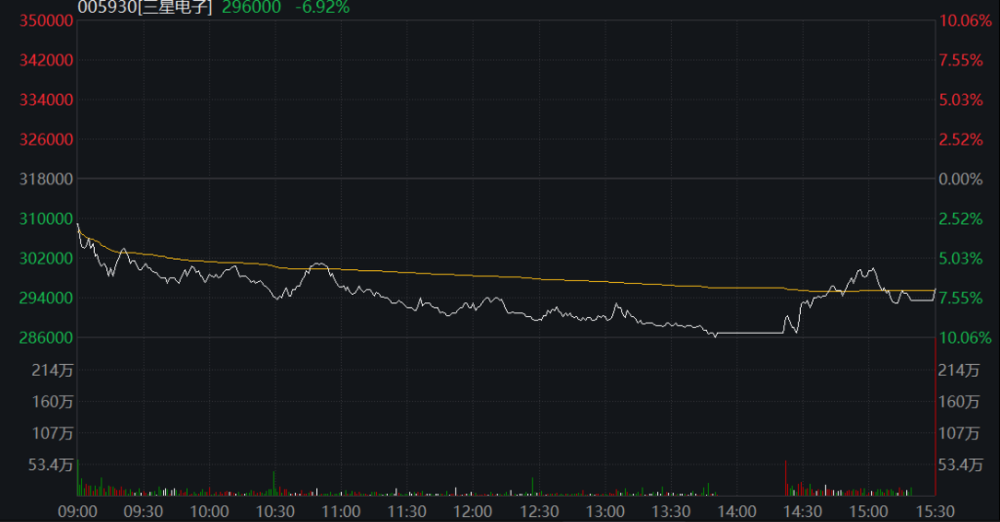
💡Key insight into how the AI hardware super-cycle is impacting major chipmakers' stock valuations and market expectations
⚡ 30-Second TL;DR
What Changed
Q2 operating profit hit 89.4 trillion KRW, exceeding analyst expectations.
Why It Matters
The market's reaction suggests that even record-breaking AI-driven performance may not satisfy investors if it doesn't translate into tangible cash flow and strategic leadership in high-growth segments like HBM.
What To Do Next
Analyze the HBM supply chain and memory market trends to assess the long-term sustainability of AI hardware infrastructure investments.
Key Points
- •Q2 operating profit hit 89.4 trillion KRW, exceeding analyst expectations.
- •AI data center demand for HBM is driving a super-cycle in memory chips.
- •Market sentiment is shifting from 'profit growth' to 'sustainable cash flow and shareholder value'.
- •Samsung is trailing SK Hynix in AI-focused memory market share.
🧠 Deep Insight
AI-generated analysis for this event — not the original article.
🔑 Enhanced Key Takeaways
- •Samsung's Q2 2026 performance was significantly bolstered by the mass production ramp-up of its 12-layer HBM3E chips, which finally achieved qualification for major AI accelerator partners.
- •The company has initiated a strategic pivot toward 'Foundry 2.0,' aiming to decouple its design and manufacturing divisions to improve transparency and attract fabless clients wary of IP leakage.
- •Samsung's capital expenditure (CAPEX) for 2026 is heavily skewed toward advanced packaging technologies like I-Cube and H-Cube, essential for integrating HBM with logic dies.
- •Despite the profit surge, Samsung faces ongoing yield challenges in its 3nm Gate-All-Around (GAA) process, which has limited its ability to capture high-margin mobile processor orders from major US tech firms.
- •The Korean government has introduced new tax incentives for semiconductor R&D in 2026, providing a modest tailwind for Samsung's domestic investment plans.
📊 Competitor Analysis▸ Show
| Feature | Samsung Electronics | SK Hynix | Micron Technology |
|---|---|---|---|
| HBM Market Position | Challenger (Catching up) | Leader (Dominant) | Emerging Player |
| Primary HBM Tech | HBM3E (12-layer) | HBM3E (16-layer) | HBM3E (8/12-layer) |
| Foundry Capability | Full-stack (Logic + Memory) | Memory Focused | Memory Focused |
| 2026 AI Strategy | GAA Process Integration | HBM Capacity Expansion | Cost-efficient HBM Scaling |
🛠️ Technical Deep Dive
- HBM3E Architecture: Utilizes advanced thermal compression bonding (TCB) to manage heat dissipation in 12-layer stacks, critical for high-bandwidth AI training workloads.
- GAA (Gate-All-Around) FET: Samsung's proprietary 3nm process architecture designed to improve power efficiency and performance by wrapping the gate around the channel on all four sides.
- Advanced Packaging: Implementation of I-Cube (2.5D packaging) to enable high-speed communication between HBM and GPU/NPU dies on a silicon interposer.
🔮 Future ImplicationsAI analysis grounded in cited sources
⏳ Timeline
Weekly AI Recap
Read this week's curated digest of top AI events →
👉Related Updates

AI-curated news aggregator. All content rights belong to original publishers.
Original source: 虎嗅 ↗
This is a summary, not the original. Read the source, or get the weekly briefing.
Weekly AI briefing
One email a week. Unsubscribe anytime.