Bambu Lab faces 'witch hunt' in global branding
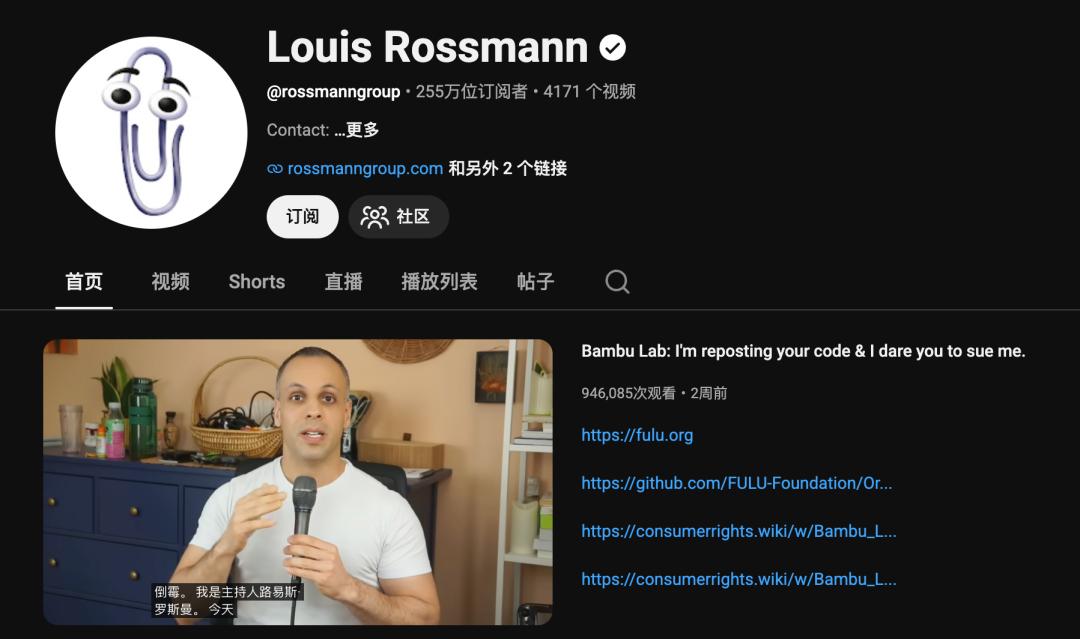
💡Learn how geopolitical tensions and public opinion impact the global expansion of AI and robotics hardware companies.
⚡ 30-Second TL;DR
What Changed
Chinese hardware brands are facing increased geopolitical scrutiny during global expansion.
Why It Matters
This highlights the importance of proactive PR and transparent data governance for AI and robotics companies expanding globally.
What To Do Next
Review your company's data privacy documentation and public communication strategy to mitigate potential geopolitical bias.
Key Points
- •Chinese hardware brands are facing increased geopolitical scrutiny during global expansion.
- •Public perception and 'witch hunt' dynamics significantly impact brand trust.
- •There is a disparity in how different global brands are treated by international media.
🧠 Deep Insight
Background and context from public sources — not the original article. 25 sources cited.
🔑 Enhanced Key Takeaways
- •Bambu Lab's international expansion challenges are significantly exacerbated by its 'closed ecosystem' approach, which includes heavy reliance on cloud infrastructure and firmware updates that have restricted local network access and third-party slicer compatibility, leading to a 'right to repair' debate and formal investigation by the Software Freedom Conservancy.
- •The 'witch hunt' dynamics against Bambu Lab are intertwined with broader Western distrust of Chinese brands, stemming from historical perceptions of quality issues, concerns over data privacy and security, and cultural unfamiliarity in marketing, despite China's advanced manufacturing capabilities.
- •Bambu Lab was founded in August 2020 by former DJI engineers, including Ye Tao, and has received significant funding from global investment firms like IDG Capital and Tencent Investment, indicating a strong financial backing despite recent controversies.
- •A major point of contention arose in January 2025 when a firmware update required users to route print jobs through Bambu Lab's cloud servers, reclassifying local network traffic as 'unauthorized requests' and leading to accusations of vendor lock-in and potential restrictions on what users can print.
- •In April 2026, Bambu Lab sent legal cease-and-desist threats to an open-source developer for creating a local network workaround for OrcaSlicer, which was widely criticized by the maker community, right-to-repair advocates, and prominent tech reviewers, ultimately leading Bambu Lab to back off its legal demands by May 25, 2026.
📊 Competitor Analysis▸ Show
| Feature / Brand | Bambu Lab | Prusa Research | Creality | Anycubic | Elegoo |
|---|---|---|---|---|---|
| Ecosystem | Closed-source, cloud-dependent | Open-source | Open-source (Klipper firmware on newer models) | Open-source (Kobra 2) | Open-source (Neptune 4 Pro) |
| Speed | High (e.g., X1 Carbon reigns supreme, A2L 500 mm/s, X2D 1000 mm/s) | High (Prusa Core One) | High (K1 Max 300mm/s, K2 Plus) | High (Kobra 2 250mm/s, Kobra X faster than A1 in color swaps) | High (Centauri Carbon) |
| Multi-color Printing | Yes, via AMS (up to 19 colors with A2L) | Yes (e.g., Prusa XL, MMU) | Yes (K2 Plus advanced material system for up to 16 spools) | Yes (Kobra X with miniature multimaterial system) | Limited/Add-on |
| Build Volume (Typical) | Varied (e.g., A1 256x256x256mm, A2L 330x320x325mm, X2D 256x256x260mm) | Varied (e.g., Prusa Core One 250x210x220mm) | Varied (e.g., K1 Max 300x300x300mm, SparkX i7 260x260x255mm) | Varied (e.g., Kobra 2, Kobra X 260x260x260mm) | Varied (e.g., Centauri Carbon 256x256x256mm) |
| Target Audience | Accessible, fast, reliable out-of-the-box performance, but increasingly closed ecosystem | Enthusiasts, open-source advocates, reliability | Budget-friendly, open-source, DIY, now challenging high-end | Budget-friendly, entry-level | Budget-friendly, entry-level |
| Controversies | Cloud dependency, firmware lockouts, legal threats against open-source developers, alleged AGPL violations | N/A | N/A | N/A | N/A |
🛠️ Technical Deep Dive
- Core Architecture: Bambu Lab printers utilize CoreXY kinematics for high-speed printing, often enclosed (e.g., X1 Carbon, X2D) or open-frame (e.g., A1, A2L).
- Extrusion System: Features hardened steel extruder gears and stainless steel nozzles, supporting various diameters (0.2mm, 0.4mm, 0.6mm, 0.8mm). Max nozzle temperature reaches 300°C (X1 Carbon, X2D, A2L). The A2L uses a closed-loop PMSM servo motor for stable power delivery and extrusion monitoring.
- Build Volume: Varies by model, for example, the A2L offers 330 x 320 x 325 mm, the X2D 256 x 256 x 260 mm, and the A1 256 x 256 x 256 mm.
- Heatbed: Max heatbed temperatures range from 80°C (A2L) to 120°C (X2D), with supported build plate types including Textured PEI, Smooth PEI, Cool Plate SuperTack, and Engineering Plate.
- Speed & Acceleration: Toolhead speeds can reach up to 1000 mm/s (X2D) and accelerations up to 20,000 mm/s² (X2D).
- Multi-material System (AMS): The Automatic Material System allows for multi-color printing, with the A2L supporting up to 4 AMS units and 1 AMS lite for up to 19 colors.
- Sensors & Calibration: Printers include features like lidar-based bed leveling and first layer inspection (X1 series), filament run-out, tangle, and odometry sensors, power loss recovery, and clumping detection. The A2L features adaptive vibration compensation with multi-point calibration and load adaptation, and granular dampers.
- Connectivity: Primarily Wi-Fi (2.4G), with some professional models like the X2D offering Ethernet. Cloud dependency is a key aspect of their ecosystem, though a LAN-only developer mode exists with limitations.
- Software: Bambu Studio (a fork of PrusaSlicer) is the primary slicer, with limited support for third-party slicers.
🔮 Future ImplicationsAI analysis grounded in cited sources
⏳ Timeline
📎 Sources (25)
Factual claims are grounded in the sources below. Forward-looking analysis is AI-generated interpretation.
- wikipedia.org
- howtogeek.com
- medium.com
- tomshardware.com
- pcgamer.com
- medium.com
- reddit.com
- all3dp.com
- 3dnatives.com
- reddit.com
- equalocean.com
- cameroncoward.com
- abovea.tech
- upenn.edu
- tracxn.com
- pitchbook.com
- reddit.com
- bgr.com
- cnet.com
- bambulab.com
- bambulab.com
- bambulab.com
- tomshardware.com
- bambulab.com
- 3dprintingindustry.com
Weekly AI Recap
Read this week's curated digest of top AI events →
👉Related Updates



AI-curated news aggregator. All content rights belong to original publishers.
Original source: 钛媒体 ↗
This is a summary, not the original. Read the source, or get the weekly briefing.
The weekly digest
One email a week. Unsubscribe anytime.