Baidu Robotaxi Glitch Halts Chinese Traffic
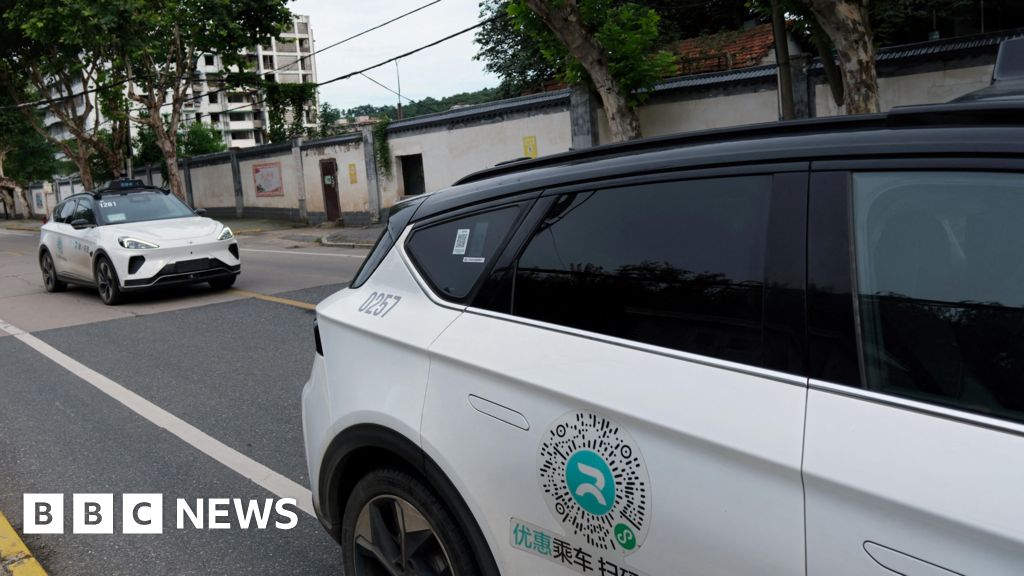
💡Baidu's 100-car robotaxi fail exposes AV deployment pitfalls for practitioners.
⚡ 30-Second TL;DR
What Changed
Malfunction impacted at least 100 Baidu robotaxis
Why It Matters
This outage underscores scalability risks in robotaxi deployments, potentially eroding public confidence in autonomous services and prompting stricter regulations.
What To Do Next
Audit your AV system's redundancy protocols using Baidu's Apollo SDK examples.
Key Points
- •Malfunction impacted at least 100 Baidu robotaxis
- •Traffic halted in unspecified Chinese city
- •Baidu declined to comment on the incident
🧠 Deep Insight
Background and context from public sources — not the original article. 7 sources cited.
🔑 Enhanced Key Takeaways
- •The incident occurred in Wuhan on the night of March 31, 2026, involving over 100 vehicles that stalled simultaneously, stranding passengers on busy elevated highways and thoroughfares.
- •Wuhan police confirmed the cause was a 'system malfunction' and facilitated the rescue of passengers, some of whom reported being trapped for nearly two hours and receiving no response from Baidu's in-car emergency support.
- •Industry analysts suggest the mass halt was triggered by a safety self-check mechanism designed to prioritize passenger safety during unexpected conditions, though the exact nature of the system failure remains under investigation.
📊 Competitor Analysis▸ Show
| Feature | Baidu (Apollo Go) | Waymo (Alphabet) | Pony.ai |
|---|---|---|---|
| Primary Market | China (Wuhan, Beijing, etc.) | USA (San Francisco, etc.) | China / USA |
| Fleet Scale | >1,000 (Wuhan) | Large-scale commercial | Mid-scale commercial |
| Recent Outage | March 2026 (System failure) | Dec 2025 (Power outage) | N/A (Fire incident 2025) |
| Tech Stack | L4 (Xinghe architecture) | L4 (Waymo Driver) | L4 (PonyAlpha) |
🛠️ Technical Deep Dive
- •Vehicles involved are Level 4 (L4) autonomous robotaxis based on Baidu's sixth-generation autonomous driving platform.
- •The platform utilizes the 'Xinghe' automotive E/E (electrical/electronic) architecture, designed specifically for L4 autonomous driving.
- •Hardware includes full redundancy in computing units, braking systems, and sensor arrays (8 LiDARs, 6 millimeter-wave radars, 12 ultrasonics, 12 cameras).
- •The system employs a 'closed-loop data' ingestion architecture ('Apollo Loop') that uses both on-board small AI models and cloud-based big AI models for automated training and data mining.
🔮 Future ImplicationsAI analysis grounded in cited sources
⏳ Timeline
📎 Sources (7)
Factual claims are grounded in the sources below. Forward-looking analysis is AI-generated interpretation.
📰 Event Coverage
Weekly AI Recap
Read this week's curated digest of top AI events →
👉Related Updates


AI-curated news aggregator. All content rights belong to original publishers.
Original source: BBC Technology ↗
This is a summary, not the original. Read the source, or get the weekly briefing.
The weekly digest
One email a week. Unsubscribe anytime.