AWS Finance teams optimize workflows with Amazon Quick
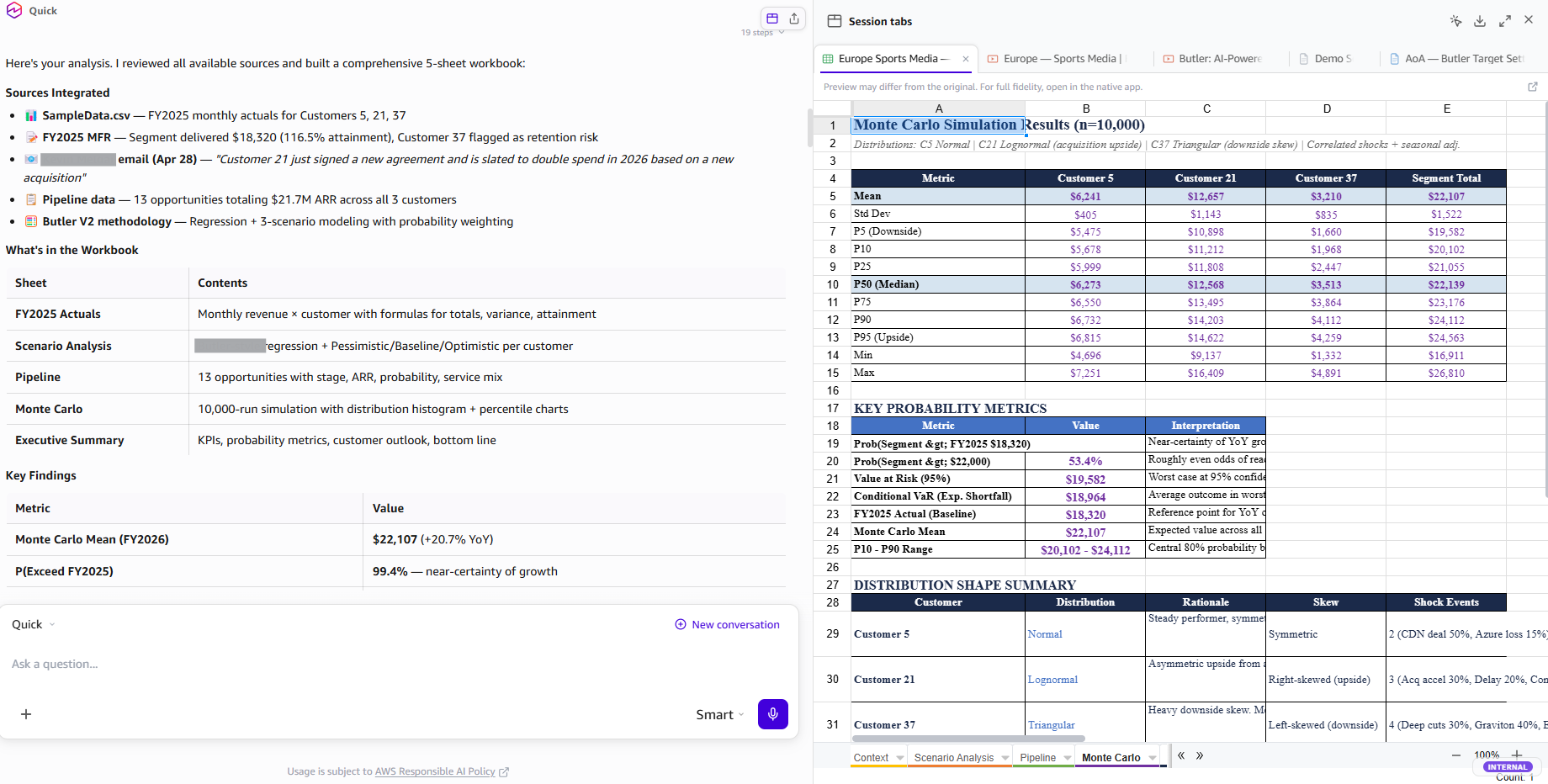
💡A practical example of how enterprise finance teams are using agentic workflows to reclaim operational time.
⚡ 30-Second TL;DR
What Changed
Automated time-consuming financial workflows
Why It Matters
Provides a real-world use case for enterprise AI adoption, showing how internal business functions can benefit from agentic automation.
What To Do Next
Identify your team's most repetitive manual tasks and evaluate if a chat-based agent flow can automate them.
Key Points
- •Automated time-consuming financial workflows
- •Utilized chat agents for operational efficiency
- •Leveraged Flows to streamline complex tasks
🧠 Deep Insight
AI-generated analysis for this event — not the original article.
🔑 Enhanced Key Takeaways
- •Amazon Quick integrates with Amazon Q Business to provide generative AI-powered insights directly within financial dashboards.
- •The implementation utilizes Amazon Q's ability to connect to internal data sources like Amazon S3 and financial databases to reduce manual data retrieval time.
- •Finance teams specifically leveraged the 'Flows' feature to automate multi-step approval processes that previously required manual intervention across disparate systems.
- •The solution incorporates guardrails to ensure financial data privacy and compliance, addressing strict regulatory requirements inherent in AWS internal finance operations.
- •By shifting from static reporting to agentic workflows, AWS Finance reduced the latency of month-end close processes by automating reconciliation tasks.
📊 Competitor Analysis▸ Show
| Feature | Amazon Quick (AWS) | Microsoft Power BI + Copilot | Tableau + Einstein Copilot |
|---|---|---|---|
| Agentic Workflow | Native AWS ecosystem integration | Deep M365/Power Automate integration | Salesforce/Data Cloud integration |
| Pricing Model | Consumption-based/User-based | Per-user/Capacity-based | Per-user/Tiered |
| Financial Benchmarks | High efficiency in AWS-native data | Strong enterprise adoption/Excel parity | High visual analytics performance |
🛠️ Technical Deep Dive
- Architecture: Utilizes a RAG (Retrieval-Augmented Generation) pipeline that connects Amazon Q to internal AWS data lakes via AWS Glue.
- Agentic Framework: Employs Amazon Q Business agents configured with custom tools to execute API calls to internal financial systems.
- Flow Orchestration: Uses AWS Step Functions as the underlying engine for 'Flows' to manage stateful, multi-step financial workflows.
- Security: Implements IAM-based access control and VPC endpoints to ensure data remains within the AWS perimeter during agent processing.
🔮 Future ImplicationsAI analysis grounded in cited sources
⏳ Timeline
Weekly AI Recap
Read this week's curated digest of top AI events →
👉Related Updates


AI-curated news aggregator. All content rights belong to original publishers.
Original source: AWS Machine Learning Blog ↗
This is a summary, not the original. Read the source, or get the weekly briefing.
Weekly AI briefing
One email a week. Unsubscribe anytime.