Aviation Safety and Interception Protocols Explained
💡Learn about critical safety protocols and failure management in high-stakes autonomous navigation environments.
⚡ 30-Second TL;DR
What Changed
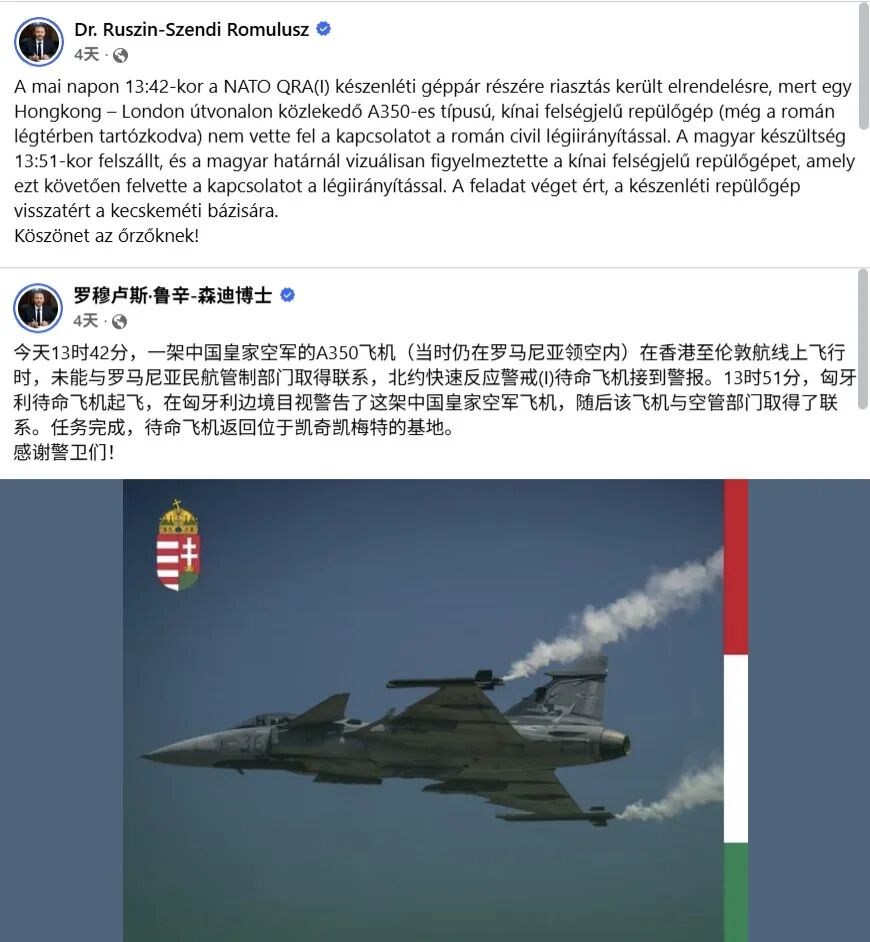
Military interception occurs when civilian aircraft lose communication with air traffic control.
Why It Matters
Understanding safety protocols and failure modes is essential for developers building autonomous or AI-assisted navigation systems.
What To Do Next
Review fail-safe mechanisms in your AI-driven control systems to ensure graceful degradation during communication loss.
Key Points
- •Military interception occurs when civilian aircraft lose communication with air traffic control.
- •Modern aviation safety relies on redundant systems to mitigate human error.
- •International protocols exist for communication between intercepting fighters and commercial jets.
- •Fatigue and technical failures remain significant threats to flight safety.
🧠 Deep Insight
AI-generated analysis for this event — not the original article.
🔑 Enhanced Key Takeaways
- •The International Civil Aviation Organization (ICAO) Doc 9433 provides the standardized visual signals that intercepting aircraft must use to communicate with intercepted aircraft, including specific maneuvers like rocking wings or flashing lights.
- •Automatic Dependent Surveillance-Broadcast (ADS-B) mandates in many jurisdictions have significantly reduced the frequency of 'loss of communication' events by providing continuous, high-fidelity position data to ground control.
- •Military interception protocols are governed by the Chicago Convention, which emphasizes that the use of weapons against civil aircraft in flight is prohibited and that the lives of persons on board must not be endangered.
- •The 'Code of Conduct' for air intercepts often involves the intercepting pilot positioning themselves slightly ahead and to the left of the civilian aircraft to ensure visibility from the cockpit without causing wake turbulence issues.
- •Modern Air Defense Identification Zones (ADIZ) utilize automated radar fusion systems that trigger interception alerts based on pre-set parameters, such as deviation from a filed flight plan or failure to squawk a discrete transponder code.
🛠️ Technical Deep Dive
- Transponder Modes: Civilian aircraft utilize Mode S transponders which allow for selective interrogation and data link capabilities, facilitating better tracking than older Mode A/C systems.
- Intercept Geometry: Interception vectors are calculated using kinematic equations that account for the target's current heading, speed, and altitude to minimize the time to intercept while maintaining safety buffers.
- Data Link Integration: Link 16 and other tactical data links allow military interceptors to receive real-time updates on civilian flight paths directly from ground-based radar networks, reducing reliance on voice radio.
- Visual Identification (VID) Procedures: Pilots follow strict checklists to identify aircraft markings and tail numbers while maintaining a safe distance, typically outside the 'no-fly' zone defined by the intercepted aircraft's wake turbulence category.
🔮 Future ImplicationsAI analysis grounded in cited sources
⏳ Timeline
Weekly AI Recap
Read this week's curated digest of top AI events →
👉Related Updates



AI-curated news aggregator. All content rights belong to original publishers.
Original source: 虎嗅 ↗
This is a summary, not the original. Read the source, or get the weekly briefing.
The weekly digest
One email a week. Unsubscribe anytime.