Aviation industry profits plummet despite revenue growth
💡See how legacy industries use data and AI to combat razor-thin margins and supply chain volatility.
⚡ 30-Second TL;DR
What Changed
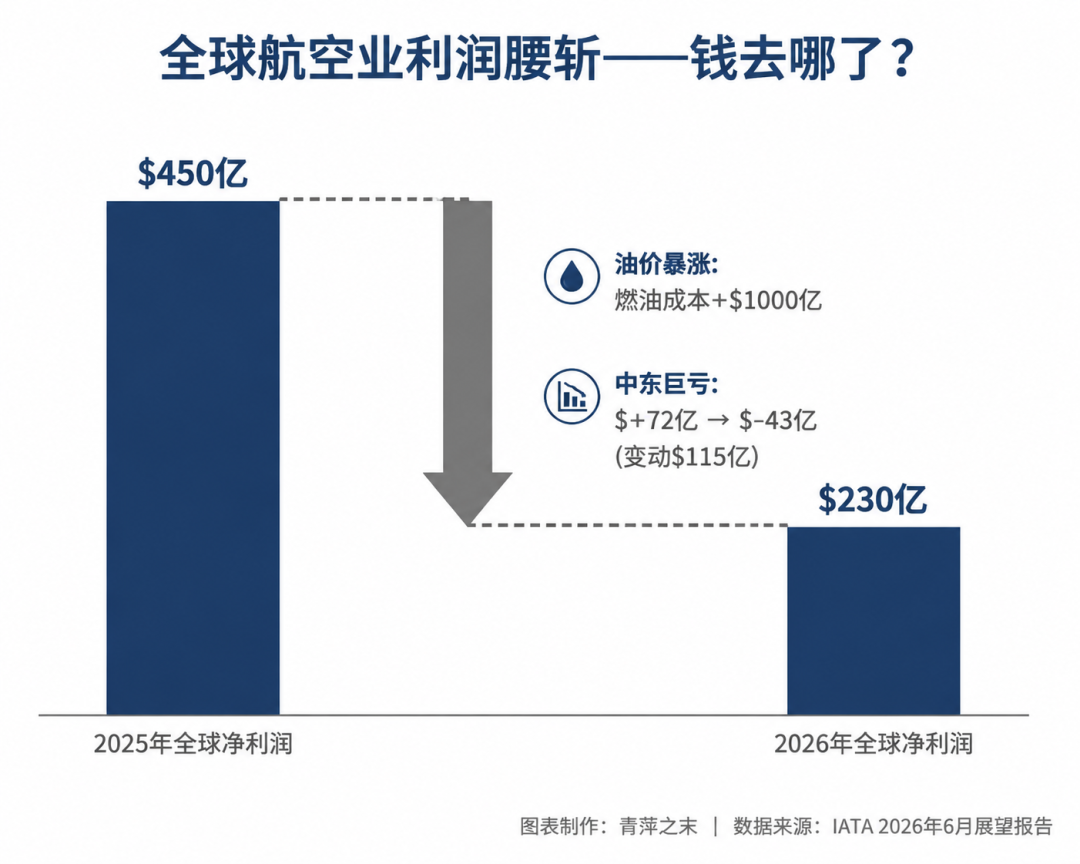
Global aviation revenue rose 9.4%, but profits were halved.
Why It Matters
Airlines are increasingly relying on AI-based predictive analytics for cost control and revenue management.
What To Do Next
Explore opportunities to build predictive maintenance or dynamic pricing models for the logistics and travel sector.
Key Points
- •Global aviation revenue rose 9.4%, but profits were halved.
- •Airlines are leveraging data and non-flight revenue to maintain margins.
- •Supply chain and fuel costs are the primary drivers of current financial instability.
🧠 Deep Insight
Background and context from public sources — not the original article. 31 sources cited.
🔑 Enhanced Key Takeaways
- •The International Air Transport Association (IATA) has nearly halved its 2026 global airline profitability outlook, projecting a 70% surge in jet fuel prices to an average of $152 per barrel, up from $90 in 2025, which represents a 'fuel shock' that airlines struggle to absorb quickly.
- •Persistent supply chain disruptions, including a record backlog of over 17,000 aircraft and engine delivery delays, are estimated to cost airlines at least $11 billion in 2025 by forcing them to operate older, less fuel-efficient aircraft and incurring higher maintenance and leasing costs.
- •Geopolitical tensions, particularly conflicts in the Middle East, are significantly contributing to reduced profitability by necessitating rerouted flight paths, increasing operational costs, and shifting global travel patterns due to heightened security concerns.
- •Airlines are increasingly deploying advanced AI and real-time data analytics for predictive maintenance, dynamic scheduling, network optimization, and personalized customer services, while air cargo operations leverage these technologies for demand forecasting, route optimization, and automated handling to enhance efficiency.
- •Airports and airlines are strategically expanding non-flight revenue streams, such as dynamic parking management, retail optimization through passenger flow analytics, and personalized offers via loyalty programs, to build financial resilience and offset fluctuating aeronautical income.
🛠️ Technical Deep Dive
- AI and Machine Learning (ML): Utilized for predictive maintenance to forecast mechanical failures, dynamic scheduling to optimize flight schedules based on real-time data (e.g., weather, air traffic), network optimization, and dynamic pricing.
- Data Analytics in Cargo Operations: AI-powered systems automate tasks like cargo routing and load optimization. Predictive analytics leverage historical data, market insights, and real-time trends for demand forecasting, route optimization, and streamlining documentation such as customs clearance and document verification.
- Internet of Things (IoT) and Radio-Frequency Identification (RFID): Integrated for real-time data tracking in aviation logistics, providing enhanced visibility into the movement of goods and monitoring shipment conditions like temperature, humidity, and location.
- Blockchain Technology: Employed to enhance transparency and security in supply chain transactions, establishing an immutable ledger for all transactions and transfers in real-time.
- Specific Implementations:
- Swissport uses AI-powered robots for baggage sorting and distribution.
- Air India has integrated AI-powered data analysis using Microsoft Copilot for operational workflow.
- Eindhoven Airport, in collaboration with Schiphol, implemented the AI-powered "Deep Turnaround" solution for ground handling optimization.
- Platforms like SmartKargo utilize predictive insights for identifying potential aircraft/equipment issues and intelligent route optimization.
- DexoryView employs AI-driven automation for real-time inventory accuracy, discrepancy detection, and optimized rack utilization in air cargo hubs.
- The International Air Transport Association (IATA) is promoting "ONE Record," a standardized data-sharing framework for air cargo.
🔮 Future ImplicationsAI analysis grounded in cited sources
⏳ Timeline
📎 Sources (31)
Factual claims are grounded in the sources below. Forward-looking analysis is AI-generated interpretation.
- businesstravelnews.com
- airwaysmag.com
- iata.org
- iata.org
- aa.com.tr
- iata.org
- iata.org
- aerospaceglobalnews.com
- substack.com
- peakhotels.com
- latentview.com
- alfafreight.com
- striim.com
- oag.com
- caasint.com
- microsoft.com
- researchgate.net
- figshare.com
- kalelogistics.com
- smartkargo.com
- theairportshow.com
- studycorgi.com
- mappedin.com
- ca.vu
- airportanalytics.aero
- airportscouncil.org
- iata.org
- packagingworldinsights.com
- dexory.com
- trb.org
- wiley.com
Weekly AI Recap
Read this week's curated digest of top AI events →
👉Related Updates



AI-curated news aggregator. All content rights belong to original publishers.
Original source: 钛媒体 ↗
This is a summary, not the original. Read the source, or get the weekly briefing.
The weekly digest
One email a week. Unsubscribe anytime.