Autodesk Connects Design Data for AI
💡Learn why connected engineering data—not isolated AI tools—is key to manufacturing transformation.
⚡ 30-Second TL;DR
What Changed
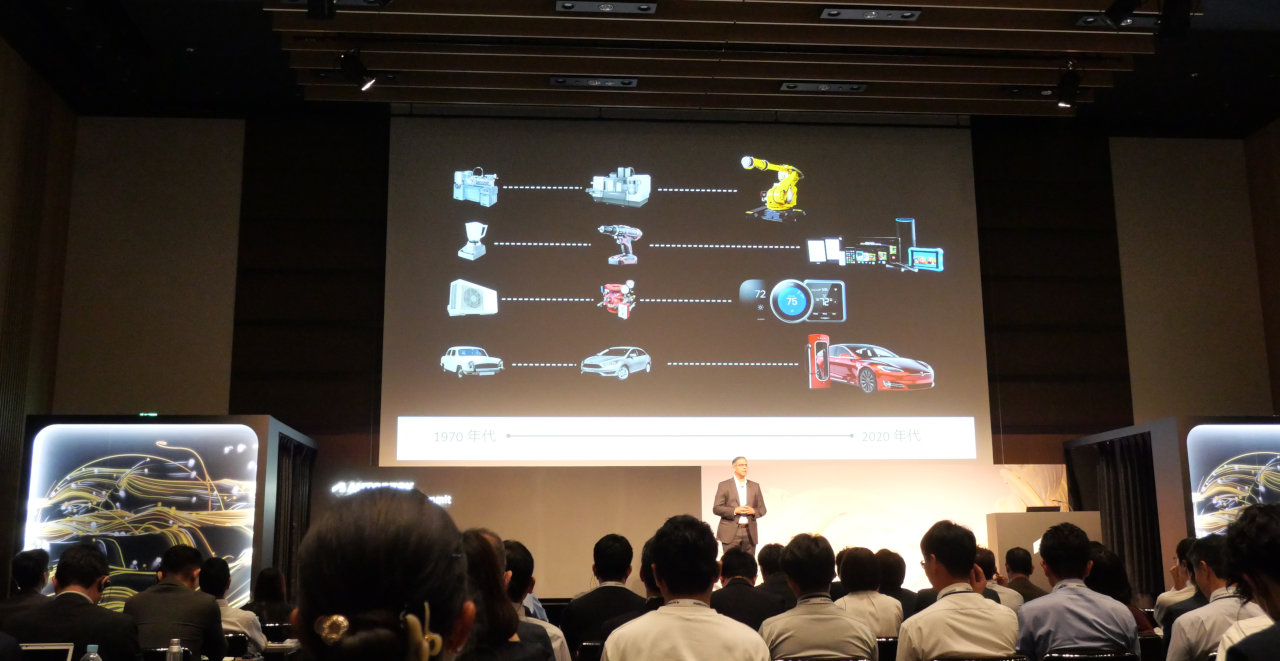
Autodesk held Design & Make Summit Japan 2026 in Tokyo
Why It Matters
For manufacturers, the article reinforces that AI value depends on connecting design, production, and operational data rather than adding isolated copilots. Organizations with fragmented data may need to prioritize interoperability and governance before scaling generative AI use cases.
What To Do Next
Map one product’s design-to-production data flow in Autodesk tools and identify the three highest-value data connections for an AI pilot.
Key Points
- •Autodesk held Design & Make Summit Japan 2026 in Tokyo
- •The company identified connected data as a foundation for manufacturing AI
- •AI is expected to reshape workflows spanning design and production
- •The keynote focused on enterprise transformation rather than a single product launch
🧠 Deep Insight
Background and context from public sources — not the original article. 25 sources cited.
🔑 Enhanced Key Takeaways
- •Autodesk Platform Services (APS), formerly known as Forge, serves as a crucial cloud-based developer platform, offering APIs that facilitate the integration of design and manufacturing data into various applications and power AI workflows.
- •Autodesk's AI strategy is centered on augmenting human expertise by automating repetitive tasks, thereby enabling designers and engineers to dedicate more time to innovation rather than replacing human roles.
- •Fusion 360, Autodesk's dedicated industry cloud for manufacturing, embeds AI directly into its workflows across CAD, CAM, CAE, PCB, and PDM, featuring capabilities such as generative design, automated modeling, automated toolpaths, and automated drawings.
- •The 'Design and Make Platform' concept by Autodesk aims to establish a unified, cloud-connected data environment to eliminate data silos and enable seamless, end-to-end workflows across diverse industries including Architecture, Engineering, Construction, and Operations (AECO); Design and Manufacturing (D&M); and Media and Entertainment (M&E).
- •Autodesk has been investing in AI for over a decade, with generative design being one of its initial commercial applications, first introduced for manufacturing and subsequently expanded to the AEC industry with Revit 2021.
📊 Competitor Analysis▸ Show
| Competitor | AI Strategy Focus | Key Products/Platforms |
|---|---|---|
| Autodesk | Interface AI: Natural language to geometry, prompt-driven modeling, automated workflows within UI, embedding AI directly into design tools. | Fusion 360 (CAD/CAM/CAE/PDM with generative design, automated drawings, toolpaths), Autodesk Platform Services (APIs for AI integration), Forma (AI-native AECO cloud). |
| Siemens | Engineering AI: Simulation-driven design, generative engineering based on constraints, digital twins, PLM-driven intelligence, manufacturing-aware optimization. | Teamcenter (PLM with AI Copilot for BOM exploration, CAD-to-PLM connectivity), NX (CAD/CAM with digital twin simulation, generative design), Industrial Copilot (PLC code generation). |
| Dassault Systèmes | Engineering AI: Strong focus on digital twins, simulation, and PLM-driven intelligence across their 3DEXPERIENCE platform. | CATIA, SOLIDWORKS, ENOVIA (PLM). |
| PTC | PLM AI: Part intelligence for rationalization, generative assistants, change request orchestration, sustainability analytics. | Windchill (PLM with AI for part intelligence, digital thread optimization), Arena (Cloud PLM for regulated industries). |
| Aras Innovator | Open PLM AI: Grounded search (RAG), contextual actions, digital thread graphing, permission-aware AI assistants. | Aras Innovator (Open, low-code PLM platform with AI Assistant). |
🛠️ Technical Deep Dive
- Autodesk Platform Services (APS) provides a suite of APIs including Viewer SDK for interactive web viewers, Automation API for cloud services of AutoCAD, Revit, Inventor, 3ds Max, and Fusion, and Data Management API for unifying data across BIM 360, Fusion Team, and Object Storage Service.
- APS also offers specialized APIs like Sustainability Data API, Data Exchange for interoperability, and Machine Translation API for technical content.
- The platform supports AI for developers, enabling the creation of applications such as digital twins, dashboards, and enterprise integrations, and allows AI agents to perform real-time lookups, memory recall, instant reactions, and autonomous routines using 3D model data.
- Fusion 360's AI capabilities include Sketch AutoConstrain for automatically defining geometry, Automated Drawings for generating 2D drawings from 3D models, Automated Toolpaths for CAM programming, and Generative Design for exploring multiple design alternatives based on user-defined constraints.
- Generative design in Fusion 360 leverages scalable cloud computing environments, such as Amazon Web Services (AWS), to process and analyze design parameters, generating hundreds of optimized design options based on criteria like material type, weight, cost, and manufacturing methods.
- Autodesk's Design and Make Platform aims to centralize, organize, and surface granular, interoperable, and accessible data in a cloud-native environment, moving away from document-centric workflows to a data-centric approach.
🔮 Future ImplicationsAI analysis grounded in cited sources
⏳ Timeline
📎 Sources (25)
Factual claims are grounded in the sources below. Forward-looking analysis is AI-generated interpretation.
- autodesk.com
- autodesk.com
- autodesk.com
- autodesk.com
- autodesk.com
- autodesk.com
- autodesk.com
- autodesk.com
- autodesk.com
- autodesk.com
- autodesk.com
- autodesk.com
- archdaily.com
- autodesk.com
- engineeringsoftwaretrials.com
- thecadhub.com
- energent.ai
- colabsoftware.com
- autodesk.com
- fastn.ai
- autodesk.com
- youtube.com
- autodesk.com
- novedge.com
- amazon.com
Weekly AI Recap
Read this week's curated digest of top AI events →
👉Related Updates

AI-curated news aggregator. All content rights belong to original publishers.
Original source: ITmedia AI+ (日本) ↗
This is a summary, not the original. Read the source, or get the weekly briefing.
Weekly AI briefing
One email a week. Unsubscribe anytime.