⚛️Stalecollected in 2h

Audi CEO outlines future strategy for local car production
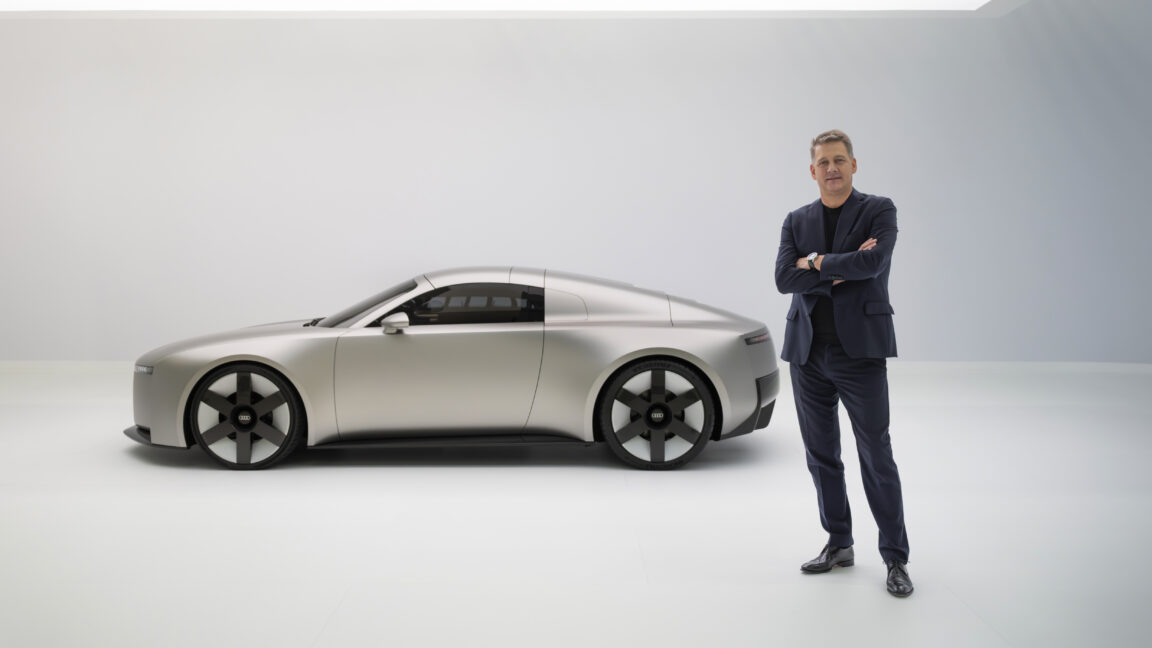
Audi CEO outlines future strategy for local car production
PostLinkedIn
⚛️Read original on Ars Technica

💡Understand how a major automotive player is restructuring its global supply chain and manufacturing strategy.

⚡ 30-Second TL;DR

What Changed

Focus on balancing global brand with local production

Why It Matters

Audi's shift toward localized production may influence supply chain strategies and regional manufacturing automation requirements.

What To Do Next

Monitor Audi's manufacturing automation updates to see how they integrate AI-driven localized production lines.

Who should care:Enterprise & Security Teams

Key Points

  • Focus on balancing global brand with local production
  • Strategic vision provided by CEO Gernot Döllner
  • Insights into Audi's long-term operational roadmap

🧠 Deep Insight

Web-grounded analysis with 31 cited sources.

🔑 Enhanced Key Takeaways

  • Audi's '360factory' strategy aims for all global production sites to manufacture all-electric vehicles by 2029, with a goal to halve factory costs by 2033 by leveraging existing plants rather than building new greenfield sites.
  • The company is significantly expanding its research and development and production capabilities in China, including a new plant in Changchun (Audi FAW NEV Co) dedicated to producing PPE-based electric vehicles like the Q6L e-tron and A6L e-tron, specifically tailored for the Chinese market.
  • Audi is actively exploring further localization options in North America, potentially utilizing Volkswagen Group's Tennessee plant, to mitigate tariff impacts, reduce logistics costs, and better serve local customer demands, including potential for local battery production and charging infrastructure.
  • Audi Hungaria in Győr, Hungary, is a crucial hub for engine production and has commenced manufacturing electric motors for the Premium Platform Electric (PPE) platform, which will power upcoming Audi electric models such as the Q6 e-tron.
  • The company is integrating artificial intelligence (AI) and digitalization across its production and logistics operations, including projects like 'Next2OEM' to digitalize wire harness production and implement real-time tracking of components to enhance efficiency and supply chain resilience.
📊 Competitor Analysis▸ Show
Feature/StrategyAudiBMWMercedes-BenzTesla
Localization StrategyBalancing global brand with local production; '360factory' for existing plants; R&D in China for local models; exploring North American options.'Local for local' principle; integrating battery production with vehicle manufacturing; expanding battery assembly globally (Germany, Hungary, USA, China, Mexico).'Local-for-local' manufacturing; increasing sourcing from best-cost countries to 30% by 2027; flexible production lines for EV/combustion; strong China R&D.Vertical integration; Gigafactory network for localized production (e.g., Shanghai, Texas, Berlin); over 90% local components in Giga Shanghai.
EV Platform FocusPremium Platform Electric (PPE) developed with Porsche for larger EVs; Modular Electric Drive Kit (MEB) for smaller EVs.'Neue Klasse' vehicles from 2025, featuring new cylindrical battery cells and integrated battery production.Flexible production lines to accommodate both electric and combustion models; developing new electric architectures.Gigafactory network for battery cell manufacturing (e.g., 4680 cells) and vehicle assembly under one roof.
Supply Chain EmphasisOptimizing supply chains with multi-modal transport; digital tools for inventory and tracking; deeper integration across departments.Regional supply chains for key battery and EV components; reducing transport distances for sustainability.Localized raw materials procurement (e.g., lithium refiner in Germany); diversifying sourcing to reduce dependencies.Prioritizes local supply chains for critical battery materials; vertical integration to reduce reliance on external suppliers.

🛠️ Technical Deep Dive

  • Premium Platform Electric (PPE): Developed in cooperation with Porsche, this platform is designed for large electric cars, emphasizing high performance, extended range, rapid charging capabilities, and dynamic driving. It supports 800-volt fast charging technology.
  • Modular Electric Drive Kit (MEB): Utilized for smaller electric models, such as the Audi Q4 e-tron, with production often integrated into Volkswagen Group plants.
  • 360factory Strategy: This comprehensive approach focuses on transforming existing global production sites to efficiently manufacture all-electric vehicles by 2029. It involves making factories flexible and resilient, with a goal to achieve net carbon neutrality for some plants by 2025.
  • Digitalization and AI Integration: Audi is scaling up the use of artificial intelligence and digital technologies in production and logistics. This includes projects like 'Next2OEM' to fully digitalize and automate wire harness production from supplier to installation, and deploying digital tools for real-time tracking of components and optimized inventory management.
  • Integrated Production: An example of this is the planned production of the Audi Q3 at the Ingolstadt plant starting mid-2026, where vehicle bodies will be manufactured in Győr, Hungary, and then painted and assembled in Ingolstadt, showcasing flexible international collaboration within the production network.

🔮 Future ImplicationsAI analysis grounded in cited sources

Audi's localized production strategy will significantly enhance its competitiveness in key regional markets.
By tailoring products and production to local demands and regulatory environments, Audi can reduce costs, mitigate tariff impacts, and respond faster to market shifts.
The '360factory' approach will accelerate Audi's transition to an all-electric portfolio while optimizing existing assets.
Investing in existing plants for EV production rather than solely building new greenfield sites allows for resource conservation and faster transformation.
Increased integration of AI and digitalization will lead to substantial improvements in manufacturing efficiency and supply chain resilience.
Digital tools, real-time tracking, and automation help optimize inventory, reduce disruptions, and streamline complex processes.

Timeline

1909
August Horch founded Audi.
1932
Auto Union AG formed by merger of Audi, Horch, DKW, and Wanderer.
1969
Auto Union merged with NSU Motorenwerke AG, forming Audi NSU Auto Union AG.
1985
Company renamed Audi AG; local assembly plant established in Uitenhage, South Africa.
1993
New engine plant established in Győr, Hungary.
2016
Audi Q5 production started at San José Chiapa, Mexico plant.
2019
Audi launched 'Mission:Zero' environmental program to achieve net carbon neutrality by 2025 for production sites.
2022-12
Audi announced '360factory' strategy, aiming for all global production sites to manufacture all-electric vehicles by 2029 and phasing out combustion models by 2033.
2023-11
Audi Hungaria in Győr began production of electric motors for the PPE platform.
2024-12
Audi FAW NEV Co plant in Changchun, China, started production of PPE-based electric models (Q6L e-tron).
2026-04
Production of Audi Q3 to begin at Ingolstadt in collaboration with Audi Hungaria in Győr.
📰

Weekly AI Recap

Read this week's curated digest of top AI events →

👉Related Updates

AI-curated news aggregator. All content rights belong to original publishers.
Original source: Ars Technica