Asset efficiency is the new core of logistics operations
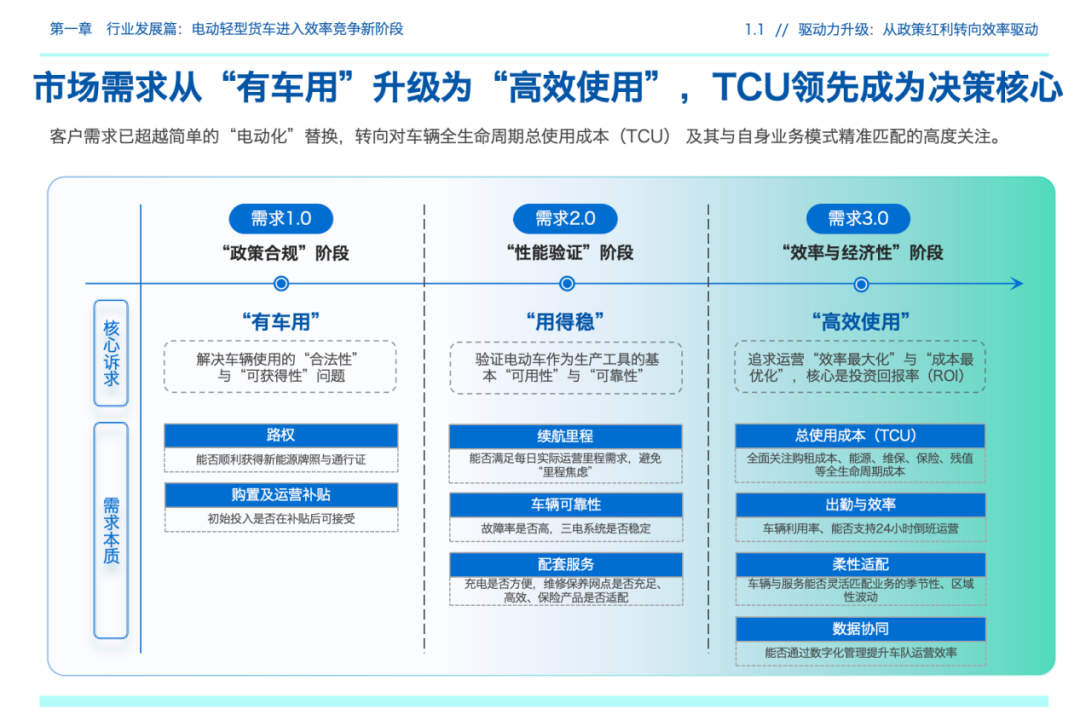
💡Learn how AI-driven IoT and fleet management are redefining logistics asset efficiency.
⚡ 30-Second TL;DR
What Changed
Energy costs are now a variable that requires optimization through smart charging and route planning.
Why It Matters
Logistics companies need AI-powered fleet management systems to optimize energy usage and predict vehicle maintenance needs.
What To Do Next
Develop or integrate an IoT-based predictive maintenance module for EV logistics fleets.
Key Points
- •Energy costs are now a variable that requires optimization through smart charging and route planning.
- •Maintenance is shifting from reactive repairs to predictive, data-driven health monitoring.
- •Battery management and residual value assessment are critical new cost-control factors.
🧠 Deep Insight
Background and context from public sources — not the original article. 19 sources cited.
🔑 Enhanced Key Takeaways
- •Smart charging systems go beyond simple cost reduction by enabling dynamic load balancing, maximizing the use of renewable energy sources, and prioritizing vehicle charging based on operational needs, thereby avoiding costly grid infrastructure upgrades.
- •Predictive maintenance in new energy vehicle (NEV) logistics is evolving to not only prevent breakdowns but also to significantly extend vehicle lifespan, enhance safety through early detection of critical component issues like brakes, and optimize workshop capacity by scheduling maintenance proactively.
- •Advanced battery management systems continuously monitor critical parameters such as capacity degradation, internal resistance changes, and charge-discharge cycles to calculate a precise State of Health (SoH) score, which is fundamental for accurate warranty risk assessment and determining the residual value of electric vehicle fleets.
- •The integration of Artificial Intelligence (AI) and the Internet of Things (IoT), known as AIoT, is creating highly autonomous fleet management systems that enhance safety through intelligent driver assistance, real-time hazard detection, and dynamic routing without constant human intervention.
- •Digital Twin (DT) technology is being introduced to logistics to construct virtual models of physical vehicles, enabling real-time monitoring, integrating multi-source heterogeneous data, and utilizing predictive models (e.g., LSTM neural networks) for time-series forecasting of transportation behaviors, addressing data fragmentation and system integration challenges.
🛠️ Technical Deep Dive
- Smart Charging Systems: Utilize communication protocols among EVs, charging stations, building loads, fleet operations, and utilities. They employ dynamic load balancing to adjust charging power based on available capacity and vehicle numbers, and can be implemented via cloud-based or local solutions.
- Predictive Maintenance: Leverages IoT sensors to collect real-time data on engine health, tire pressure, brake systems, and temperature. AI/Machine Learning algorithms analyze this data, alongside telematics, fault codes, vibration patterns, and historical repair logs, to predict potential failures and estimate the remaining useful life (RUL) of components.
- Battery Health Management: Involves continuous monitoring of battery performance parameters such as capacity degradation, internal resistance changes, and charge-discharge cycle analysis to calculate the State of Health (SoH). Advanced systems use artificial neural network battery models for real-time anomaly detection and combine physics-based models with data-driven machine learning approaches for improved accuracy.
- AIoT Integration: Fuses AI technologies with interconnected IoT devices, allowing systems to not only collect and exchange data but also to analyze and act upon it autonomously. This includes AI-powered vision systems for real-time hazard detection and driver behavior analysis.
- Digital Twin Technology: Constructs virtual models of physical objects (e.g., unmanned vehicles) to enable real-time monitoring and data analysis. It integrates multi-source heterogeneous data and employs algorithms like the Long Short-Term Memory (LSTM) neural network for time-series forecasting of transportation behaviors.
🔮 Future ImplicationsAI analysis grounded in cited sources
⏳ Timeline
📎 Sources (19)
Factual claims are grounded in the sources below. Forward-looking analysis is AI-generated interpretation.
Weekly AI Recap
Read this week's curated digest of top AI events →
👉Related Updates


AI-curated news aggregator. All content rights belong to original publishers.
Original source: 虎嗅 ↗
This is a summary, not the original. Read the source, or get the weekly briefing.
Weekly AI briefing
One email a week. Unsubscribe anytime.