ASML Unveils Hyper-NA EUV for Sub-0.7nm Nodes
💡Critical infrastructure news: ASML's roadmap for sub-0.7nm chips will define the future of AI compute capacity.
⚡ 30-Second TL;DR
What Changed
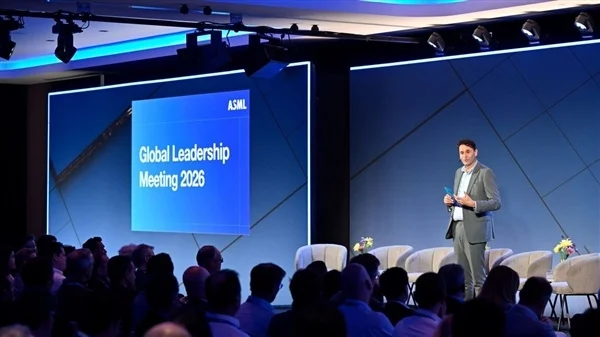
ASML officially introduced the Hyper-NA EUV roadmap at SPIE EUVL 2026.
Why It Matters
This advancement is critical for the long-term scaling of AI hardware, ensuring that chip density continues to grow to support increasingly complex neural networks.
What To Do Next
Monitor ASML's quarterly technical updates to adjust your long-term hardware infrastructure planning for AI model training.
Key Points
- •ASML officially introduced the Hyper-NA EUV roadmap at SPIE EUVL 2026.
- •The system is designed to enable manufacturing processes beyond the 0.7nm node.
- •The development runs in parallel with the current scaling of 0.55NA High-NA EUV systems.
🧠 Deep Insight
AI-generated analysis for this event — not the original article.
🔑 Enhanced Key Takeaways
- •Hyper-NA EUV systems are projected to utilize an optical numerical aperture exceeding 0.75, necessitating significant advancements in lens aberration control and mask-side illumination optics.
- •The transition to Hyper-NA is driven by the physical limitations of High-NA (0.55) systems, which face resolution plateaus as logic gate pitches shrink below the 10nm threshold.
- •Industry analysts suggest that Hyper-NA adoption will require a shift to 'forksheet' or 'CFET' (Complementary FET) transistor architectures to maintain power-performance-area (PPA) scaling benefits.
🛠️ Technical Deep Dive
- Numerical Aperture: Targeted at >0.75 NA to improve resolution beyond the 0.55 NA limit of current EXE:5000/5200 series systems.
- Illumination Optics: Requires anamorphic lens designs with increased magnification to manage the larger field size and extreme light angles.
- Resist Sensitivity: Demands new photoresist materials with higher sensitivity to compensate for the increased photon shot noise inherent in higher NA systems.
- Throughput: Expected to maintain wafer-per-hour (WPH) targets by utilizing faster stage acceleration and improved light source power (exceeding 500W-1kW).
🔮 Future ImplicationsAI analysis grounded in cited sources
⏳ Timeline
Weekly AI Recap
Read this week's curated digest of top AI events →
👉Related Updates

AI-curated news aggregator. All content rights belong to original publishers.
Original source: cnBeta (Full RSS) ↗
This is a summary, not the original. Read the source, or get the weekly briefing.
Weekly AI briefing
One email a week. Unsubscribe anytime.