Scientists Reconstruct Mouse Visual Scenes from Brain Activity
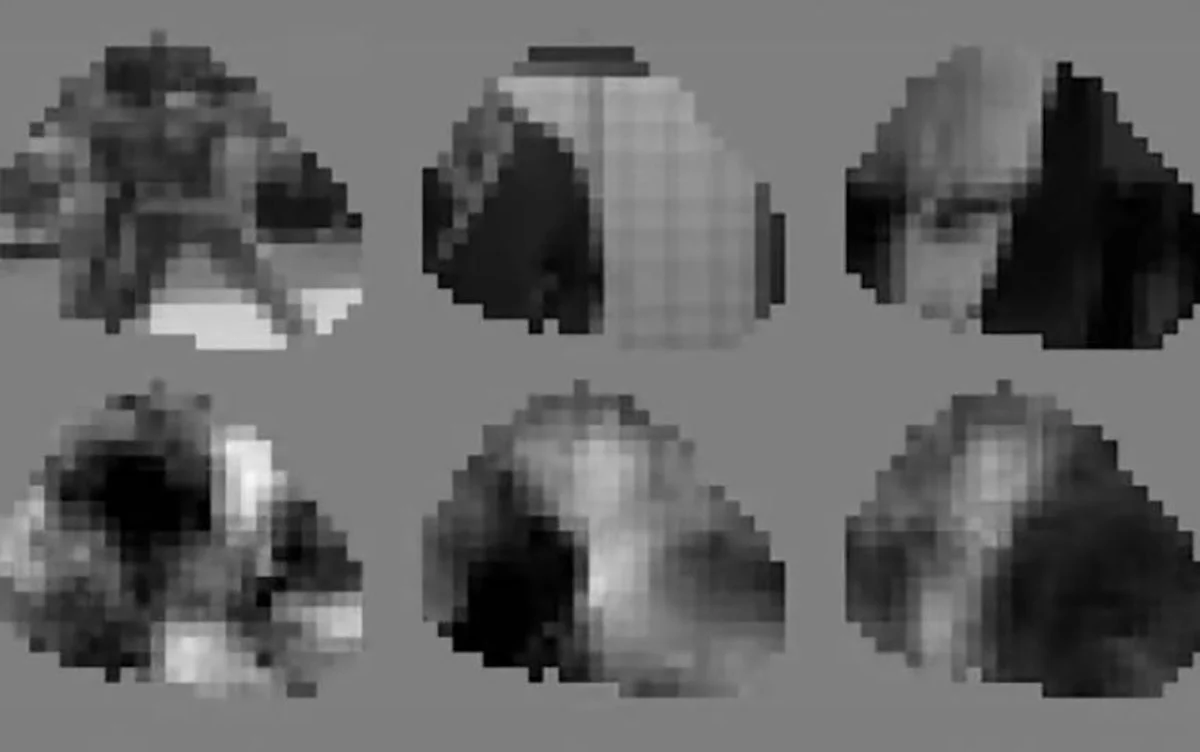
First successful reconstruction of visual video from neural activity, a major milestone for BCI and neuro-AI.
30-Second TL;DR
What Changed
Researchers reconstructed 10-second video clips from mouse neural activity.
Why It Matters
This research paves the way for future brain-computer interfaces (BCI) and advanced neural decoding technologies. It helps bridge the gap between biological vision and machine perception.
What To Do Next
Review the published paper in eLife to understand the neural decoding algorithms used for visual reconstruction.
Key Points
- •Researchers reconstructed 10-second video clips from mouse neural activity.
- •The study was conducted by a team led by University College London.
- •Findings were published in the journal eLife.
- •The research advances the understanding of neural visual encoding.
Deep Insight
AI-generated analysis for this event — not the original article.
Enhanced Key Takeaways
- •The study utilized a deep learning model known as a variational autoencoder (VAE) to map neural signals from the mouse visual cortex to latent visual representations.
- •Researchers recorded neural activity using two-photon calcium imaging, which allows for the observation of thousands of neurons simultaneously in the living brain.
- •The reconstruction process specifically focused on decoding activity from the primary visual cortex (V1), demonstrating that this region contains sufficient information to reconstruct dynamic visual scenes.
- •The model was trained on a dataset where mice were exposed to naturalistic movie clips, allowing the algorithm to learn the statistical regularities of the visual environment.
- •This research highlights a significant improvement in decoding accuracy compared to linear models, suggesting that non-linear neural processing is essential for visual perception.
Technical Deep Dive
- Model Architecture: Variational Autoencoder (VAE) framework used to compress and reconstruct visual stimuli from neural latent spaces.
- Data Acquisition: Two-photon calcium imaging used to capture high-resolution neural activity patterns in the visual cortex.
- Input Data: Neural firing rates derived from calcium fluorescence signals.
- Decoding Mechanism: Non-linear mapping between neural population vectors and visual feature space.
- Training Paradigm: Supervised learning on paired datasets of visual stimuli and corresponding neural responses.
Future ImplicationsAI analysis grounded in cited sources
Timeline
- 2019-05Initial research into neural decoding of visual stimuli using deep learning begins at UCL.
- 2021-11Publication of preliminary findings on neural population dynamics in the mouse visual cortex.
- 2023-08Refinement of the VAE-based reconstruction model for dynamic video clips.
- 2024-04Formal submission of the study detailing video reconstruction from neural activity to eLife.
Weekly AI Recap
Read this week's curated digest of top AI events →
Related Updates

AI-curated news aggregator. All content rights belong to original publishers.
Original source: cnBeta (Full RSS) ↗
This is a summary, not the original. Read the source, or get the weekly briefing.
The weekly digest
One email a week. Unsubscribe anytime.