ASML EUV Rumours and China's Semiconductor Reality
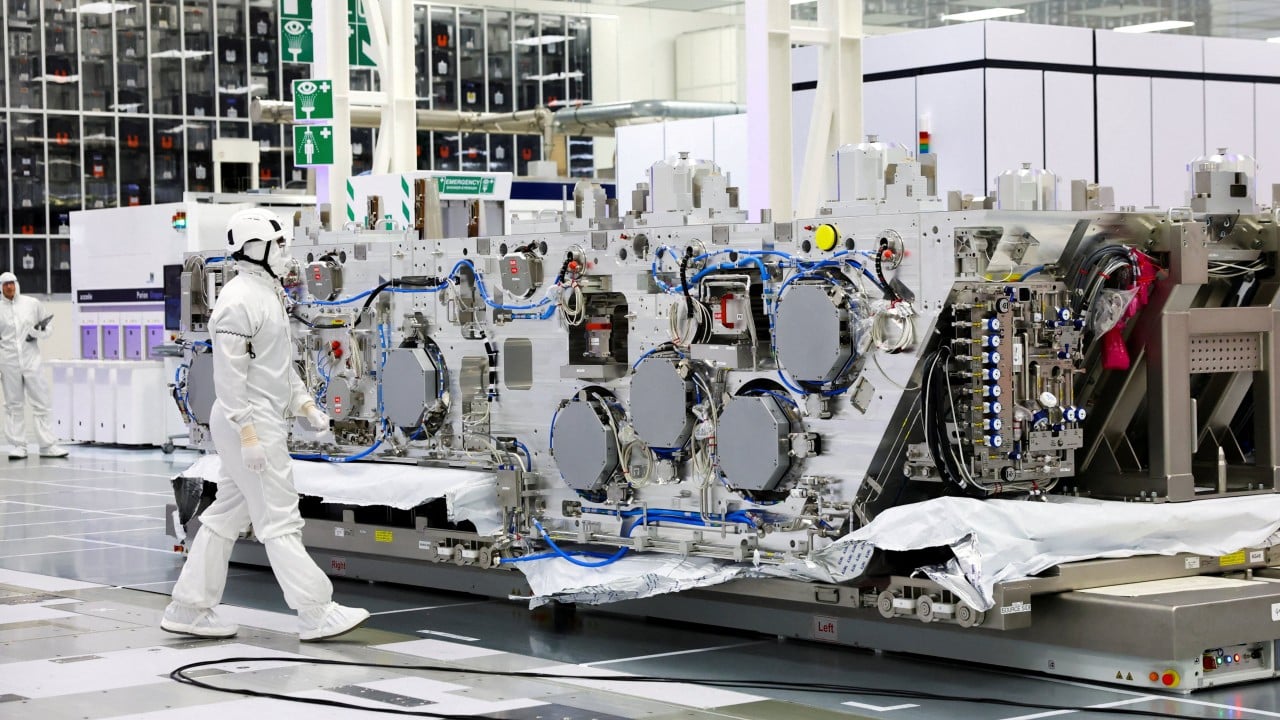
Understand how hardware export restrictions on EUV machines impact the future of global AI compute capacity.
30-Second TL;DR
What Changed
ASML denies rumors of EUV shipments to China amid US export controls.
Why It Matters
Geopolitical restrictions on high-end lithography equipment directly limit the hardware capabilities available for training large-scale AI models in restricted regions. This forces a shift in hardware strategy for AI infrastructure developers.
What To Do Next
Monitor export control updates from the US Bureau of Industry and Security (BIS) to assess risks to your GPU procurement and AI compute infrastructure.
Key Points
- •ASML denies rumors of EUV shipments to China amid US export controls.
- •EUV systems are massive, 180-tonne machines requiring complex installation and maintenance.
- •The semiconductor industry faces ongoing supply chain fragmentation due to geopolitical tensions.
Deep Insight
AI-generated analysis for this event — not the original article.
Enhanced Key Takeaways
- •ASML remains the sole global supplier of EUV (Extreme Ultraviolet) lithography machines, which are essential for manufacturing sub-7nm logic chips.
- •The Dutch government, under pressure from US-led export controls, has revoked licenses for shipping even older DUV (Deep Ultraviolet) immersion systems like the NXT:2050i and NXT:2100i to China.
- •China's domestic semiconductor champion, SMIC, has reportedly attempted to utilize multi-patterning techniques with DUV machines to achieve 7nm and 5nm-class nodes, despite significantly lower yields and higher costs compared to EUV.
- •ASML's financial exposure to China remains significant, with the region accounting for a record-breaking percentage of its total revenue in recent quarters due to a rush of orders before export restrictions tightened.
- •The Wassenaar Arrangement, an international export control regime, serves as the multilateral framework often cited by the US and Netherlands to justify the restriction of advanced semiconductor manufacturing equipment.
Technical Deep Dive
- EUV Lithography utilizes a 13.5nm wavelength light source, generated by firing a high-power CO2 laser at molten tin droplets to create plasma.
- The optical system requires a vacuum environment and specialized Bragg reflectors (molybdenum/silicon multilayers) because EUV light is absorbed by almost all materials, including air.
- High-NA (Numerical Aperture) EUV systems, the next generation of machines, feature a 0.55 NA lens to enable further scaling beyond the 0.33 NA of standard EUV systems.
- DUV immersion lithography uses 193nm ArF (Argon Fluoride) excimer lasers, requiring complex multi-patterning steps to achieve feature sizes that EUV can print in a single exposure.
Future ImplicationsAI analysis grounded in cited sources
Timeline
- 2019-06Dutch government denies ASML export license for EUV machine to SMIC.
- 2023-01Netherlands and Japan join US in restricting exports of advanced chip-making equipment to China.
- 2023-09New Dutch export control regulations officially take effect, further restricting DUV immersion systems.
- 2024-01ASML announces partial revocation of export licenses for NXT:2050i and NXT:2100i systems.
- 2025-05ASML reports record revenue share from China as customers front-load orders ahead of potential further restrictions.
Weekly AI Recap
Read this week's curated digest of top AI events →
Related Updates

AI-curated news aggregator. All content rights belong to original publishers.
Original source: SCMP Technology ↗
This is a summary, not the original. Read the source, or get the weekly briefing.
The weekly digest
One email a week. Unsubscribe anytime.