Asia's vessel tracking tech fails to prevent labor abuse
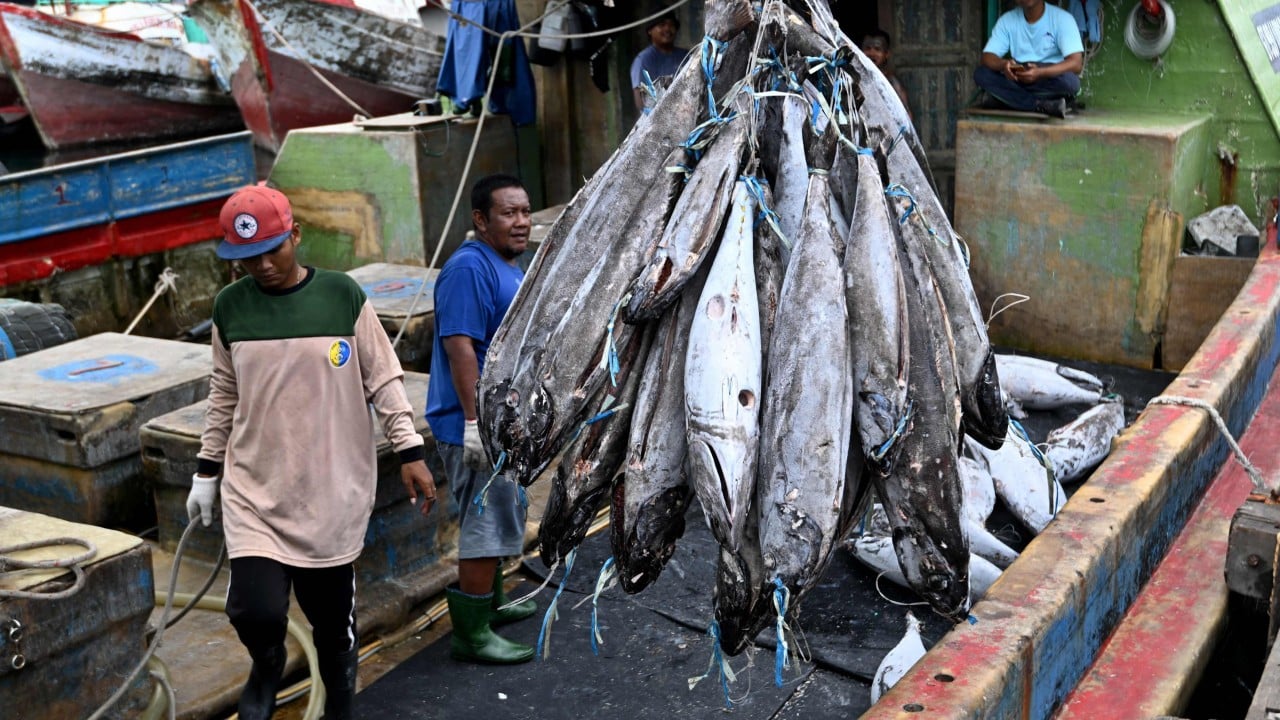
Learn why high-tech vessel tracking fails to stop labor abuse and the role for better AI-driven oversight.
30-Second TL;DR
What Changed
80 cases of labor abuse identified across 72 vessels linked to MSC-certified fisheries.
Why It Matters
This highlights the limitations of purely data-driven monitoring in supply chain ethics. It suggests a need for AI-driven sentiment or behavioral analysis to augment existing location-based tracking systems.
What To Do Next
Explore integrating satellite imagery and NLP-based communication analysis to detect anomalies in crew welfare that standard AIS data misses.
Key Points
- •80 cases of labor abuse identified across 72 vessels linked to MSC-certified fisheries.
- •Discrepancy between vessel location tracking and human rights monitoring.
- •Governance blind spots persist despite high-tech maritime surveillance infrastructure.
Deep Insight
AI-generated analysis for this event — not the original article.
Enhanced Key Takeaways
- •The Marine Stewardship Council (MSC) has faced mounting criticism from NGOs like the Changing Markets Foundation, which argue that current certification standards prioritize environmental sustainability over social accountability.
- •Vessel Monitoring Systems (VMS) and Automatic Identification Systems (AIS) are primarily designed for fisheries management and collision avoidance, lacking the granular data streams required to detect forced labor indicators such as restricted movement or excessive working hours.
- •Transshipment—the practice of transferring catch between vessels at sea—remains a major blind spot, as it allows vessels to avoid port inspections where labor authorities could intervene.
- •Recent investigations suggest that 'certification laundering' occurs when fish caught by vessels with poor labor records are mixed with compliant catch during processing, rendering traceability systems ineffective.
- •International labor organizations are pushing for the mandatory integration of 'human rights due diligence' (HRDD) audits into maritime certification frameworks, moving beyond simple GPS-based surveillance.
Technical Deep Dive
- Vessel Monitoring Systems (VMS) utilize satellite-based transceivers (Inmarsat or Iridium networks) to transmit periodic location, speed, and heading data to national fisheries authorities.
- Automatic Identification Systems (AIS) operate on VHF radio frequencies, broadcasting vessel identity and position to nearby ships and coastal stations, though they are susceptible to 'going dark' by turning off transponders.
- Electronic Monitoring (EM) systems, which include onboard CCTV cameras and sensor arrays, are being piloted to provide visual verification of catch and crew activity, though they face significant privacy and data storage challenges.
- Blockchain-based traceability platforms are being tested to create immutable digital ledgers for catch documentation, though they rely heavily on the accuracy of initial data entry at the point of capture.
Future ImplicationsAI analysis grounded in cited sources
Timeline
- 2014-09MSC introduces the 'Risk-Based Framework' to assess fisheries with limited data, later criticized for gaps in social oversight.
- 2018-05MSC launches a formal review of its labor requirements following reports of forced labor in certified supply chains.
- 2021-02MSC implements a new policy requiring certified fisheries to demonstrate they have systems in place to prevent forced and child labor.
- 2024-11Independent audit reports highlight persistent failures in the MSC's ability to verify labor conditions on high-seas vessels.
Weekly AI Recap
Read this week's curated digest of top AI events →
Related Updates




AI-curated news aggregator. All content rights belong to original publishers.
Original source: SCMP Technology ↗
This is a summary, not the original. Read the source, or get the weekly briefing.
The weekly digest
One email a week. Unsubscribe anytime.