๐Ÿ‡ญ๐Ÿ‡ฐStalecollected in 1m

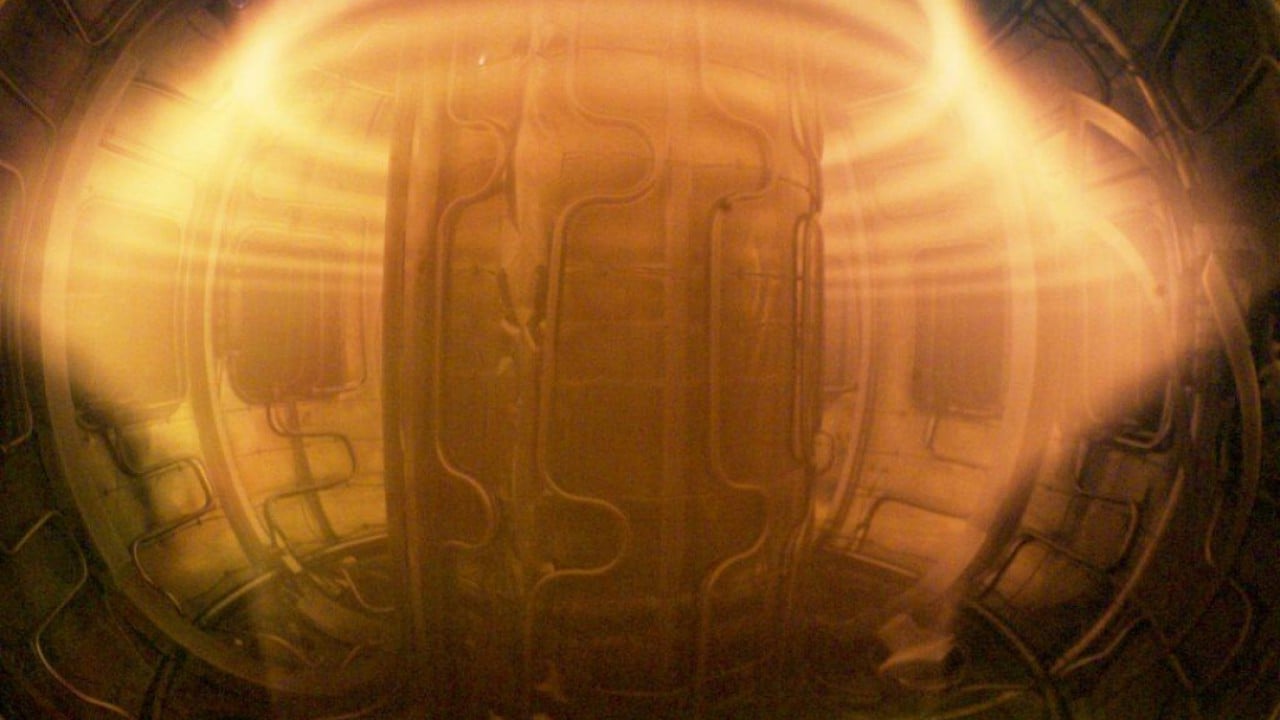
AI tackles fusion energy's software simulation bottleneck
AI tackles fusion energy's software simulation bottleneck
PostLinkedIn
๐Ÿ‡ญ๐Ÿ‡ฐRead original on SCMP Technology

๐Ÿ’กLearn how AI is breaking the 'impossible triangle' in high-performance physics simulations for clean energy.

โšก 30-Second TL;DR

What Changed

Fusion simulation software currently suffers from an 'impossible triangle' of accuracy, speed, and cost.

Why It Matters

Successfully optimizing fusion simulation could drastically reduce the time and capital required for commercial fusion energy, potentially accelerating the global transition to clean power.

What To Do Next

Explore the use of Physics-Informed Neural Networks (PINNs) to replace traditional CFD solvers in your own simulation-heavy workflows.

Who should care:Researchers & Academics

Key Points

  • โ€ขFusion simulation software currently suffers from an 'impossible triangle' of accuracy, speed, and cost.
  • โ€ขAI is being applied to bridge the gap between high-fidelity physics models and real-time computational requirements.
  • โ€ขThe initiative aims to shorten the trial-and-error cycle inherent in fusion energy research.

๐Ÿง  Deep Insight

AI-generated analysis for this event โ€” not the original article.

๐Ÿ”‘ Enhanced Key Takeaways

  • โ€ขThe 'impossible triangle' specifically refers to the conflict between kinetic simulation (high accuracy), fluid simulation (high speed), and the massive supercomputing resources required to bridge them.
  • โ€ขResearchers are utilizing Physics-Informed Neural Networks (PINNs) to embed fundamental plasma equations directly into the AI's loss function, ensuring physical consistency.
  • โ€ขThis AI-driven approach is being integrated into the control systems of experimental reactors like the Experimental Advanced Superconducting Tokamak (EAST) to predict plasma instabilities in milliseconds.
  • โ€ขThe methodology employs surrogate modeling, where the AI acts as a fast-running proxy for complex magnetohydrodynamic (MHD) codes, reducing simulation times from weeks to minutes.
  • โ€ขThe project is part of a broader national strategy in China to achieve 'fusion ignition' by leveraging AI-enhanced digital twins of tokamak reactors.
๐Ÿ“Š Competitor Analysisโ–ธ Show
FeatureAI-Enhanced Simulation (China)DeepMind/ITER CollaborationUS DOE Fusion AI Initiatives
Primary FocusPlasma Instability ControlMagnetic Coil ConfigurationMulti-scale Physics Modeling
ArchitecturePhysics-Informed Neural NetworksDeep Reinforcement LearningSurrogate/Reduced Order Models
StatusOperational/ExperimentalResearch/PilotResearch/Development

๐Ÿ› ๏ธ Technical Deep Dive

  • Architecture: Utilizes Physics-Informed Neural Networks (PINNs) to solve partial differential equations governing plasma behavior.
  • Data Integration: Incorporates historical sensor data from tokamak discharges to refine surrogate model accuracy.
  • Optimization: Employs GPU-accelerated training loops to handle high-dimensional plasma state spaces.
  • Implementation: The software functions as a real-time inference engine capable of predicting edge-localized modes (ELMs) before they occur.

๐Ÿ”ฎ Future ImplicationsAI analysis grounded in cited sources

AI-driven simulation will reduce the time-to-first-plasma for new reactor designs by at least 30%.
Accelerated iteration cycles allow engineers to test reactor configurations virtually before committing to expensive physical hardware builds.
Real-time AI plasma control will become a standard requirement for all commercial-scale fusion reactors by 2030.
The complexity of maintaining stable plasma at commercial scales exceeds human reaction times, necessitating autonomous AI intervention.

โณ Timeline

2023-02
Initial deployment of AI-based plasma shape control on the EAST tokamak.
2024-05
Publication of research detailing the integration of PINNs for fusion simulation.
2025-11
Successful validation of AI surrogate models against high-fidelity experimental discharge data.
๐Ÿ“ฐ

Weekly AI Recap

Read this week's curated digest of top AI events โ†’

๐Ÿ‘‰Related Updates

AI-curated news aggregator. All content rights belong to original publishers.
Original source: SCMP Technology โ†—

This is a summary, not the original. Read the source, or get the weekly briefing.

Weekly AI briefing

One email a week. Unsubscribe anytime.