Artificial Heart IPO Halted Over Technical Accuracy Disputes
💡A rare IPO suspension due to 'technical distortion' claims—a warning for hardware startups on transparency.
⚡ 30-Second TL;DR
What Changed
CoreHeart's IPO review was suspended by the Shanghai Stock Exchange due to unresolved technical verification issues.
Why It Matters
This case highlights the risks of aggressive technical marketing in high-stakes medical hardware, potentially leading to increased regulatory scrutiny for 'hard tech' IPOs.
What To Do Next
When evaluating deep-tech hardware, verify technical claims against peer-reviewed literature rather than relying solely on marketing whitepapers.
Key Points
- •CoreHeart's IPO review was suspended by the Shanghai Stock Exchange due to unresolved technical verification issues.
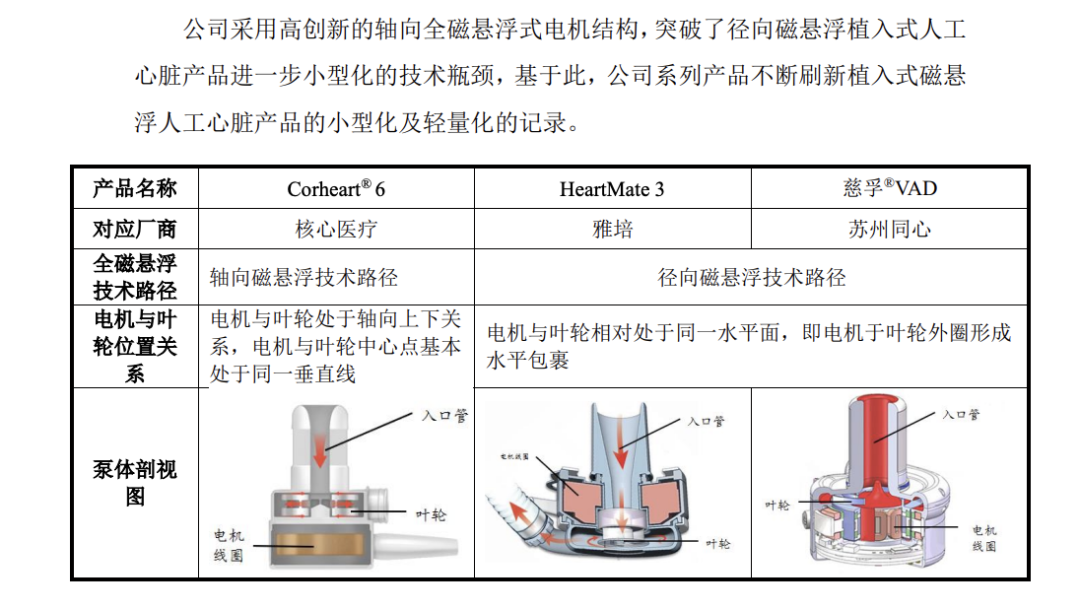
- •Critics claim Corheart®6 uses 'magnetic-assisted hydrodynamic bearings' rather than 'full magnetic levitation'.
- •The distinction is critical as full magnetic levitation is the industry gold standard for reducing blood damage and thrombosis.
- •The company maintains its product is full magnetic levitation despite conflicting expert opinions and product manual warnings.
🧠 Deep Insight
AI-generated analysis for this event — not the original article.
🔑 Enhanced Key Takeaways
- •The Shanghai Stock Exchange (SSE) inquiry specifically questioned the consistency between CoreHeart's marketing materials and the technical specifications filed in their NMPA (National Medical Products Administration) registration dossiers.
- •Industry analysts note that the Corheart®6 is the smallest ventricular assist device (VAD) in China, which complicates the engineering requirements for achieving true full magnetic levitation compared to larger, traditional devices.
- •The controversy has triggered a broader regulatory review of 'full magnetic levitation' terminology in the Chinese medical device sector, with the NMPA reportedly considering stricter labeling guidelines for VADs.
- •CoreHeart's valuation was heavily predicated on the 'full magnetic levitation' claim, which investors viewed as a significant competitive moat against mechanical bearing-based VADs.
- •Several prominent cardiovascular surgeons have publicly questioned the device's long-term hemocompatibility data, suggesting that the current clinical trial results may not fully account for the shear stress differences between magnetic-assisted and full magnetic levitation systems.
📊 Competitor Analysis▸ Show
| Feature | Corheart®6 (CoreHeart) | HeartMate 3 (Abbott) | CHVAD (CH Biomedical) |
|---|---|---|---|
| Levitation Tech | Disputed (Mag-assisted) | Full Magnetic | Full Magnetic |
| Size | Ultra-compact | Large | Medium |
| Market Status | IPO Suspended | Global Gold Standard | NMPA Approved |
| Primary Risk | Hemolysis/Thrombosis | Surgical Complexity | Size/Invasiveness |
🛠️ Technical Deep Dive
- Corheart®6 utilizes a centrifugal pump design with a rotor suspended by a combination of active magnetic control and hydrodynamic forces.
- The core technical dispute centers on the 'gap' control mechanism; critics argue the rotor makes physical contact with the housing during startup or low-flow states, which is characteristic of hydrodynamic bearings.
- Full magnetic levitation requires active electromagnetic suspension that maintains a constant gap regardless of rotational speed, preventing any mechanical contact.
- The device's power consumption profile and heat dissipation metrics are cited by experts as inconsistent with the energy requirements of a fully levitated system.
🔮 Future ImplicationsAI analysis grounded in cited sources
⏳ Timeline
Weekly AI Recap
Read this week's curated digest of top AI events →
👉Related Updates


AI-curated news aggregator. All content rights belong to original publishers.
Original source: 虎嗅 ↗
This is a summary, not the original. Read the source, or get the weekly briefing.
Weekly AI briefing
One email a week. Unsubscribe anytime.