Applying Karl Weick's Sensemaking to Organizational Evolution
💡Learn how to apply Karl Weick's sensemaking framework to build more resilient and adaptive AI-driven organizations.
⚡ 30-Second TL;DR
What Changed
Organizations are dynamic processes of 'sensemaking' rather than static structures.
Why It Matters
Understanding Weick's theory helps leaders navigate high-uncertainty environments by shifting from linear planning to iterative, sensemaking-based management.
What To Do Next
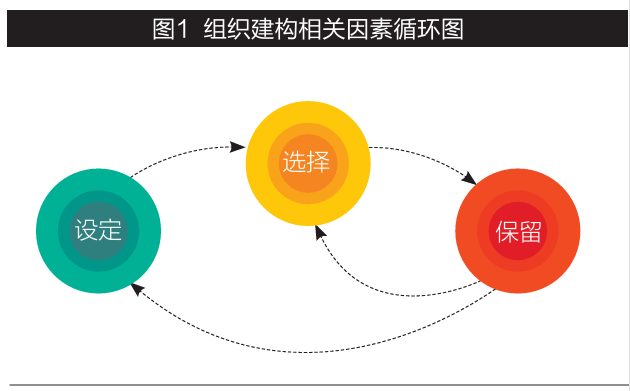
Map your team's current decision-making process to the ESR model to identify where you are failing to 'retain' valuable organizational knowledge.
Key Points
- •Organizations are dynamic processes of 'sensemaking' rather than static structures.
- •The ESR model (Enactment, Selection, Retention) explains how organizations build collective memory and meaning.
- •Action defines cognition: organizations learn by doing and reflecting on past interactions.
- •Effective management requires balancing stability (retention) with flexibility (adaptation).
🧠 Deep Insight
Background and context from public sources — not the original article. 18 sources cited.
🔑 Enhanced Key Takeaways
- •Karl Weick's sensemaking theory posits that in ambiguous and equivocal environments, people prioritize constructing plausible accounts of events over achieving absolute accuracy, recognizing that an obsession with accuracy can be counterproductive in complex, postmodern contexts.
- •Beyond the Enactment-Selection-Retention (ESR) model, Weick articulated seven core properties of sensemaking: it is grounded in identity construction, retrospective, enactive of sensible environments, social, ongoing, focused on extracted cues, and driven by plausibility.
- •A primary function of sensemaking in organizations is to reduce 'equivocality,' which refers to the unpredictability and multiple possible interpretations inherent in an organization's information environment, achieved through interlocked behaviors and communication cycles.
- •Weick also introduced other influential concepts into organizational studies, such as 'loose coupling' (systems with flexible connections allowing for adaptation) and 'mindfulness' (a heightened state of attention and awareness), which complement sensemaking by describing how organizations manage complexity and unexpected events.
- •Sensemaking represents a fundamental shift in organizational theory, moving the focus from traditional decision-making processes to understanding how meaning is actively created and negotiated, which then informs and constrains the identity and actions of individuals and groups within an organization.
🔮 Future ImplicationsAI analysis grounded in cited sources
⏳ Timeline
📎 Sources (18)
Factual claims are grounded in the sources below. Forward-looking analysis is AI-generated interpretation.
Weekly AI Recap
Read this week's curated digest of top AI events →
👉Related Updates


AI-curated news aggregator. All content rights belong to original publishers.
Original source: 虎嗅 ↗
This is a summary, not the original. Read the source, or get the weekly briefing.
The weekly digest
One email a week. Unsubscribe anytime.