來源虎嗅•較早收集於 19m
應用 Karl Weick 的意義建構理論於組織演化
#management-strategy#sensemakingkarl-weick's-organizational-theorykarl weicke-tech
💡學習如何應用 Karl Weick 的意義建構框架,打造更具韌性與適應力的 AI 驅動型組織。
⚡ 30 秒速覽
有什麼變化
組織是動態的「意義建構」過程,而非靜態結構。
為什麼重要
理解 Weick 的理論有助於領導者在高不確定性環境中,從線性規劃轉向基於意義建構的迭代式管理。
下一步行動
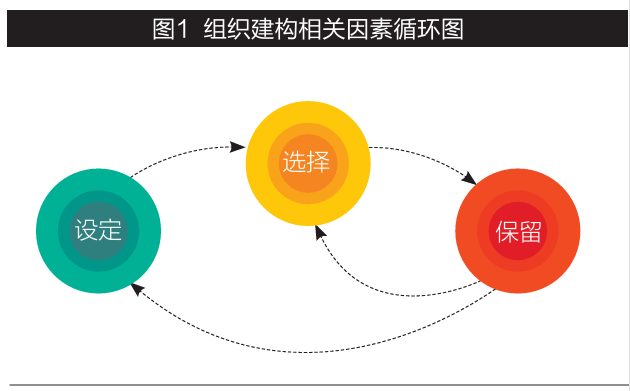
將團隊目前的決策過程對應到 ESR 模型,以找出在「保留」有價值組織知識方面的缺失。
誰應關注:Founders & Product Leaders
關鍵要點
- •組織是動態的「意義建構」過程,而非靜態結構。
- •ESR 模型(設定、選擇、保留)解釋了組織如何建立集體記憶與意義。
- •行動定義認知:組織透過行動與對過去互動的反思來學習。
- •有效的管理需要在穩定性(保留)與靈活性(適應)之間取得平衡。
🧠 深度解析
背景與延伸:來自公開資料,非原文內容。引用 18 個來源。
🔑 增強重點摘要
- •Karl Weick's sensemaking theory posits that in ambiguous and equivocal environments, people prioritize constructing plausible accounts of events over achieving absolute accuracy, recognizing that an obsession with accuracy can be counterproductive in complex, postmodern contexts.
- •Beyond the Enactment-Selection-Retention (ESR) model, Weick articulated seven core properties of sensemaking: it is grounded in identity construction, retrospective, enactive of sensible environments, social, ongoing, focused on extracted cues, and driven by plausibility.
- •A primary function of sensemaking in organizations is to reduce 'equivocality,' which refers to the unpredictability and multiple possible interpretations inherent in an organization's information environment, achieved through interlocked behaviors and communication cycles.
- •Weick also introduced other influential concepts into organizational studies, such as 'loose coupling' (systems with flexible connections allowing for adaptation) and 'mindfulness' (a heightened state of attention and awareness), which complement sensemaking by describing how organizations manage complexity and unexpected events.
- •Sensemaking represents a fundamental shift in organizational theory, moving the focus from traditional decision-making processes to understanding how meaning is actively created and negotiated, which then informs and constrains the identity and actions of individuals and groups within an organization.
🔮 前景展望基於引用來源的 AI 分析
Weick's sensemaking theory will remain highly relevant for organizations navigating increasing volatility and uncertainty.
The theory provides a framework for understanding how organizations can create meaning and adapt in unpredictable environments, a challenge that is becoming more prevalent in global markets and technological shifts.
The principles of sensemaking will be increasingly applied to understand human-AI collaboration and the integration of generative AI in workplaces.
As AI introduces new forms of information and ambiguity, employees will need to engage in sensemaking to interpret AI outputs, adapt their roles, and collectively construct new meanings for work processes, potentially leading to new 'equivocality reduction' strategies.
Future research will continue to explore the interplay between individual and collective sensemaking, particularly in distributed and hybrid work environments.
The social and discursive aspects of sensemaking are critical for shared understanding, and new work models necessitate deeper investigation into how collective meaning is constructed without constant physical co-presence.
⏳ 時間線
1936-10
Karl E. Weick born in Warsaw, Indiana.
1962-08
Earned Ph.D. in Psychology from The Ohio State University.
1969
Published 'The Social Psychology of Organizing,' introducing the concept of sensemaking.
1995
Published 'Sensemaking in Organizations,' a seminal work expanding on the theory.
2001
Appointed Rensis Likert Distinguished University Professor at the University of Michigan.
2005-08
Co-authored 'Organizing and the Process of Sensemaking' with Kathleen M. Sutcliffe and David Obstfeld.
📎 來源 (18)
Factual claims are grounded in the sources below. Forward-looking analysis is AI-generated interpretation.
📰
AI 週報
閱讀本週精選 AI 大事摘要 →
👉相關動態


AI 策展新聞聚合。所有內容版權歸原始發布者所有。
原始來源: 虎嗅 ↗
每週電子報
每週一封,可隨時退訂。