Apple's Siri to introduce auto-deleting chat history options
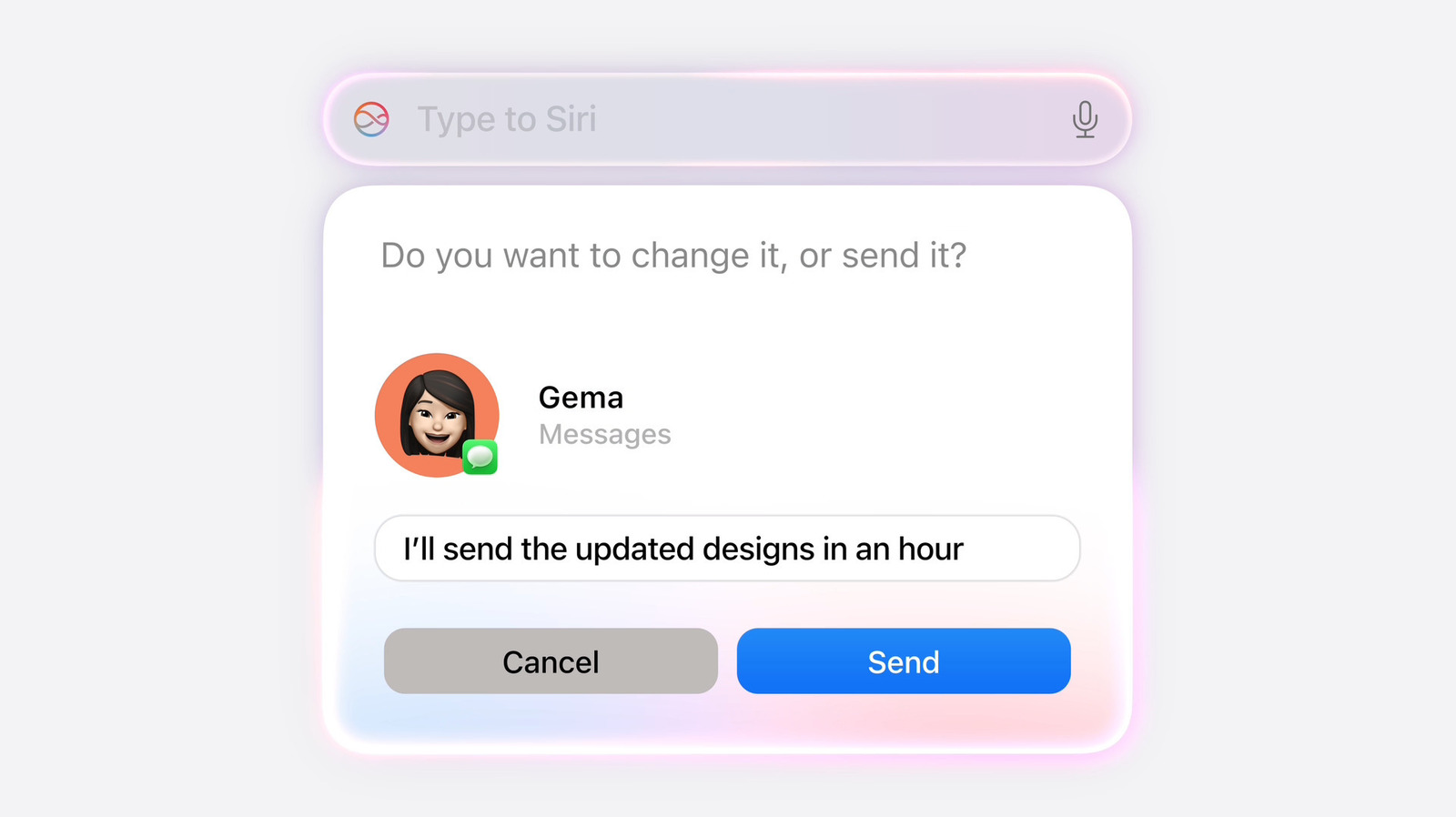
Learn how Apple is balancing AI data retention with user privacy, a critical design pattern for modern AI builders.
30-Second TL;DR
What Changed
Users can set auto-delete intervals for Siri chat logs.
Why It Matters
This update reflects a growing industry trend toward giving users more agency over their personal data in LLM-based applications. It sets a standard for privacy-first design in consumer-facing AI assistants.
What To Do Next
If building an AI chat interface, implement a configurable TTL setting for user data to improve compliance with privacy regulations like GDPR.
Key Points
- •Users can set auto-delete intervals for Siri chat logs.
- •Available retention options include 30 days, one year, or forever.
- •The feature aims to enhance user privacy and data management in AI interactions.
Deep Insight
Background and context from public sources — not the original article. 26 sources cited.
Enhanced Key Takeaways
- •The new Siri app, expected with iOS 27, will function as a standalone chatbot, offering a conversational interface similar to OpenAI's ChatGPT or Anthropic's Claude.
- •Apple is positioning this auto-delete feature as a core privacy differentiator, aiming to embed privacy protections by default rather than offering them as optional 'incognito' or 'temporary chat' modes, which is common among competitors.
- •The auto-delete functionality is part of Apple's broader 'Apple Intelligence' platform, which leverages a hybrid approach combining on-device processing with a 'Private Cloud Compute' layer designed to prevent user data from being stored, logged, or used for advertising by Apple.
- •Despite Apple's emphasis on its own privacy-focused architecture, the revamped Siri is reportedly set to integrate Google's Gemini AI models and utilize Google's cloud infrastructure for some of its expanded capabilities.
- •Siri's requests are associated with a random, device-generated identifier that rotates frequently and is not linked to a user's Apple Account, a method Apple claims is unique among digital assistants.
Competitor Analysis
- Apple Siri (Upcoming)
- 30 days, 1 year, Indefinitely (user configurable)
- Google Assistant
- 3 months, 18 months (default for new accounts), or manual deletion
- Amazon Alexa
- Retained indefinitely by default, manual deletion, or auto-delete schedule
- Microsoft Copilot (Personal)
- 18 months by default, manual deletion
- Microsoft 365 Copilot (Enterprise)
- Configurable via Microsoft Purview for any duration, including indefinitely
- Apple Siri (Upcoming)
- User configurable (30 days, 1 year, indefinitely)
- Google Assistant
- 18 months for new accounts (Web & App Activity, Location History)
- Amazon Alexa
- Indefinite retention of voice recordings
- Microsoft Copilot (Personal)
- 18 months
- Microsoft 365 Copilot (Enterprise)
- Up to 30 days for service improvement, then deleted unless compliance requires longer
- Apple Siri (Upcoming)
- Apple uses synthetic data, not real user data for training
- Google Assistant
- Yes, users can opt out of using conversation activity for model training
- Amazon Alexa
- As of March 28, 2025, users can no longer opt out of sending voice recordings to the cloud for processing and AI model training
- Microsoft Copilot (Personal)
- Yes, users can opt out of using conversation activity for model training
- Microsoft 365 Copilot (Enterprise)
- User data and prompts are not used to train LLMs without explicit permission
- Apple Siri (Upcoming)
- Yes, where possible, leveraging Neural Engine
- Google Assistant
- Yes, some processing on-device, but most requests processed on company servers
- Amazon Alexa
- No longer an option to prevent sending voice recordings to the cloud as of March 28, 2025
- Microsoft Copilot (Personal)
- Not explicitly detailed for personal Copilot; M365 Copilot processes within M365 service boundary
- Microsoft 365 Copilot (Enterprise)
- Processes within Microsoft 365 service boundary
- Apple Siri (Upcoming)
- Privacy protections ingrained by default, not an optional mode
- Google Assistant
- Yes, Guest Mode prevents interactions from being saved to Google Account
- Amazon Alexa
- Offers a 'Don't Retain' option for voice recordings (immediately discarded after processing)
- Microsoft Copilot (Personal)
- Yes, users can disable personalization and memory
- Microsoft 365 Copilot (Enterprise)
- Not applicable; enterprise controls via Purview
- Apple Siri (Upcoming)
- Random, device-generated identifier, not tied to Apple Account
- Google Assistant
- Data used to personalize experience; can be controlled
- Amazon Alexa
- Voice recordings linked to Amazon account
- Microsoft Copilot (Personal)
- Data processed and stored in alignment with organizational content in Microsoft 365
- Microsoft 365 Copilot (Enterprise)
- Data processed and stored in alignment with organizational content in Microsoft 365
| Feature/Assistant | Apple Siri (Upcoming) | Google Assistant | Amazon Alexa | Microsoft Copilot (Personal) | Microsoft 365 Copilot (Enterprise) |
|---|---|---|---|---|---|
| Chat History Retention Options | 30 days, 1 year, Indefinitely (user configurable) | 3 months, 18 months (default for new accounts), or manual deletion | Retained indefinitely by default, manual deletion, or auto-delete schedule | 18 months by default, manual deletion | Configurable via Microsoft Purview for any duration, including indefinitely |
| Default Data Retention | User configurable (30 days, 1 year, indefinitely) | 18 months for new accounts (Web & App Activity, Location History) | Indefinite retention of voice recordings | 18 months | Up to 30 days for service improvement, then deleted unless compliance requires longer |
| Opt-out of Model Training | Apple uses synthetic data, not real user data for training | Yes, users can opt out of using conversation activity for model training | As of March 28, 2025, users can no longer opt out of sending voice recordings to the cloud for processing and AI model training | Yes, users can opt out of using conversation activity for model training | User data and prompts are not used to train LLMs without explicit permission |
| On-device Processing | Yes, where possible, leveraging Neural Engine | Yes, some processing on-device, but most requests processed on company servers | No longer an option to prevent sending voice recordings to the cloud as of March 28, 2025 | Not explicitly detailed for personal Copilot; M365 Copilot processes within M365 service boundary | Processes within Microsoft 365 service boundary |
| Temporary/Incognito Mode | Privacy protections ingrained by default, not an optional mode | Yes, Guest Mode prevents interactions from being saved to Google Account | Offers a 'Don't Retain' option for voice recordings (immediately discarded after processing) | Yes, users can disable personalization and memory | Not applicable; enterprise controls via Purview |
| Data Anonymization/Identifiers | Random, device-generated identifier, not tied to Apple Account | Data used to personalize experience; can be controlled | Voice recordings linked to Amazon account | Data processed and stored in alignment with organizational content in Microsoft 365 | Data processed and stored in alignment with organizational content in Microsoft 365 |
Technical Deep Dive
- Siri is designed to perform as much processing as possible directly on the user's device, utilizing the Neural Engine for audio processing on compatible hardware.
- For tasks that necessitate cloud interaction, Apple employs 'Private Cloud Compute,' an architectural extension that aims to maintain the iPhone's security model in the cloud, ensuring user data is not stored, logged, or made accessible to Apple.
- User requests to Siri are associated with a random, device-generated identifier that rotates frequently, rather than being linked to a user's Apple ID or email address.
- Apple states that it relies on synthetic data generation for training its AI models, rather than using actual user data, to uphold privacy.
- The new Siri will operate on Apple's 'Apple Intelligence' platform, which is a hybrid system combining on-device processing with cloud-based capabilities.
- Portions of the next-generation Siri experience, particularly for expanded capabilities, are expected to be powered by Google's Gemini AI models and leverage Google's cloud infrastructure.
Future ImplicationsAI analysis grounded in cited sources
Timeline
- 2013-04Apple reveals it retains anonymized Siri data for up to two years.
- 2019-09Google introduces auto-delete options (3 or 18 months) for Assistant data following privacy concerns.
- 2020-06Google makes 18-month auto-delete the default for new accounts' Location History and Web & App Activity.
- 2025-01Apple issues a statement detailing Siri's privacy features, including on-device processing, after a $95 million privacy settlement.
- 2025-03Amazon announces that, starting March 28, 2025, Alexa will no longer offer an option to prevent sending voice recordings to the cloud for processing.
- 2026-05-17Reports emerge that Apple's standalone Siri app in iOS 27 will feature auto-deleting chat history options (30 days, one year, indefinitely).
Sources (26)
Factual claims are grounded in the sources below. Forward-looking analysis is AI-generated interpretation.
Weekly AI Recap
Read this week's curated digest of top AI events →
Related Updates

AI-curated news aggregator. All content rights belong to original publishers.
Original source: Engadget ↗
This is a summary, not the original. Read the source, or get the weekly briefing.
The weekly digest
One email a week. Unsubscribe anytime.