Apple's revamped Siri may launch as a beta
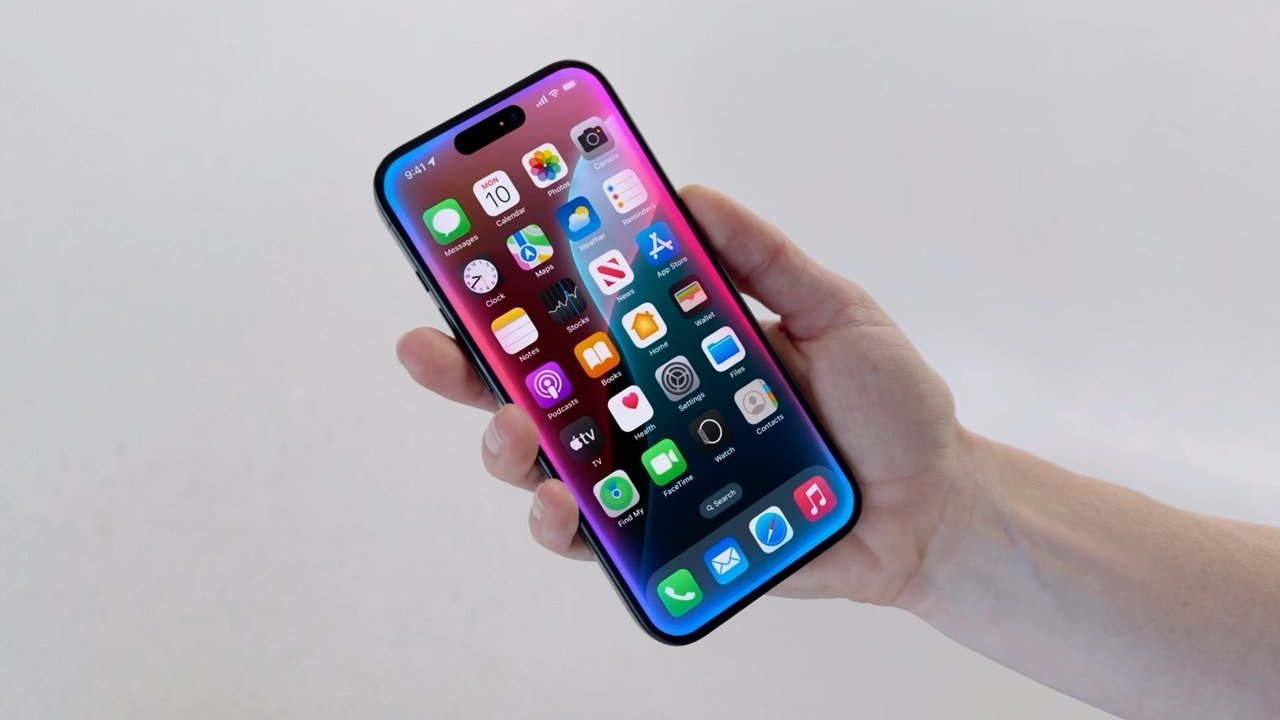
Understand Apple's cautious strategy for deploying generative AI in mass-market consumer voice assistants.
30-Second TL;DR
What Changed
The Siri project is currently two years behind its original development schedule.
Why It Matters
This delay highlights the technical complexity of integrating LLMs into legacy voice assistant architectures. It suggests that Apple is prioritizing stability and safety over a rapid, potentially buggy rollout.
What To Do Next
Monitor Apple's developer documentation for new SiriKit APIs that might expose these refactored capabilities to third-party integrations.
Key Points
- •The Siri project is currently two years behind its original development schedule.
- •Apple intends to deploy the new Siri as a beta version to manage user expectations.
- •The update represents a deep architectural refactoring of the existing assistant.
Deep Insight
Background and context from public sources — not the original article. 18 sources cited.
Enhanced Key Takeaways
- •The delay in Apple's Siri overhaul is attributed to the need for further refinement in security, reliability, and user trust, alongside significant technical hurdles and potential internal disagreements regarding the project's scope.
- •The revamped Siri aims to transition from a command-based tool to a contextual, conversational AI by rebuilding its architecture with large language model (LLM) technology.
- •Apple's vision for the new Siri includes advanced capabilities such as on-screen awareness, personal context retrieval across various applications, and the ability to perform hundreds of new actions through App Intents.
- •The new Siri is expected to integrate Google's Gemini AI models for its computational backbone, in addition to Apple's own models, and will also feature integration with OpenAI's ChatGPT.
- •The architectural refactoring involves moving from a split system to a unified LLM-based architecture, designed to primarily run on-device using Apple's Neural Engine for enhanced privacy and efficiency, with more complex queries routed to a 'Private Cloud Compute' system that does not store user data.
Competitor Analysis
A Markdown table comparing this with competitors (Feature/Pricing/Benchmarks). Return null if not applicable (e.g. op-ed, interview, single-product announcement with no clear competitors).
Technical Deep Dive
- The overhaul involves a fundamental shift from Siri's original architecture, which was based on intent classification and entity extraction, to a large language model (LLM) driven system.
- The new architecture is designed to leverage Apple's Neural Engine for on-device processing, enhancing privacy and enabling faster responses for many requests.
- For more complex queries requiring greater computational power, Siri will utilize a 'Private Cloud Compute' architecture, which is engineered to prevent user data from being stored, logged, or used for advertising.
- The revamped Siri aims to support continuous conversations and provide human-like responses, along with deeper integration across applications through an updated developer framework that exposes more in-app actions.
- Reports indicate a partnership with Google for a custom 1.2-trillion-parameter Gemini model to power parts of Siri, complementing Apple's internal models.
- The updated assistant will support both voice and text input, feature on-screen awareness, and possess the ability to remember and build upon previous user queries for more coherent interactions.
- A dedicated Siri app is planned, which will include a chat-style history and support for uploading images and documents.
Future ImplicationsAI analysis grounded in cited sources
Timeline
- 2007Siri Inc. founded as a startup.
- 2010-04Apple acquires Siri Inc.
- 2011-10Apple debuts a beta version of Siri with the iPhone 4S.
- 2016iOS 10 allows Siri to integrate with third-party applications.
- 2024-06Apple introduces new AI-powered Siri features as part of Apple Intelligence at WWDC 2024, initially targeting a 2025 launch.
- 2025-03Apple confirms the comprehensive Siri overhaul is postponed to Spring 2026.
- 2026-01Apple reportedly signs a deal with Google for a custom Gemini model to power Siri.
- 2026-02Reports indicate further delays for Siri's AI redesign due to internal testing problems, with features to be rolled out incrementally.
Sources (18)
Factual claims are grounded in the sources below. Forward-looking analysis is AI-generated interpretation.
Event Coverage
Weekly AI Recap
Read this week's curated digest of top AI events →
Related Updates


AI-curated news aggregator. All content rights belong to original publishers.
Original source: cnBeta (Full RSS) ↗
This is a summary, not the original. Read the source, or get the weekly briefing.
The weekly digest
One email a week. Unsubscribe anytime.