Apple's new Siri integration criticized as cumbersome bloatware
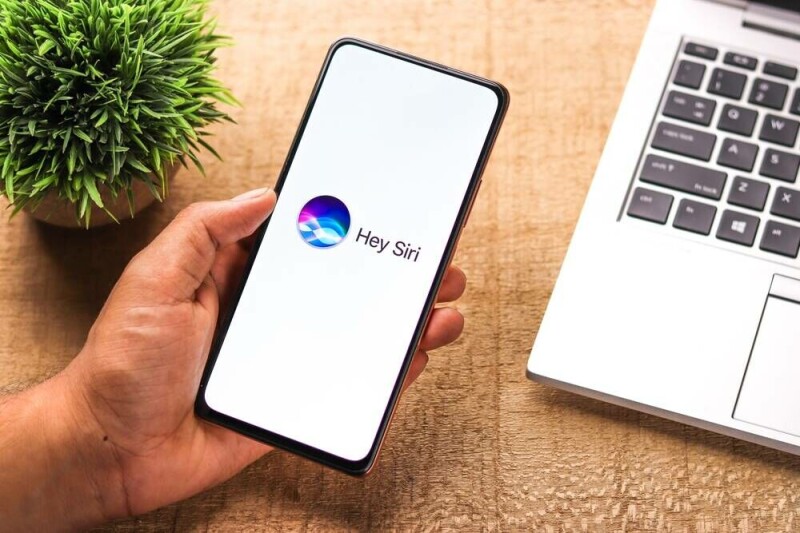
💡See how Apple's AI integration is drawing backlash for compromising core OS utility and search speed.
⚡ 30-Second TL;DR
What Changed
Apple Intelligence integration is negatively impacting Spotlight's efficiency.
Why It Matters
This shift highlights the friction between aggressive AI feature deployment and established OS UX patterns. It suggests that Apple may face user backlash if AI features prioritize model visibility over search speed.
What To Do Next
Evaluate your own product's UX to ensure AI features augment rather than obstruct core search or navigation workflows.
Key Points
- •Apple Intelligence integration is negatively impacting Spotlight's efficiency.
- •Users report the new interface feels like bloated, intrusive AI software.
- •Critics draw direct comparisons to the controversial Google AI Overviews experience.
🧠 Deep Insight
Background and context from public sources — not the original article. 27 sources cited.
🔑 Enhanced Key Takeaways
- •Apple Intelligence (AI) was initially unveiled on June 10, 2024, at the Worldwide Developers Conference (WWDC), as a core feature for iOS 18, iPadOS 18, and macOS Sequoia, with a comprehensive rollout anticipated by 2026.
- •The latest iteration, Siri AI, was introduced on June 8, 2026, leveraging a new architecture that deeply integrates Apple Foundation Models (AFM) across Apple's platforms, developed in collaboration with Google using Gemini technologies.
- •Apple Intelligence operates on a hybrid architecture, prioritizing on-device processing for privacy and speed, while utilizing Private Cloud Compute for more demanding tasks, with Apple silicon servers designed to prevent data storage or accessibility by Apple.
- •The integration of Siri AI into Spotlight on iPad and Mac enables users to conduct searches on a wide array of topics and interact with on-screen content through system-wide context menus.
- •Despite Apple's emphasis on privacy and local processing, benchmark tests conducted in February 2026 indicated that Apple's server-based AI models lagged behind leading competitors like OpenAI's GPT-4.1 in areas such as reasoning, mathematical problem-solving, and complex language understanding.
📊 Competitor Analysis▸ Show
A detailed comparison of AI platforms reveals distinct strategies and performance metrics:
| Feature/Platform | Apple Intelligence (Siri AI) | Google Gemini (AI Overviews) | Microsoft Copilot | Samsung Galaxy AI |
|---|---|---|---|---|
| Core Philosophy | Privacy-first, on-device AI layer, system-level integration. | Multimodal reach, developer tooling, hyper-personalized responses. | Enterprise productivity, governance, deep integration with Microsoft 365. | Practical mass-market utility, accessible, mixes partner clouds with local features. |
| On-Device AI | Strong emphasis, uses Apple silicon, Private Cloud Compute for complex tasks. | Gemini Nano for on-device features. | Limited on-device features; primarily cloud/Graph focused. | On-device features for translation/summarization. |
| Multimodality | Emphasizes text + images more heavily; natively multimodal on-device model (AFM 3 Core Advanced). | Leads with Gemini 2.5 Pro supporting text, image, audio, video, and long context. | Supports multimodal inputs via cloud agents. | Supports multimodal inputs via cloud agents. |
| Privacy Posture | Local processing, inspectable Private Cloud Compute; data not stored or made accessible to Apple. | Enterprise controls provided, but cloud-centric for largest models. | Enterprise controls via Purview, Microsoft Graph grounding, tenant-level policies. | Mixes partner clouds with local features. |
| Performance Benchmarks (as of Feb 2026) | On-device model comparable to similarly-sized models (e.g., Microsoft Phi-3-mini, Mistral-7B, Google Gemma-7B, Meta Llama-3-8B). Server model lags behind state-of-the-art (e.g., OpenAI GPT-4.1, GPT-4o, Claude) in reasoning, math, complex language. | Gemini-class systems are benchmarks for others; strong in multimodality. | GPT-4.1 (April 2025) showed significant improvements over previous versions in coding tasks. | N/A (focus on practical utility rather than raw benchmarks). |
| Criticisms | "Bloatware," cumbersome integration, struggles with complex requests, performance lag compared to rivals. | Hallucinations, misleading/harmful answers (e.g., health advice, defamation), "chattiness," overshadowing useful search results. | Microsoft's AI-powered chatbot got alarming amount of election information wrong. | N/A |
| Pricing | Free for users with supported devices; some features (e.g., image generation limits) may be tied to iCloud+ subscriptions. | Free, but often with usage limits for advanced features. | Free, but often with usage limits for advanced features. | N/A |
| Availability | iOS 27, iPadOS 27, macOS 27, watchOS 27, visionOS 27 (on iPhone 15 Pro/16/17 series or later, M1/A17 Pro iPads, M1 Macs or later); delayed in EU for iOS/iPadOS due to DMA. | Widely available on Android, integrated into Search. | Integrated into Windows, Microsoft 365. | Integrated into Galaxy devices. |
🛠️ Technical Deep Dive
- Apple Intelligence utilizes a family of five Apple Foundation Models (AFM), comprising two on-device models and three server-based models.
- The on-device models include AFM 3 Core, a 3-billion-parameter dense model, and AFM 3 Core Advanced, a 20-billion-parameter natively multimodal model that employs a sparse architecture, activating 1 to 4 billion parameters as needed.
- For on-device inference, Apple uses low-bit palletization and a novel framework with LoRA adapters, incorporating a mixed 2-bit and 4-bit configuration to achieve high accuracy while optimizing memory, power, and performance.
- Private Cloud Compute (PCC) runs on Apple silicon servers, featuring a Secure Enclave and a Trusted Execution Monitor to ensure only verified and signed code is executed, with independent researchers able to inspect the software for privacy verification.
- A system orchestrator is central to Apple Intelligence, coordinating features across platforms by leveraging the Spotlight index and an app toolbox to provide context-aware responses based on the active application and user's current task.
- Spotlight's revamped index is entirely on-device, continuously scanning new content in near real-time and compressing embeddings for rapid retrieval, utilizing neural hashing techniques similar to those in Private Cloud Compute.
🔮 Future ImplicationsAI analysis grounded in cited sources
⏳ Timeline
📎 Sources (27)
Factual claims are grounded in the sources below. Forward-looking analysis is AI-generated interpretation.
- wikipedia.org
- apple.com
- apple.com
- apple.com
- macrumors.com
- apple.com
- macrumors.com
- uoregon.edu
- apple.com
- cloudtekspace.com
- justthink.ai
- windowsforum.com
- androidauthority.com
- bcstrategies.com
- blockchain-council.org
- slashdot.org
- macrumors.com
- odysseynewmedia.com
- theguardian.com
- google.com
- mozillafoundation.org
- apple.com
- howtogeek.com
- windowsforum.com
- apple.com
- aicerts.ai
- techadvisor.com
Weekly AI Recap
Read this week's curated digest of top AI events →
👉Related Updates

AI-curated news aggregator. All content rights belong to original publishers.
Original source: The Register - AI/ML ↗
This is a summary, not the original. Read the source, or get the weekly briefing.
Weekly AI briefing
One email a week. Unsubscribe anytime.