Apple's Foldable iPhone Delayed to 2027 Due to Hinge Issues
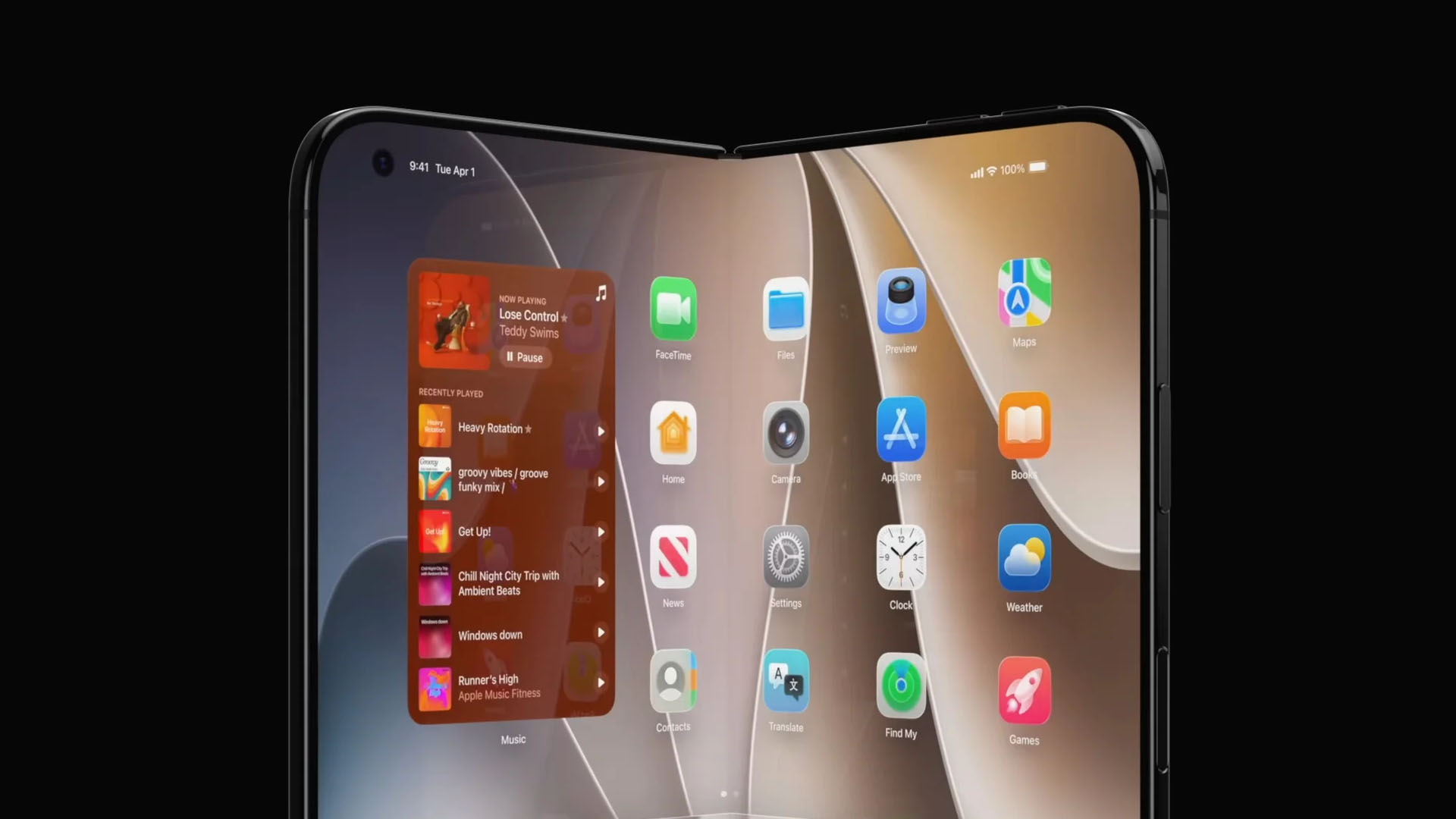
Understand how Apple's hardware manufacturing challenges impact the roadmap for future AI-enabled mobile devices.
30-Second TL;DR
What Changed
Early engineering tests reveal complex hinge design flaws.
Why It Matters
The delay suggests Apple is prioritizing hardware reliability over speed to market, potentially impacting the competitive landscape for foldable AI-integrated devices.
What To Do Next
Monitor Apple's patent filings regarding foldable hinge mechanics to anticipate future hardware integration strategies.
Key Points
- •Early engineering tests reveal complex hinge design flaws.
- •Supply chain partners notified of potential production delays.
- •Launch timeline pushed back to 2027.
Deep Insight
AI-generated analysis for this event — not the original article.
Enhanced Key Takeaways
- •Apple has reportedly been experimenting with multiple form factors, including both a clamshell 'flip' style device and a larger, tablet-like foldable, with the latter currently facing more significant durability hurdles.
- •The hinge engineering challenges involve maintaining a 'crease-free' display panel while ensuring the device can withstand the rigorous 200,000+ cycle durability testing standards Apple mandates for its hardware.
- •Internal reports suggest Apple is exploring proprietary display materials, potentially involving a new type of ultra-thin glass (UTG) that is more resistant to cracking than current industry-standard solutions.
- •The delay is also attributed to Apple's insistence on achieving a 'zero-gap' fold design that remains flush when closed, a feat that has proven difficult to balance with the necessary internal space for battery and cooling components.
- •Supply chain sources indicate that Apple has been actively testing hinge components from multiple vendors, including Amphenol and various Taiwanese manufacturers, to resolve the 3D-printing precision issues.
Competitor Analysis
- Apple Foldable (Projected)
- 3D-Printed (In-Dev)
- Samsung Galaxy Z Fold 7
- Integrated Flex Hinge
- Google Pixel Fold 2
- Friction Hinge
- Apple Foldable (Projected)
- Proprietary UTG
- Samsung Galaxy Z Fold 7
- Dynamic AMOLED 2X
- Google Pixel Fold 2
- Actua Flex OLED
- Apple Foldable (Projected)
- Crease-free / Durability
- Samsung Galaxy Z Fold 7
- Multitasking / Ecosystem
- Google Pixel Fold 2
- Software / AI Integration
- Apple Foldable (Projected)
- Unreleased (2027)
- Samsung Galaxy Z Fold 7
- Available
- Google Pixel Fold 2
- Available
| Feature | Apple Foldable (Projected) | Samsung Galaxy Z Fold 7 | Google Pixel Fold 2 |
|---|---|---|---|
| Hinge Design | 3D-Printed (In-Dev) | Integrated Flex Hinge | Friction Hinge |
| Display Tech | Proprietary UTG | Dynamic AMOLED 2X | Actua Flex OLED |
| Primary Focus | Crease-free / Durability | Multitasking / Ecosystem | Software / AI Integration |
| Market Status | Unreleased (2027) | Available | Available |
Technical Deep Dive
- Hinge Architecture: Utilizing additive manufacturing (3D printing) for complex internal gear structures to reduce part count and weight.
- Display Substrate: Researching specialized polyimide-based layers combined with chemically strengthened ultra-thin glass to mitigate permanent deformation at the fold axis.
- Thermal Management: Implementing ultra-thin vapor chambers designed to bridge the hinge gap, allowing heat dissipation across both halves of the device.
- Structural Integrity: Testing aerospace-grade titanium alloys for the chassis to maintain rigidity despite the mechanical complexity of the folding mechanism.
Future ImplicationsAI analysis grounded in cited sources
Timeline
- 2021-05Apple files initial patents for foldable display technology and hinge mechanisms.
- 2023-02Reports emerge of Apple testing foldable prototypes with internal teams.
- 2024-08Supply chain rumors suggest Apple is evaluating foldable panels from LG and Samsung Display.
- 2025-11Internal engineering reviews identify critical failure points in the 3D-printed hinge prototypes.
Weekly AI Recap
Read this week's curated digest of top AI events →
Related Updates
AI-curated news aggregator. All content rights belong to original publishers.
Original source: cnBeta (Full RSS) ↗
This is a summary, not the original. Read the source, or get the weekly briefing.
The weekly digest
One email a week. Unsubscribe anytime.