Apple joins carrier alliance for universal satellite connectivity
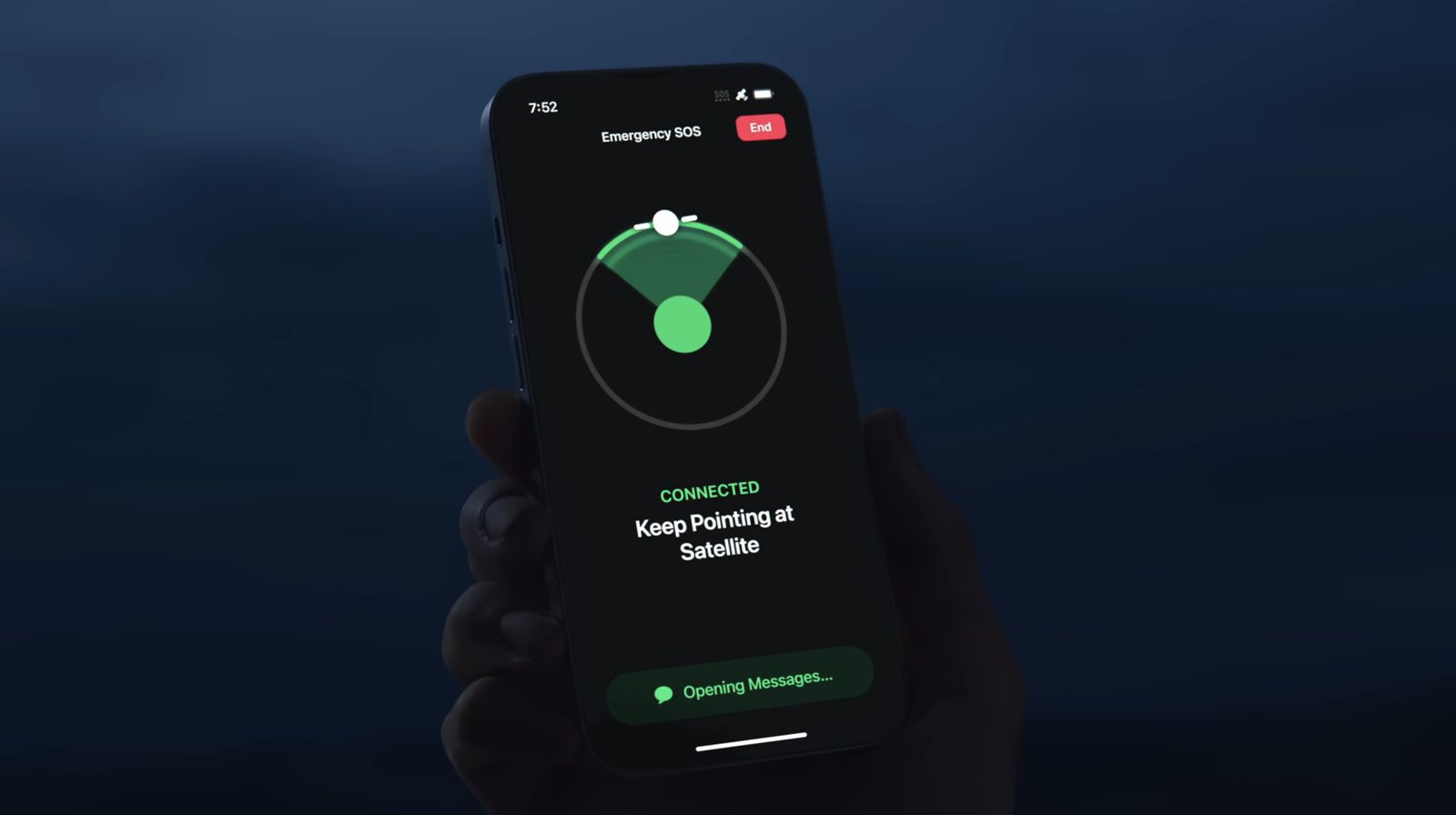
Universal satellite connectivity enables new edge AI use cases in remote areas previously unreachable by cellular data.
30-Second TL;DR
What Changed
AT&T, T-Mobile, and Verizon formed a D2D satellite joint venture.
Why It Matters
This infrastructure shift enables reliable connectivity for edge-based AI applications that previously required constant cellular uptime. It expands the potential market for offline-first AI models running on mobile hardware.
What To Do Next
Evaluate your mobile AI app's latency requirements for scenarios where users might switch to low-bandwidth satellite fallback connections.
Key Points
- •AT&T, T-Mobile, and Verizon formed a D2D satellite joint venture.
- •The partnership aims to eliminate cellular signal dead zones in the US.
- •iPhone users will gain nationwide network redundancy via satellite integration.
Deep Insight
Background and context from public sources — not the original article. 39 sources cited.
Enhanced Key Takeaways
- •The joint venture between AT&T, T-Mobile, and Verizon aims to pool spectrum resources and establish common technical standards for direct-to-device (D2D) satellite services across the US.
- •This alliance is intended to simplify technical integration for mobile users and satellite operators, fostering competition and increasing consumer choice in the D2D market.
- •Beyond eliminating signal dead zones, the joint venture will provide critical redundant connectivity during emergencies such as natural disasters or network outages.
- •Apple's existing satellite features, including Emergency SOS, Messages via Satellite, Roadside Assistance, and Find My, are powered by Globalstar's network and operate independently of this new carrier alliance.
- •The individual D2D partnerships of the participating carriers, such as T-Mobile with Starlink and AT&T and Verizon with AST SpaceMobile, are expected to continue alongside this new joint venture.
Competitor Analysis
- Apple (with Globalstar)
- Emergency SOS, Messages, Roadside Assistance, Location Sharing
- T-Mobile (with Starlink Direct to Cell)
- Texting, Location Sharing, Picture/Audio Messaging, Select Apps, Satellite Data
- AT&T (with AST SpaceMobile)
- Voice, Data, Text, Mission-Critical Push-to-Talk (FirstNet)
- Verizon (with AST SpaceMobile)
- Voice, Data, Text (aiming for broadband)
- Apple (with Globalstar)
- iPhone 14 and later (unmodified)
- T-Mobile (with Starlink Direct to Cell)
- Most modern LTE phones (unmodified)
- AT&T (with AST SpaceMobile)
- Existing everyday smartphones (unmodified)
- Verizon (with AST SpaceMobile)
- Existing everyday smartphones (unmodified)
- Apple (with Globalstar)
- Free for initial period (extended to at least Nov 2026 for iPhone 14/15 users)
- T-Mobile (with Starlink Direct to Cell)
- Included with Go5G Next plan; $15/month for other T-Mobile plans; $20/month for other carriers (requires eSIM)
- AT&T (with AST SpaceMobile)
- Details to be announced; currently testing
- Verizon (with AST SpaceMobile)
- Details to be announced; currently testing
- Apple (with Globalstar)
- Globalstar LEO constellation (24 satellites, expanding)
- T-Mobile (with Starlink Direct to Cell)
- Starlink LEO constellation (thousands of satellites)
- AT&T (with AST SpaceMobile)
- AST SpaceMobile LEO constellation (BlueBird satellites with large antenna arrays)
- Verizon (with AST SpaceMobile)
- AST SpaceMobile LEO constellation (BlueBird satellites with large antenna arrays)
- Apple (with Globalstar)
- Commercially launched (Emergency SOS Nov 2022, Messages via Satellite Sept 2024)
- T-Mobile (with Starlink Direct to Cell)
- Commercial launch July 2025, beta testing ongoing
- AT&T (with AST SpaceMobile)
- Testing and commercial agreement in place; aiming for service launch by year-end
- Verizon (with AST SpaceMobile)
- Testing and commercial agreement in place
| Feature/Provider | Apple (with Globalstar) | T-Mobile (with Starlink Direct to Cell) | AT&T (with AST SpaceMobile) | Verizon (with AST SpaceMobile) |
|---|---|---|---|---|
| Service Type | Emergency SOS, Messages, Roadside Assistance, Location Sharing | Texting, Location Sharing, Picture/Audio Messaging, Select Apps, Satellite Data | Voice, Data, Text, Mission-Critical Push-to-Talk (FirstNet) | Voice, Data, Text (aiming for broadband) |
| Device Compatibility | iPhone 14 and later (unmodified) | Most modern LTE phones (unmodified) | Existing everyday smartphones (unmodified) | Existing everyday smartphones (unmodified) |
| Pricing | Free for initial period (extended to at least Nov 2026 for iPhone 14/15 users) | Included with Go5G Next plan; $15/month for other T-Mobile plans; $20/month for other carriers (requires eSIM) | Details to be announced; currently testing | Details to be announced; currently testing |
| Satellite Network | Globalstar LEO constellation (24 satellites, expanding) | Starlink LEO constellation (thousands of satellites) | AST SpaceMobile LEO constellation (BlueBird satellites with large antenna arrays) | AST SpaceMobile LEO constellation (BlueBird satellites with large antenna arrays) |
| Current Status | Commercially launched (Emergency SOS Nov 2022, Messages via Satellite Sept 2024) | Commercial launch July 2025, beta testing ongoing | Testing and commercial agreement in place; aiming for service launch by year-end | Testing and commercial agreement in place |
Technical Deep Dive
- Direct-to-device (D2D) satellite technology enables standard smartphones to connect directly to Low Earth Orbit (LEO) satellites, typically orbiting at altitudes of 500 to 600 kilometers, without requiring specialized equipment.
- These LEO satellites function as orbiting cell towers, receiving signals from smartphones and relaying them to ground stations, which are then connected to terrestrial telecommunications networks.
- Apple's satellite features on iPhone 14 and later models utilize a Qualcomm X65 modem chip, along with custom hardware, to communicate with Globalstar's satellites over the n53 band, which is part of the 5G New Radio (NR) specification.
- To optimize transmission over the limited bandwidth of satellite connections, messages are compressed using advanced algorithms.
- Establishing a satellite connection requires a clear, unobstructed view of the sky; performance can be significantly degraded or prevented by heavy foliage, buildings, or indoor environments.
- The 3GPP Non-Terrestrial Network (NTN) standard is crucial for defining how mobile phones and satellites communicate, ensuring interoperability across different devices and orbital networks.
- AST SpaceMobile's approach involves deploying satellites with the largest active antenna arrays in LEO, designed to provide superior coverage and performance while reducing power requirements for the connected device.
Future ImplicationsAI analysis grounded in cited sources
Timeline
- 2022-09Apple announces Emergency SOS via satellite for iPhone 14 series.
- 2022-11Apple launches Emergency SOS via satellite in the US and Canada, powered by Globalstar.
- 2023-06AST SpaceMobile completes the first over-the-top video application call over AT&T spectrum using BlueWalker 3 satellite.
- 2024-09Apple launches Messages via satellite in the US and Canada with iOS 18.
- 2025-07T-Mobile and Starlink's 'Coverage Above and Beyond' (T-Satellite) service launches commercially.
- 2026-05AT&T, T-Mobile, and Verizon agree in principle to form a joint venture for D2D satellite services.
Sources (39)
Factual claims are grounded in the sources below. Forward-looking analysis is AI-generated interpretation.
Weekly AI Recap
Read this week's curated digest of top AI events →
Related Updates

AI-curated news aggregator. All content rights belong to original publishers.
Original source: cnBeta (Full RSS) ↗
This is a summary, not the original. Read the source, or get the weekly briefing.
The weekly digest
One email a week. Unsubscribe anytime.