Apple increases Mac prices citing rising memory costs
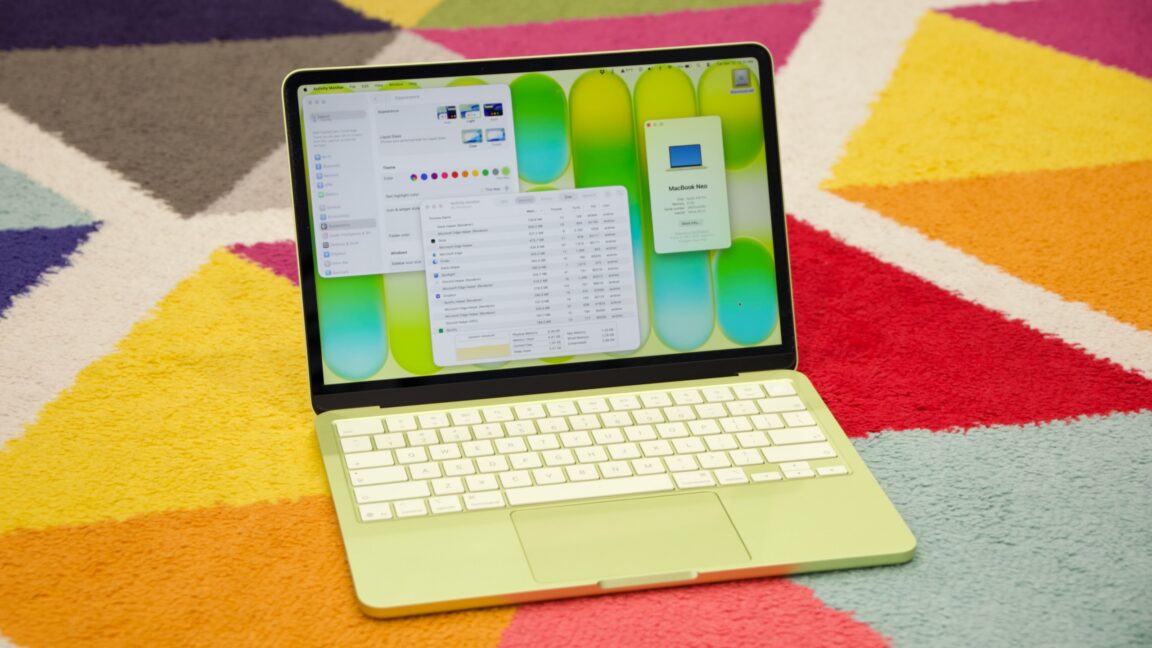
Hardware cost spikes directly affect the ROI of local AI development environments.
30-Second TL;DR
What Changed
Apple increased prices for select Mac models effective immediately
Why It Matters
Rising hardware costs for high-memory configurations directly impact the total cost of ownership for AI developers who rely on local compute for model fine-tuning and inference.
What To Do Next
Evaluate the cost-benefit of local vs. cloud inference if your development hardware costs continue to rise due to memory pricing.
Key Points
- •Apple increased prices for select Mac models effective immediately
- •Rising memory component costs are cited as the primary driver
- •Price adjustments result in increases of several hundred dollars per unit
Deep Insight
AI-generated analysis for this event — not the original article.
Enhanced Key Takeaways
- •The price adjustments specifically target high-capacity unified memory upgrades, with 32GB and 64GB configurations seeing the steepest percentage increases.
- •Industry analysts attribute the memory cost surge to a global supply shortage of advanced DRAM and HBM (High Bandwidth Memory) driven by the insatiable demand for AI server infrastructure.
- •Apple's move follows a broader trend of semiconductor manufacturers prioritizing AI-focused chips over consumer-grade memory modules, tightening supply chains for PC OEMs.
- •The price hike coincides with the rollout of the M5-series chip architecture, which utilizes a more complex, integrated memory controller design that is more sensitive to component yield rates.
- •Retailers and authorized resellers have been notified that existing inventory will maintain legacy pricing until stock is depleted, creating a temporary price disparity in the market.
Competitor Analysis
- Apple (M5 Mac)
- Unified Memory (SoC)
- Dell (XPS/Precision)
- Discrete LPDDR5x/CAMM2
- Microsoft (Surface)
- Discrete LPDDR5x
- Apple (M5 Mac)
- Premium/Fixed
- Dell (XPS/Precision)
- Tiered/Competitive
- Microsoft (Surface)
- Mid-to-High/Fixed
- Apple (M5 Mac)
- High (Neural Engine)
- Dell (XPS/Precision)
- Variable (NPU/dGPU)
- Microsoft (Surface)
- High (NPU focus)
| Feature/Metric | Apple (M5 Mac) | Dell (XPS/Precision) | Microsoft (Surface) |
|---|---|---|---|
| Memory Architecture | Unified Memory (SoC) | Discrete LPDDR5x/CAMM2 | Discrete LPDDR5x |
| Pricing Strategy | Premium/Fixed | Tiered/Competitive | Mid-to-High/Fixed |
| AI Performance | High (Neural Engine) | Variable (NPU/dGPU) | High (NPU focus) |
Technical Deep Dive
- Apple's unified memory architecture integrates DRAM directly onto the M5 package, requiring high-speed LPDDR5X or LPDDR6 modules that are currently experiencing supply constraints.
- The M5 chip utilizes a 3nm process node, which increases the complexity of memory integration and makes the final product more susceptible to cost fluctuations in the semiconductor supply chain.
- The price increase is specifically linked to the 'cost-per-gigabyte' of the high-bandwidth memory interface required to support the M5's increased neural processing throughput.
Future ImplicationsAI analysis grounded in cited sources
Timeline
- 2023-01Apple introduces M2 Pro and M2 Max chips with expanded unified memory support.
- 2024-03Apple releases M3-series chips, further optimizing memory bandwidth for AI tasks.
- 2025-06Global DRAM prices begin a steady climb due to increased AI data center demand.
- 2026-05Apple launches M5-series silicon, marking the start of the current hardware cycle.
Event Coverage
Weekly AI Recap
Read this week's curated digest of top AI events →
AI-curated news aggregator. All content rights belong to original publishers.
Original source: Ars Technica ↗
This is a summary, not the original. Read the source, or get the weekly briefing.
The weekly digest
One email a week. Unsubscribe anytime.