Apple Increases Prices Across Select Hardware Portfolio
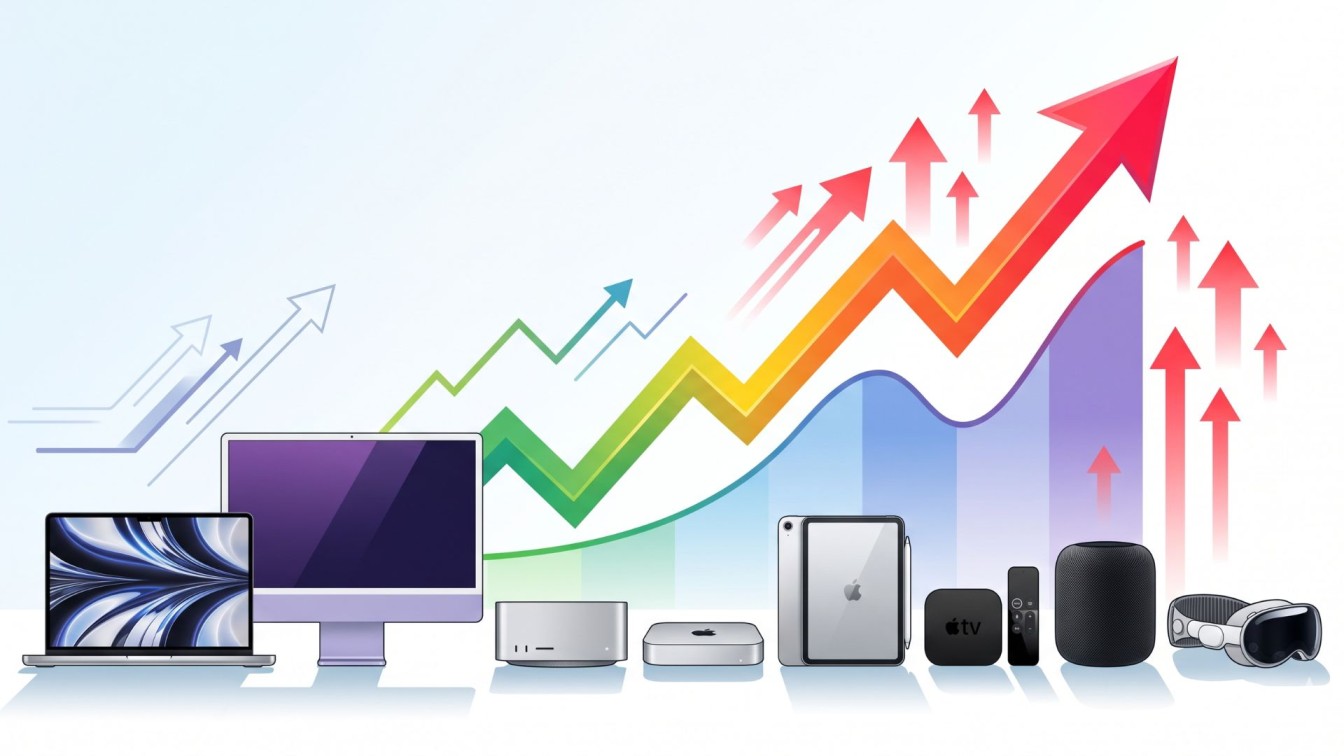
Understand how Apple's hardware price hikes might affect your budget for local AI development and testing rigs.
30-Second TL;DR
What Changed
Apple officially raised prices on a selection of its hardware lineup.
Why It Matters
Hardware price adjustments can impact the total cost of ownership for AI development environments that rely on Apple Silicon for local model inference and testing.
What To Do Next
Review your hardware procurement budget for upcoming local LLM testing or edge deployment projects involving Apple Silicon devices.
Key Points
- •Apple officially raised prices on a selection of its hardware lineup.
- •The report provides a breakdown of affected versus unaffected devices.
- •Analysis covers the reasoning behind the pricing strategy and potential international market implications.
Deep Insight
AI-generated analysis for this event — not the original article.
Enhanced Key Takeaways
- •The price adjustments are primarily attributed to rising costs in semiconductor fabrication and the integration of advanced AI-specific neural engines in the latest hardware iterations.
- •Emerging markets, particularly in Sub-Saharan Africa and parts of Southeast Asia, are seeing the most significant percentage increases due to local currency devaluation against the US Dollar.
- •Apple has shifted its supply chain strategy to prioritize 'Pro' and 'Ultra' tier devices, leading to reduced inventory availability for entry-level models which are now subject to higher margins.
- •The pricing update coincides with Apple's transition to a new proprietary 2nm manufacturing process, which has increased the bill of materials (BOM) for the latest flagship devices.
- •Retail partners have been notified that the price hikes are mandatory, effectively ending previous promotional discounting windows for the affected hardware categories.
Competitor Analysis
- Apple (Flagship)
- $1,199 (Increased)
- Samsung (Flagship)
- $1,099
- Google (Flagship)
- $999
- Apple (Flagship)
- A-Series (2nm)
- Samsung (Flagship)
- Snapdragon 8 Gen Series
- Google (Flagship)
- Tensor G-Series
- Apple (Flagship)
- On-Device Neural Engine
- Samsung (Flagship)
- Hybrid Cloud/On-Device
- Google (Flagship)
- Cloud-First AI
- Apple (Flagship)
- 6-7 Years
- Samsung (Flagship)
- 7 Years
- Google (Flagship)
- 7 Years
| Feature/Metric | Apple (Flagship) | Samsung (Flagship) | Google (Flagship) |
|---|---|---|---|
| Starting Price | $1,199 (Increased) | $1,099 | $999 |
| Processor | A-Series (2nm) | Snapdragon 8 Gen Series | Tensor G-Series |
| AI Integration | On-Device Neural Engine | Hybrid Cloud/On-Device | Cloud-First AI |
| OS Support | 6-7 Years | 7 Years | 7 Years |
Technical Deep Dive
- Transition to 2nm process node architecture significantly increases transistor density, allowing for higher performance-per-watt but raising wafer costs by approximately 15-20%.
- Enhanced Neural Engine architecture now supports larger parameter models locally, requiring higher-bandwidth LPDDR6 memory modules.
- Implementation of advanced thermal management systems, including vapor chamber cooling, has been standardized across the updated hardware portfolio to support sustained AI workloads.
Future ImplicationsAI analysis grounded in cited sources
Timeline
- 2024-09Apple introduces the first wave of hardware integrated with advanced on-device AI capabilities.
- 2025-03Apple announces a strategic shift to 2nm chip manufacturing partnerships to secure future supply.
- 2025-11Initial reports emerge regarding supply chain cost pressures due to raw material inflation.
- 2026-04Apple reports a narrowing of hardware margins in its Q2 earnings call, signaling potential price adjustments.
Event Coverage
Weekly AI Recap
Read this week's curated digest of top AI events →
AI-curated news aggregator. All content rights belong to original publishers.
Original source: TechCabal ↗
This is a summary, not the original. Read the source, or get the weekly briefing.
The weekly digest
One email a week. Unsubscribe anytime.