Anthropic Recruits Google Chip Pioneer for Hardware Push
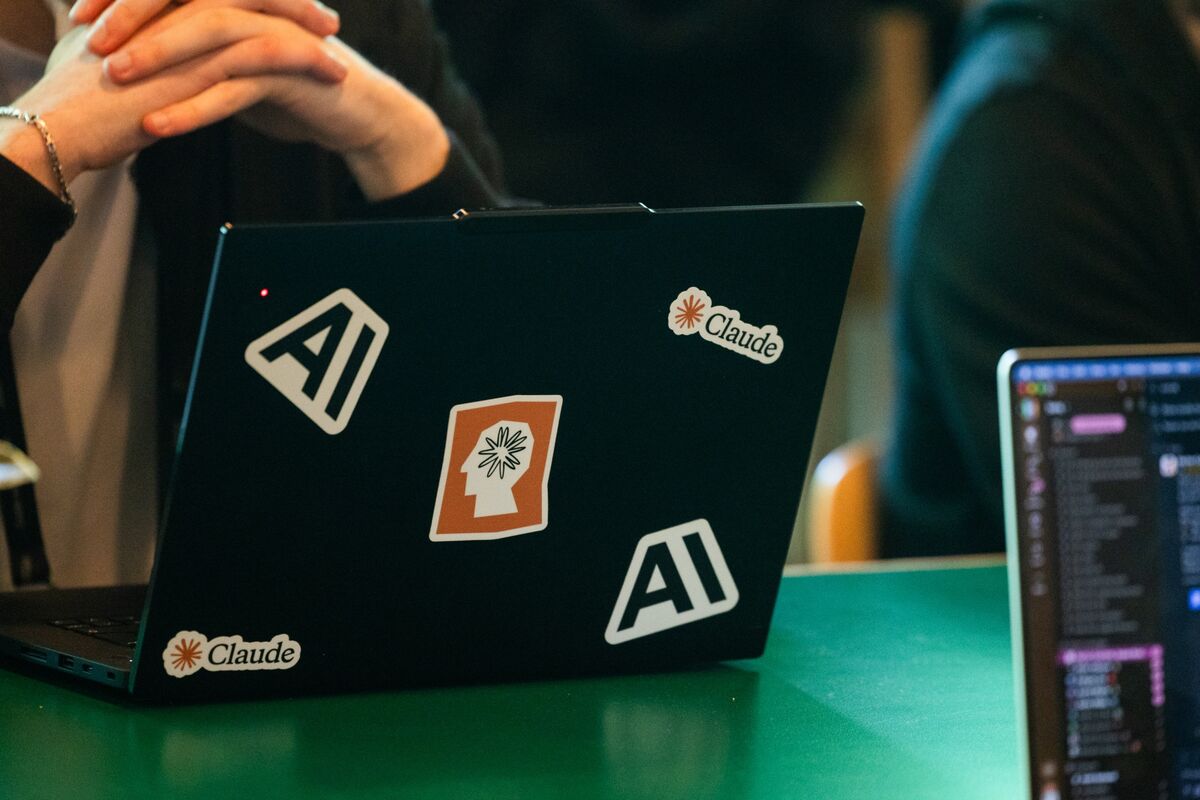
💡Anthropic’s chip hire could change inference economics, supply resilience, and the AI hardware competitive landscape.
⚡ 30-Second TL;DR
What Changed
Amir Salek has joined Anthropic from Google.
Why It Matters
Custom silicon could give Anthropic more control over inference costs, performance, and supply availability if the effort advances. It also reflects intensifying vertical integration among leading AI labs and may reshape their relationships with chip suppliers and cloud providers.
What To Do Next
Profile your Anthropic API inference workloads and track latency, token cost, and accelerator dependence so future hardware changes can be evaluated against a clear baseline.
Key Points
- •Amir Salek has joined Anthropic from Google.
- •Salek helped establish Google’s custom chip program.
- •Anthropic is laying groundwork for developing its own semiconductors.
🧠 Deep Insight
Background and context from public sources — not the original article. 7 sources cited.
🔑 Enhanced Key Takeaways
- •Anthropic is actively recruiting for a specialized semiconductor team with compensation packages ranging from $320,000 to $485,000 for roles in ASIC, FPGA, and physical design.
- •The company is exploring the use of its own AI models and reinforcement learning systems to automate critical phases of the chip development cycle, specifically RTL generation and verification.
- •Anthropic has reportedly engaged in preliminary discussions with Samsung as a potential manufacturing partner for its proprietary silicon.
- •The hardware initiative is supported by significant financial growth, with the company reaching an annualized revenue run rate exceeding $65 billion as of Q2 2026.
- •Anthropic is evaluating a potential $6 billion acquisition of the chip optimization startup Dcard to fast-track its internal hardware development capabilities.
📊 Competitor Analysis▸ Show
| Feature | Anthropic (In-House) | Google (TPU) | OpenAI (Projected) |
|---|---|---|---|
| Strategy | Hybrid/Diversified | Vertical Integration | Partnership/Custom Silicon |
| Primary Goal | Cost/Efficiency Optimization | Ecosystem Dominance | Supply Chain Security |
| Manufacturing | Potential Samsung | In-house/TSMC | Undisclosed |
🛠️ Technical Deep Dive
- Focus on ASIC and FPGA architecture to optimize inference performance for large-scale Claude model deployments.
- Implementation of AI-driven design automation to accelerate RTL (Register Transfer Level) generation.
- Integration of reinforcement learning workflows to optimize physical design and verification processes.
- Designed for a heterogeneous computing environment that maintains compatibility with existing AWS, Google, and NVIDIA infrastructure.
🔮 Future ImplicationsAI analysis grounded in cited sources
⏳ Timeline
📎 Sources (7)
Factual claims are grounded in the sources below. Forward-looking analysis is AI-generated interpretation.
Weekly AI Recap
Read this week's curated digest of top AI events →
👉Related Updates

AI-curated news aggregator. All content rights belong to original publishers.
Original source: Bloomberg Technology ↗
This is a summary, not the original. Read the source, or get the weekly briefing.
Weekly AI briefing
One email a week. Unsubscribe anytime.