Anthropic Connects Claude to Robots and Lab Hardware
💡Claude is moving toward robots and lab equipment—potentially reshaping how developers build embodied AI systems.
⚡ 30-Second TL;DR
What Changed
Anthropic introduced a software standard for AI assistants and hardware.
Why It Matters
A common integration standard could reduce the engineering effort required to connect frontier models with specialized equipment. For AI builders, it signals growing competition to establish the interface layer for embodied and industrial AI.
What To Do Next
Review Anthropic’s new hardware-integration standard and prototype a Claude workflow against one robot or laboratory instrument.
Key Points
- •Anthropic introduced a software standard for AI assistants and hardware.
- •The standard targets robots plus scientific and manufacturing tools.
- •Claude is positioned to interact with physical equipment more effectively.
🧠 Deep Insight
Background and context from public sources — not the original article. 6 sources cited.
🔑 Enhanced Key Takeaways
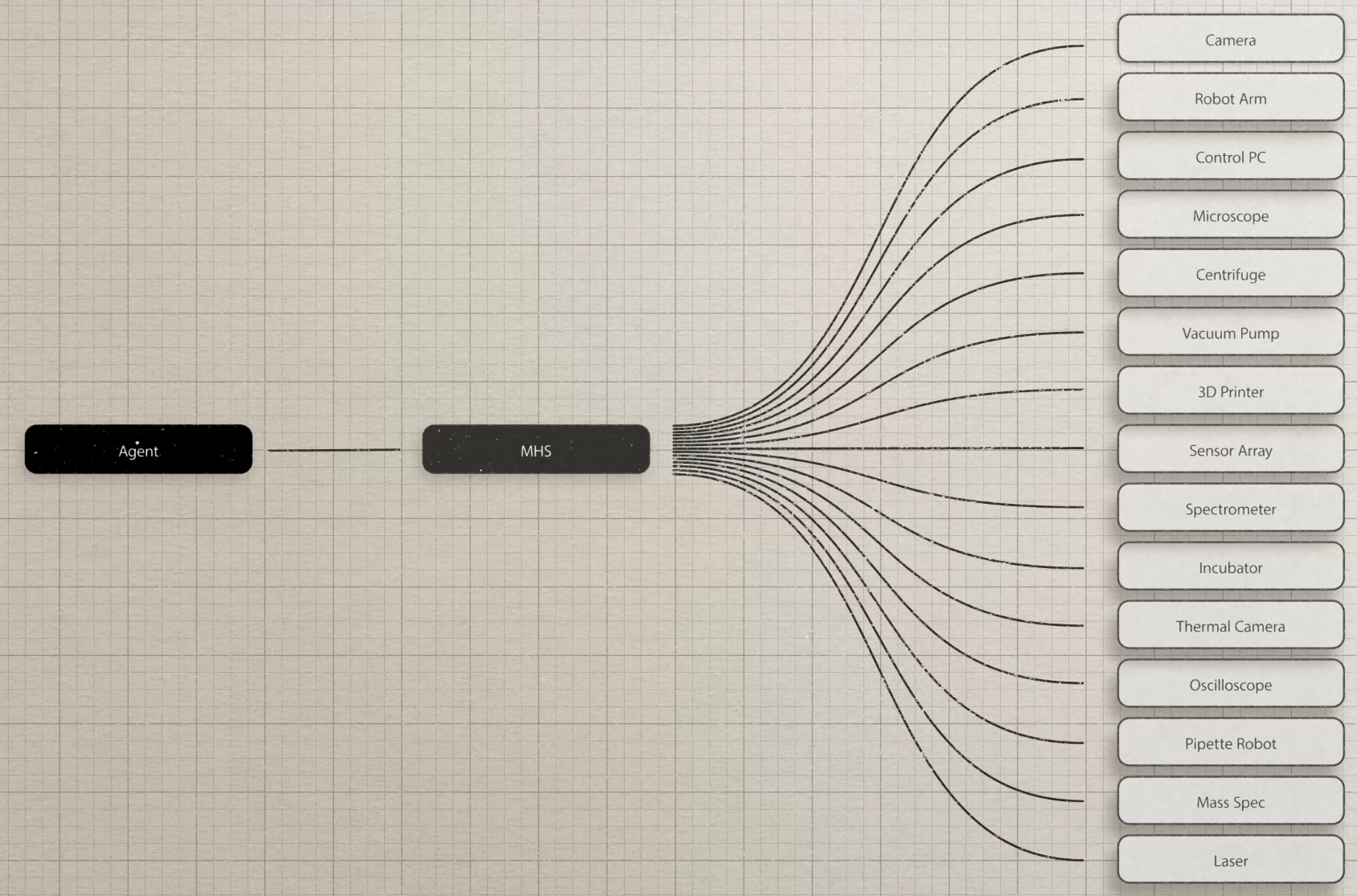
- •The initiative is branded as the Model Hardware Standard (MHS), functioning as a universal connector similar to USB-C for programmable hardware interfaces.
- •MHS was developed through a collaborative effort between Anthropic and the HHMI Janelia Research Campus to address hardware interoperability issues.
- •The standard is explicitly model-agnostic, allowing integration with any AI agent that supports standard protocols like the Model Context Protocol.
- •Early implementation by partner QuEra demonstrated a significant performance increase, raising the success rate of quantum computer laser relock tasks from 58% to 99.3%.
- •The project is currently in a research preview phase with major industry partners including Automata, Tecan, Universal Robots, and QIAGEN, with plans to eventually open-source the standard.
📊 Competitor Analysis▸ Show
| Feature | Anthropic (MHS) | OpenAI (Agentic Frameworks) | Amazon (Bedrock/Robotics) |
|---|---|---|---|
| Primary Focus | Universal hardware interoperability | General-purpose agentic reasoning | Cloud-integrated industrial automation |
| Architecture | Model-agnostic standard | Proprietary agent ecosystems | AWS-native hardware libraries |
| Status | Research Preview | Active Development | Commercial Deployment |
🛠️ Technical Deep Dive
- MHS functions as a standardized software driver layer that abstracts hardware-specific commands into a unified interface for AI agents.
- The architecture leverages the Model Context Protocol (MCP) to facilitate communication between the AI model and physical equipment.
- Designed to support diverse hardware categories including robotic arms, automated liquid handlers, and precision scientific instruments like microscopes.
- Implements a safety-first evaluation framework to manage autonomous control of physical hardware before public open-source release.
🔮 Future ImplicationsAI analysis grounded in cited sources
⏳ Timeline
📎 Sources (6)
Factual claims are grounded in the sources below. Forward-looking analysis is AI-generated interpretation.
Weekly AI Recap
Read this week's curated digest of top AI events →
👉Related Updates

AI-curated news aggregator. All content rights belong to original publishers.
Original source: Bloomberg Technology ↗
This is a summary, not the original. Read the source, or get the weekly briefing.
Weekly AI briefing
One email a week. Unsubscribe anytime.