Anthropic Standardizes AI Control of Physical Devices
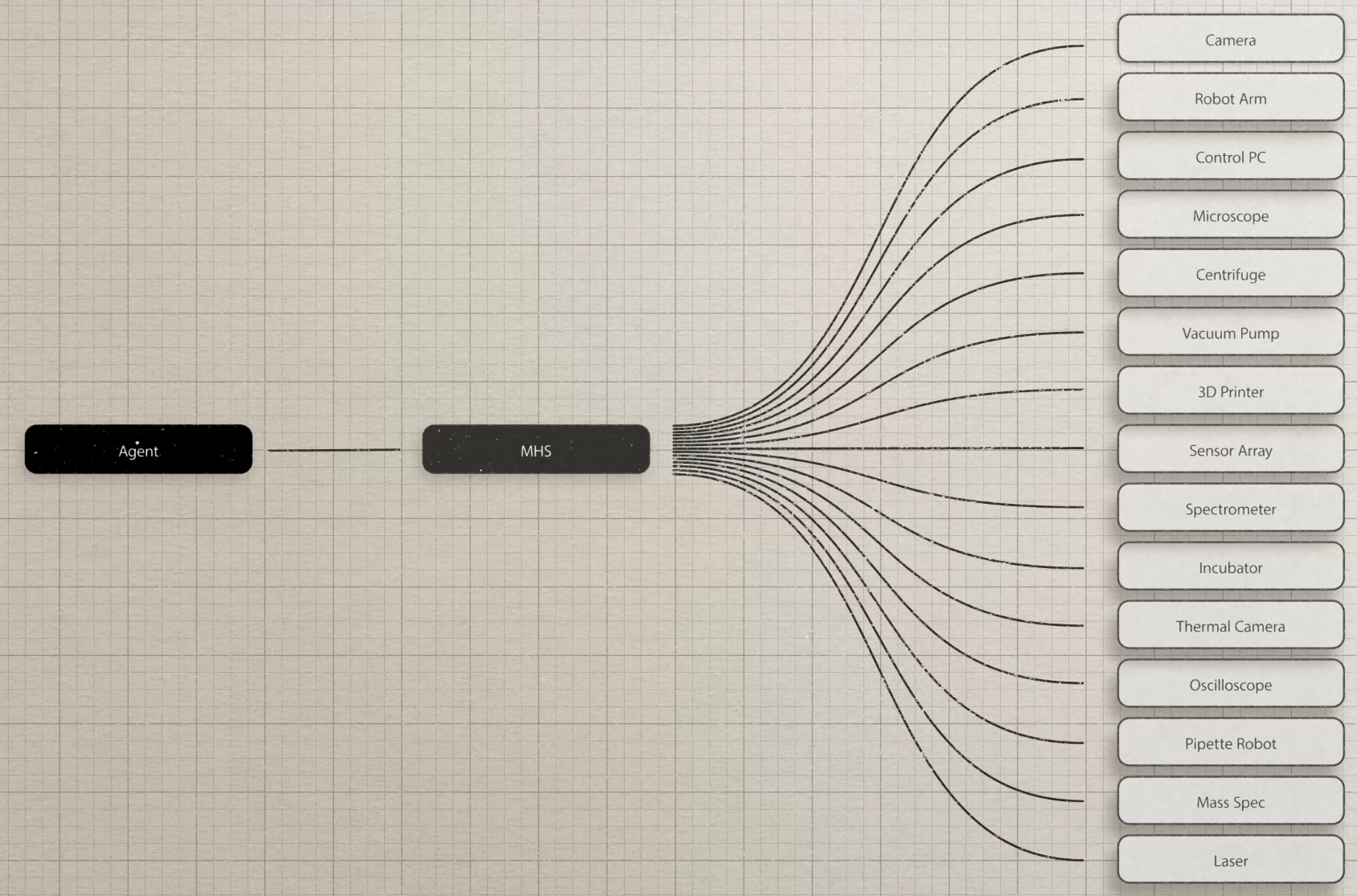
💡A new device interface could simplify how AI agents operate in the physical world.
⚡ 30-Second TL;DR
What Changed
Anthropic is introducing a standardized interface for AI agents to interact with physical hardware.
Why It Matters
A common hardware interface could reduce integration work for developers building embodied AI and agentic systems. Its practical impact will depend on adoption by device manufacturers and the breadth of supported hardware.
What To Do Next
Monitor Anthropic's hardware-standard documentation and prototype a small device adapter once the interface specification is publicly available.
Key Points
- •Anthropic is introducing a standardized interface for AI agents to interact with physical hardware.
- •The driver interface is intended to make devices interoperable with AI systems.
- •Device-to-device communication could support more coordinated physical-world agent workflows.
🧠 Deep Insight
Background and context from public sources — not the original article. 9 sources cited.
🔑 Enhanced Key Takeaways
- •The Model Hardware Standard (MHS) is designed to be model-agnostic, allowing integration with any agent harness that supports the Model Context Protocol, rather than being exclusive to Claude.
- •Development was conducted in partnership with the HHMI Janelia Research Campus to solve vendor-specific interoperability bottlenecks in scientific laboratory equipment.
- •MHS aims to reduce hardware integration timelines from months to hours by providing a universal driver interface that eliminates the need for custom, device-specific software.
- •Initial industry adoption includes major robotics and life science firms such as Automata, Tecan, Universal Robots, Doosan Robotics, and QIAGEN.
- •Anthropic is currently implementing safety guardrails and access controls within the research preview to prevent unauthorized or unsafe AI manipulation of connected physical machinery.
📊 Competitor Analysis▸ Show
| Feature | Anthropic MHS | OpenAI (Agentic Frameworks) | Google (Robotics/RT-2) |
|---|---|---|---|
| Primary Focus | Universal hardware driver standard | General purpose agent reasoning | Vision-language-action models |
| Interoperability | Open protocol (MHS) | Proprietary/API-based | Ecosystem-specific (Google Cloud/Robotics) |
| Hardware Scope | Lab/Industrial/Quantum | Software/Web-based | Research/Proprietary robotics |
🛠️ Technical Deep Dive
- MHS functions as a universal connector layer analogous to USB-C for software-to-hardware communication.
- Utilizes a standardized software driver architecture that translates OS-level commands into hardware-specific protocols.
- Built on top of the Model Context Protocol (MCP) to ensure discoverability and standardized data exchange.
- Supports direct integration with complex machinery including liquid handlers, robotic arms, and quantum computing hardware.
🔮 Future ImplicationsAI analysis grounded in cited sources
⏳ Timeline
📎 Sources (9)
Factual claims are grounded in the sources below. Forward-looking analysis is AI-generated interpretation.
Weekly AI Recap
Read this week's curated digest of top AI events →
👉Related Updates
AI-curated news aggregator. All content rights belong to original publishers.
Original source: Ars Technica ↗
This is a summary, not the original. Read the source, or get the weekly briefing.
Weekly AI briefing
One email a week. Unsubscribe anytime.