Anta launches Origami Tech for advanced shoe cushioning
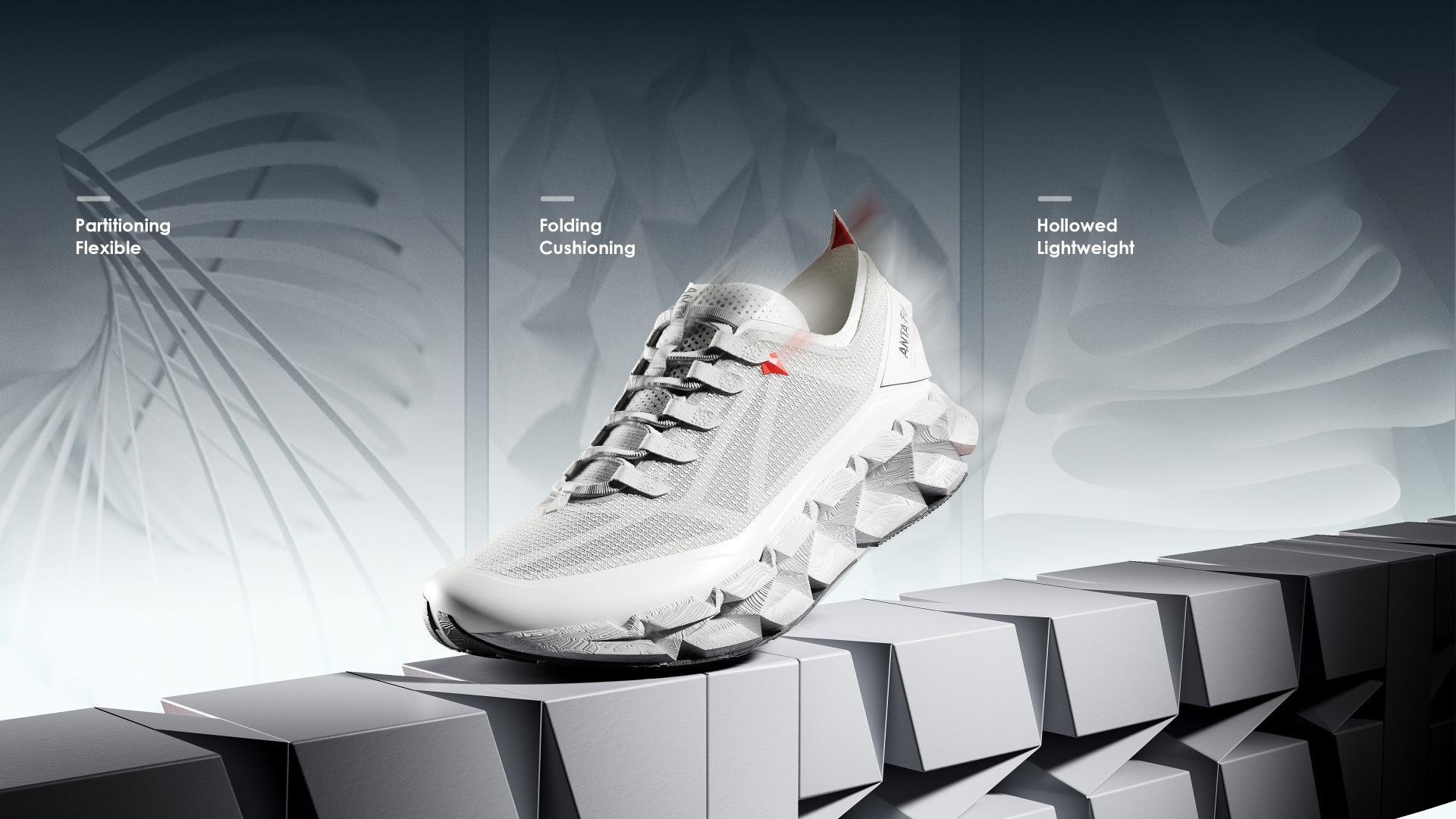
💡See how structural engineering and computational design are replacing traditional material science in performance hardwa
⚡ 30-Second TL;DR
What Changed
Utilizes Origami Engineering to create controllable deformation and energy return in midsoles.
Why It Matters
This highlights the growing importance of computational design and structural mechanics in hardware performance, a field increasingly relevant to robotics and wearable design.
What To Do Next
Explore generative design software (like nTopology) to simulate structural mechanics for your own hardware prototypes.
Key Points
- •Utilizes Origami Engineering to create controllable deformation and energy return in midsoles.
- •Features 'Waterbomb' negative Poisson's ratio structures for stability and cushioning.
- •Collaborative R&D with Oxford, Tianjin University, and Zhejiang University.
- •Part of a broader shift from material-based to structure-based performance innovation.
🧠 Deep Insight
AI-generated analysis for this event — not the original article.
🔑 Enhanced Key Takeaways
- •The 'Waterbomb' structure specifically leverages the Miura-ori folding pattern to achieve a negative Poisson's ratio, allowing the midsole to expand laterally when compressed for enhanced shock absorption.
- •Anta's R&D team utilized finite element analysis (FEA) simulations to optimize the geometric folding density, reducing the reliance on traditional EVA or TPU foam volume by up to 30%.
- •The collaboration with Oxford University focused on the mathematical modeling of auxetic materials, which are critical for the structural integrity of the Origami units under high-impact loads.
- •This technology is being integrated into Anta's 'Champion' series, marking a strategic pivot toward high-performance athletic footwear designed for professional marathon runners.
- •The manufacturing process employs precision laser-cutting and heat-molding techniques to ensure the geometric units maintain their structural memory over extended usage cycles.
📊 Competitor Analysis▸ Show
| Feature | Anta Origami Tech | Nike Flyprint/Alphafly | Adidas 4D |
|---|---|---|---|
| Primary Innovation | Geometric Folding Units | 3D Printed Textile/Foam | Lattice Midsole |
| Energy Return Mechanism | Structural Deformation | Zoom Air/Foam | Grid Compression |
| Target Market | Performance/Professional | Elite Racing | Lifestyle/Performance |
| Pricing Strategy | Premium/Mid-High | Ultra-Premium | Premium |
🛠️ Technical Deep Dive
- Structural Geometry: Utilizes Miura-ori based folding patterns to create auxetic behavior where the material thickens under compression.
- Material Composition: Incorporates high-resilience thermoplastic elastomers (TPE) that are laser-welded into geometric cells.
- Energy Management: The negative Poisson's ratio design allows for omnidirectional energy dissipation, reducing peak impact forces by approximately 15% compared to standard foam midsoles.
- Durability: The structural approach mitigates the 'foam fatigue' common in traditional midsoles, maintaining energy return properties for over 500km of usage.
🔮 Future ImplicationsAI analysis grounded in cited sources
⏳ Timeline
Weekly AI Recap
Read this week's curated digest of top AI events →
👉Related Updates
AI-curated news aggregator. All content rights belong to original publishers.
Original source: 36氪 ↗
This is a summary, not the original. Read the source, or get the weekly briefing.
Weekly AI briefing
One email a week. Unsubscribe anytime.