Andrew Ng’s New Rules for Agentic Engineering
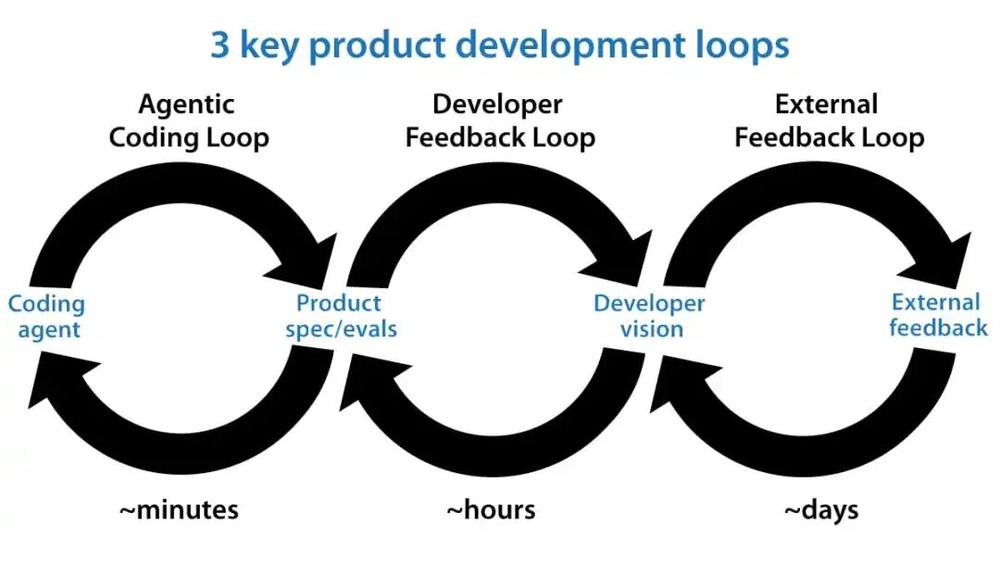
💡Learn why the next engineering advantage is iterative agent workflows—not writing more code.
⚡ 30-Second TL;DR
What Changed
Agent workflows should repeatedly plan, search, generate, evaluate, and revise instead of relying on one-shot model outputs.
Why It Matters
The main implication is that engineering advantage is shifting from writing code to designing feedback loops, evaluating models, and controlling system architecture. Companies may need to reorganize teams around rapid experimentation while protecting stable, high-risk production components.
What To Do Next
Prototype one agent workflow with a sandbox, an evaluation loop, and model abstraction so you can benchmark and switch providers within two days.
Key Points
- •Agent workflows should repeatedly plan, search, generate, evaluate, and revise instead of relying on one-shot model outputs.
- •Andrew Ng estimates AI-assisted production development gains of 30–50%, while prototypes may see 10x or greater acceleration.
- •A new orchestration layer, sometimes called Graph Engineering, is emerging between applications, foundation models, and cloud services.
- •Model switching costs are falling, with teams potentially evaluating and migrating to a new model within two or three days.
- •Teams should separate sandboxed rapid prototyping from production reliability and security reviews.
🧠 Deep Insight
Background and context from public sources — not the original article. 12 sources cited.
🔑 Enhanced Key Takeaways
- •Andrew Ng formalized four specific agentic design patterns: Reflection, Tool Use, Planning, and Multi-Agent Collaboration, which serve as the architectural blueprint for modern agentic systems.
- •The industry is transitioning from 'loop engineering'—simple iterative cycles—to 'graph engineering,' where agents are structured as nodes and edges in a state machine to enhance reliability and state management.
- •Ng introduced the 'Context Hub' and 'Code Dream' tools at AI Dev 26 to mitigate hallucinations by providing agents with real-time documentation and interactive coding environments.
- •The 'AI Engineering Skills Map' released by DeepLearning.AI identifies three core pillars for the modern developer: building/deploying AI apps, software engineering fundamentals, and proficiency with coding agents.
- •Ng explicitly rejects the 'don't learn to code' narrative, arguing that AI lowers the barrier to entry, which will historically lead to an increase in the total number of software creators rather than a decline.
🛠️ Technical Deep Dive
- Agentic Architecture: Moves from linear prompt chains to state-machine-based graph structures where nodes represent specific agent tasks and edges represent state transitions.
- Reflection Pattern: Implementation of a secondary LLM pass or self-critique loop to evaluate and refine outputs before final delivery.
- Context Hub: A retrieval-augmented generation (RAG) integration layer designed to inject live documentation into agent workflows to reduce hallucination rates.
- Multi-Agent Collaboration: Orchestration of specialized agents where one agent acts as a planner/manager and others act as workers with specific tool-use capabilities.
🔮 Future ImplicationsAI analysis grounded in cited sources
⏳ Timeline
📎 Sources (12)
Factual claims are grounded in the sources below. Forward-looking analysis is AI-generated interpretation.
Weekly AI Recap
Read this week's curated digest of top AI events →
👉Related Updates


AI-curated news aggregator. All content rights belong to original publishers.
Original source: 虎嗅 ↗
This is a summary, not the original. Read the source, or get the weekly briefing.
Weekly AI briefing
One email a week. Unsubscribe anytime.