Amazon Satellite Network Reaches Key Milestone for Starlink Rivalry
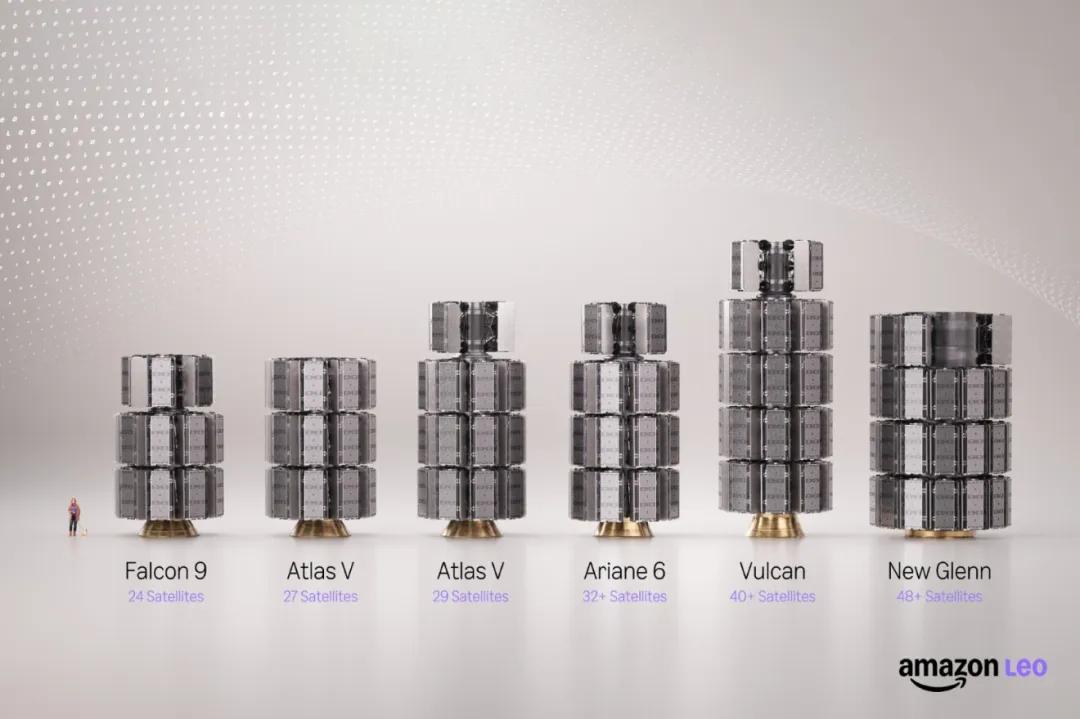
💡New global high-speed connectivity infrastructure; potential game-changer for edge AI and distributed computing.
⚡ 30-Second TL;DR
What Changed
Amazon Leo constellation now has 396 satellites in orbit
Why It Matters
Increased competition in the satellite internet market could lower latency and costs for edge computing and remote AI data processing. This infrastructure is vital for global AI deployment in disconnected regions.
What To Do Next
Monitor Amazon's satellite API availability for future edge-AI deployment scenarios in remote or underserved regions.
Key Points
- •Amazon Leo constellation now has 396 satellites in orbit
- •Project aims to provide global high-speed satellite internet
- •Direct competition with SpaceX Starlink is now technically feasible
🧠 Deep Insight
AI-generated analysis for this event — not the original article.
🔑 Enhanced Key Takeaways
- •Amazon's Project Kuiper utilizes a multi-layered constellation architecture designed to operate at three distinct orbital altitudes: 590 km, 610 km, and 630 km.
- •The project has secured launch contracts with multiple providers, including ABL Space Systems, ULA, and Blue Origin, to ensure redundancy and rapid deployment capacity.
- •Kuiper satellites incorporate proprietary 'Prometheus' chips, which are designed to handle high-throughput processing while maintaining low power consumption for satellite-to-ground communication.
- •Regulatory requirements from the FCC mandate that Amazon must deploy at least half of its authorized constellation—approximately 1,600 satellites—by mid-2026 to maintain its spectrum licenses.
- •Amazon is integrating Project Kuiper directly into its AWS infrastructure, allowing enterprise and government customers to leverage satellite connectivity for edge computing and private cloud applications.
📊 Competitor Analysis▸ Show
| Feature | Amazon Project Kuiper | SpaceX Starlink | Eutelsat OneWeb |
|---|---|---|---|
| Target Market | Enterprise/Gov/Consumer | Consumer/Enterprise | Enterprise/Gov |
| Orbital Altitude | 590-630 km | 550 km | 1,200 km |
| Integration | AWS Cloud Native | Standalone/Direct-to-Cell | Terrestrial Partner Network |
| Launch Vehicle | Vulcan, New Glenn, Ariane 6 | Falcon 9, Starship | Falcon 9, GSLV |
🛠️ Technical Deep Dive
- Satellite Bus: Modular design featuring electric propulsion systems using krypton or xenon gas for station keeping and de-orbiting.
- Antenna Technology: Phased-array antennas utilizing gallium nitride (GaN) components to improve signal efficiency and beam steering capabilities.
- Optical Inter-Satellite Links (OISLs): Laser communication terminals enabling high-speed data transfer between satellites in orbit, reducing reliance on ground stations.
- User Terminals: Three distinct terminal sizes including a compact 7-inch square model for residential use, a standard 11-inch model, and a high-performance 19-inch model for enterprise applications.
🔮 Future ImplicationsAI analysis grounded in cited sources
⏳ Timeline
Weekly AI Recap
Read this week's curated digest of top AI events →
👉Related Updates



AI-curated news aggregator. All content rights belong to original publishers.
Original source: cnBeta (Full RSS) ↗
This is a summary, not the original. Read the source, or get the weekly briefing.
Weekly AI briefing
One email a week. Unsubscribe anytime.