Amazon prepares to deploy Leo satellite broadband service
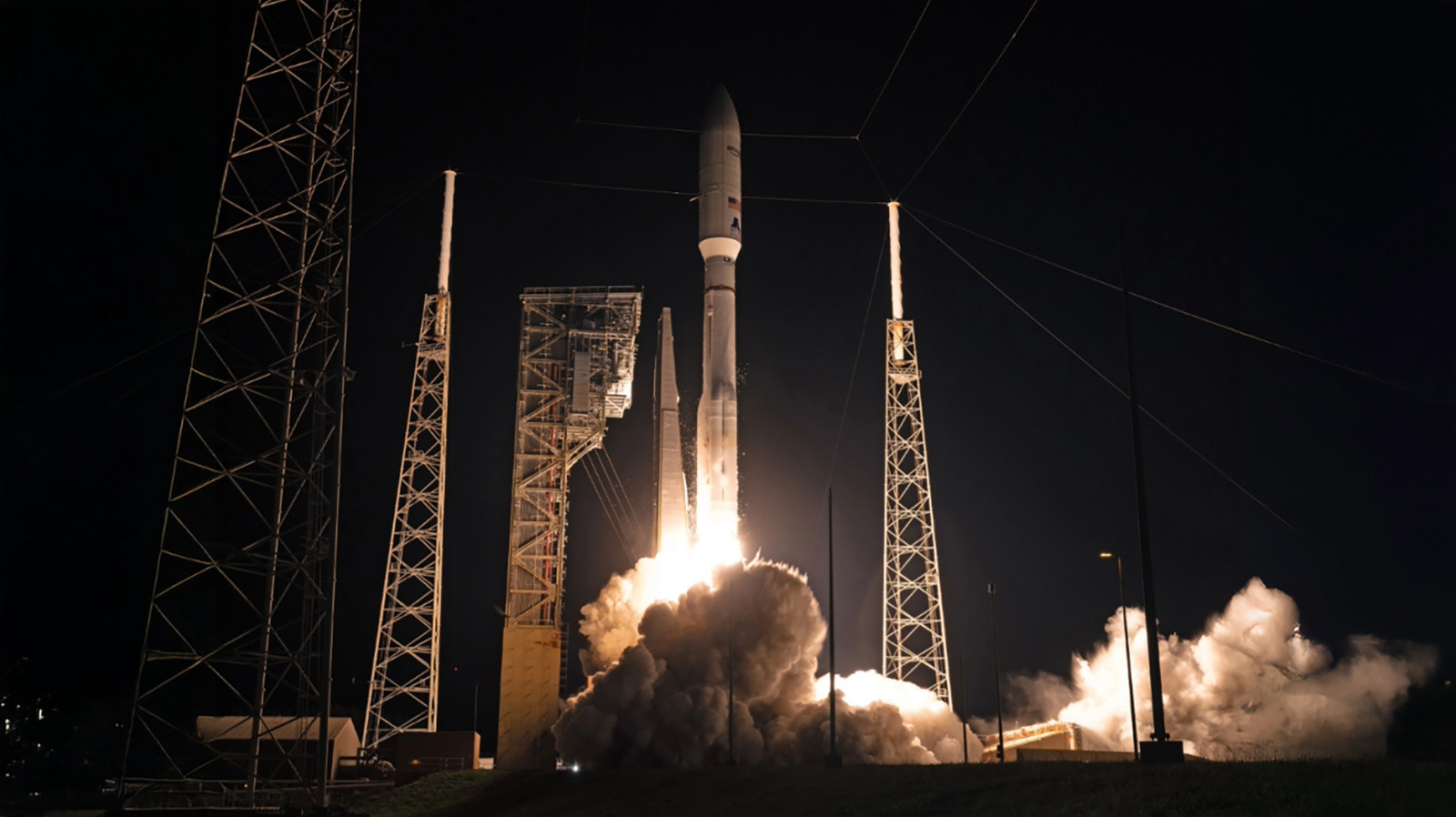
💡Amazon's satellite network expansion is critical infrastructure for future edge AI and global connectivity.
⚡ 30-Second TL;DR
What Changed
Amazon has sufficient satellites in orbit to initiate the Leo broadband service.
Why It Matters
The deployment of Leo provides a new infrastructure layer for edge computing and remote AI data processing. It could eventually enable low-latency AI inference in geographically isolated regions.
What To Do Next
Monitor Amazon's AWS Ground Station integration updates to see how Leo will interface with cloud-based AI workloads.
Key Points
- •Amazon has sufficient satellites in orbit to initiate the Leo broadband service.
- •The current constellation size is significantly smaller than the Starlink network.
- •This marks a critical step in Amazon's entry into the global satellite internet market.
🧠 Deep Insight
AI-generated analysis for this event — not the original article.
🔑 Enhanced Key Takeaways
- •Amazon's satellite project, officially branded as Project Kuiper, aims to deploy a total of 3,236 satellites into low Earth orbit to provide global broadband coverage.
- •The Federal Communications Commission (FCC) mandate requires Amazon to launch and operate at least half of its authorized constellation by July 2026 to maintain its spectrum licenses.
- •Project Kuiper utilizes custom-designed phased-array antennas and optical inter-satellite links (laser cross-links) to route data between satellites without needing a ground station in every location.
- •Amazon is leveraging its vertical integration capabilities by using its own heavy-lift launch vehicles, such as the Vulcan Centaur and New Glenn, alongside third-party providers to accelerate deployment.
- •The service is designed to integrate directly with Amazon Web Services (AWS) infrastructure, allowing enterprise and government customers to process data at the edge via satellite connectivity.
📊 Competitor Analysis▸ Show
| Feature | Amazon Project Kuiper | SpaceX Starlink | Eutelsat OneWeb |
|---|---|---|---|
| Constellation Size | ~3,236 (Planned) | ~6,000+ (Active) | ~600+ (Active) |
| Primary Market | Enterprise/AWS Integration | Consumer/Residential | Government/Enterprise |
| Launch Vehicle | Vulcan, New Glenn, Atlas V | Falcon 9, Starship | Falcon 9, GSLV |
| Orbit Altitude | ~590–630 km | ~550 km | ~1,200 km |
🛠️ Technical Deep Dive
- Satellite Bus: Modular design featuring electric Hall-effect thrusters for orbital maneuvering and station keeping.
- Frequency Bands: Operates primarily in the Ka-band for both user terminals and gateway links.
- User Terminals: Three distinct form factors including a compact 7-inch square antenna for residential use, a standard 11-inch model, and a high-performance 19-inch version for enterprise.
- Optical Inter-Satellite Links: Utilizes infrared laser terminals capable of 100 Gbps throughput between satellites to reduce latency and reliance on ground stations.
- Ground Infrastructure: Global network of teleports connected to AWS regions to ensure low-latency data backhaul.
🔮 Future ImplicationsAI analysis grounded in cited sources
⏳ Timeline
Weekly AI Recap
Read this week's curated digest of top AI events →
👉Related Updates

AI-curated news aggregator. All content rights belong to original publishers.
Original source: Engadget ↗
This is a summary, not the original. Read the source, or get the weekly briefing.
Weekly AI briefing
One email a week. Unsubscribe anytime.