Alibaba Unifies AI Office Tools in Qianwen Office Beta
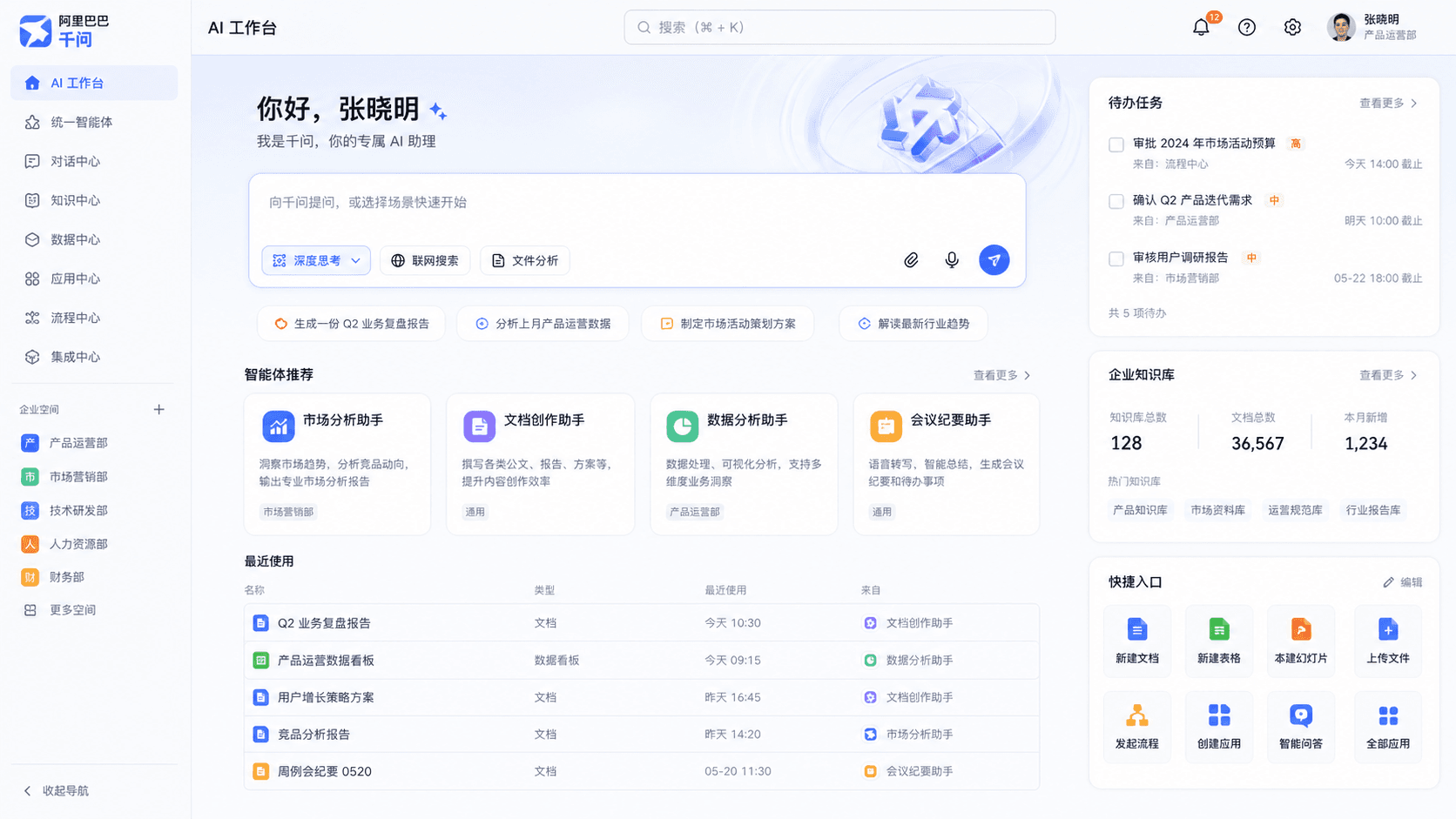
Alibaba is merging three AI work tools into one agent platform—an important signal for enterprise AI builders.
30-Second TL;DR
What Changed
Qianwen Office has entered public beta with multiple Alibaba AI workplace products integrated.
Why It Matters
For AI builders, the consolidation signals that standalone agents may be less competitive than platforms combining task execution, collaboration, and workflow context. It may also increase pressure to design interoperable agent capabilities rather than isolated point solutions.
What To Do Next
Evaluate Qianwen Office’s public beta by mapping your top three workplace-agent workflows against its available integrations and task execution capabilities.
Key Points
- •Qianwen Office has entered public beta with multiple Alibaba AI workplace products integrated.
- •The integration includes QoderWork, Wukong, and MuleRun.
- •Wukong’s standalone product cycle ended only four months after launch.
- •Alibaba is positioning a unified agent experience as competition in AI office software intensifies.
Deep Insight
AI-generated analysis for this event — not the original article.
Enhanced Key Takeaways
- •Qianwen Office leverages Alibaba's proprietary Qwen-Max large language model series to power its cross-application reasoning capabilities.
- •The integration utilizes a 'unified agent' architecture, allowing users to maintain context across document creation, coding, and data analysis tasks without switching interfaces.
- •Alibaba's strategy aligns with the 'AI-native' office suite trend, aiming to reduce the friction of fragmented toolsets that previously required separate subscriptions or logins.
- •The consolidation is part of a broader push by Alibaba Cloud to increase the adoption of its Model-as-a-Service (MaaS) platform among enterprise clients.
- •Early beta feedback indicates the platform emphasizes 'agentic workflows,' where the AI can proactively suggest document edits or code refactoring based on previous user interactions.
Competitor Analysis
- Qianwen Office
- Qwen-Max
- Microsoft 365 Copilot
- GPT-4o
- Google Workspace AI
- Gemini 1.5 Pro
- Qianwen Office
- Unified Agent
- Microsoft 365 Copilot
- Modular Copilots
- Google Workspace AI
- Integrated Workspace
- Qianwen Office
- Tiered/Enterprise
- Microsoft 365 Copilot
- Per-user Subscription
- Google Workspace AI
- Per-user Subscription
- Qianwen Office
- China/Global
- Microsoft 365 Copilot
- Global
- Google Workspace AI
- Global
| Feature | Qianwen Office | Microsoft 365 Copilot | Google Workspace AI |
|---|---|---|---|
| Core Model | Qwen-Max | GPT-4o | Gemini 1.5 Pro |
| Agent Architecture | Unified Agent | Modular Copilots | Integrated Workspace |
| Pricing Model | Tiered/Enterprise | Per-user Subscription | Per-user Subscription |
| Primary Market | China/Global | Global | Global |
Technical Deep Dive
- Architecture: Built on a multi-modal foundation model capable of processing text, code, and structured data simultaneously.
- Agent Framework: Employs a centralized orchestration layer that routes user intent to specialized sub-agents (formerly Wukong, QoderWork, MuleRun).
- Integration: Uses API-first design to allow seamless data flow between document editors, IDEs, and data visualization tools.
- Context Window: Optimized for long-context retrieval to maintain document history across the unified workspace.
Future ImplicationsAI analysis grounded in cited sources
Timeline
- 2023-04Alibaba Cloud officially launches the Qwen (Tongyi Qianwen) large language model.
- 2026-04Alibaba launches Wukong as a standalone AI workplace productivity tool.
- 2026-08Alibaba consolidates QoderWork, Wukong, and MuleRun into the unified Qianwen Office beta.
Weekly AI Recap
Read this week's curated digest of top AI events →
Related Updates



AI-curated news aggregator. All content rights belong to original publishers.
Original source: Pandaily ↗
This is a summary, not the original. Read the source, or get the weekly briefing.
The weekly digest
One email a week. Unsubscribe anytime.