Alibaba, Tencent, and Baidu Battle in Gaokao AI Guidance
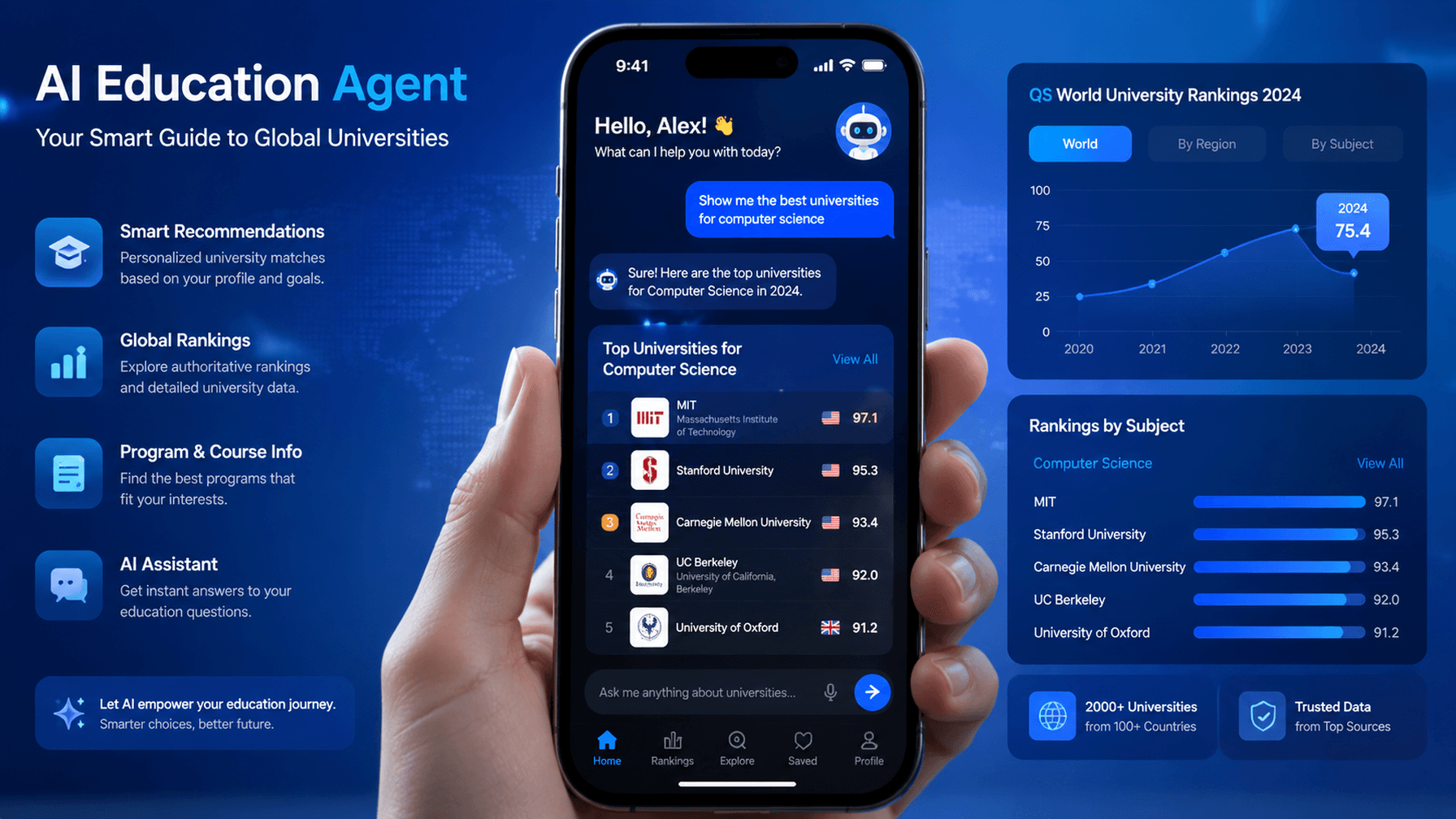
💡See how China's top tech firms are deploying vertical AI agents to solve complex, high-stakes decision problems.
⚡ 30-Second TL;DR
What Changed
Major Chinese tech firms are using Gaokao guidance as a high-visibility test case for AI agents.
Why It Matters
This competition accelerates the adoption of specialized AI agents in public services, forcing developers to improve the accuracy and reliability of LLMs in high-stakes environments.
What To Do Next
Analyze the RAG implementation strategies used by these companies to handle structured historical data for high-accuracy recommendation tasks.
Key Points
- •Major Chinese tech firms are using Gaokao guidance as a high-visibility test case for AI agents.
- •The integration of LLMs into educational consulting aims to solve complex, data-driven decision-making for students.
- •This battle signals a broader trend of big tech competing for dominance in specialized, real-world AI utility.
🧠 Deep Insight
Background and context from public sources — not the original article. 18 sources cited.
🔑 Enhanced Key Takeaways
- •The AI guidance services are provided free of charge, democratizing access to expert-level admissions counseling previously only available to a small, affluent segment of the population in China.
- •Beyond simple search tools, these AI agents offer comprehensive, full-cycle support, including managing application schedules, evaluating university/major suitability, and analyzing application writing, leveraging years of accumulated admissions data.
- •Baidu's approach specifically incorporates a three-tier human expert endorsement mechanism to enhance trust and mitigate AI hallucination, involving expert data in training, rule engine calibration, and manual review for high-risk cases.
- •Chinese tech firms, including Alibaba, Tencent, and Baidu, along with ByteDance and others, proactively restricted or suspended AI features like photo-based problem-solving during the actual Gaokao exam period in both 2025 and 2026, a measure now formalized as regulatory policy to ensure academic integrity.
- •This competition for Gaokao guidance is part of a broader strategic effort by tech giants to secure the AI consumer market and expand their agent ecosystems by integrating AI services into daily life platforms like WeChat and QQ Browser.
📊 Competitor Analysis▸ Show
| Company | Product/Service Name | Key Features | Pricing |
|---|---|---|---|
| Alibaba | Qianwen Gaokao Application Expert | Full-cycle anthropomorphic interaction, restructuring decision-making with calendars, reports, and proactive questioning; claims coverage of nearly 3,000 universities and over 2,000 undergraduate majors. | Free |
| Tencent | Yuanbao Gaokaotong | Positioned as an auxiliary consultant; integrated with QQ Browser and the WeChat ecosystem; accesses over a decade of admission databases. | Free |
| Baidu | AI Application Report (via Wenxin Assistant) | Gathers student info through multi-turn conversations; combines historical admission score lines with employment big data; features a three-tier human expert endorsement mechanism for accuracy and trust. | Free |
🛠️ Technical Deep Dive
- The AI agents are primarily based on Large Language Models (LLMs).
- Baidu's Wenxin Assistant utilizes multi-turn conversations to collect personalized student information.
- Baidu's system integrates multiple-dimensional databases, including historical admission score lines, university and major data, and job prospects of majors, to generate customized plans.
- To address AI model hallucination and build trust, Baidu employs a three-tier human expert endorsement mechanism: incorporating expert consultation data during model training, routing generated reports through a rule engine for calibration, and arranging manual review for high-risk reports.
- Tencent's Yuanbao Gaokaotong leverages access to over a decade of admission databases.
- Alibaba's Qianwen claims its data covers nearly 3,000 universities and over 2,000 undergraduate majors, verified through multi-source cross-referencing.
- The GAOKAO-Benchmark is an evaluation framework that uses Chinese Gaokao examination questions to assess LLMs' language comprehension and logical reasoning abilities, with GPT-4 showing competitive scores, particularly in objective questions.
- ERNIE 4.0 has been used in evaluating LLMs for grading short answers in Chinese tests, demonstrating strong Chinese language comprehension capabilities.
- GAOKAO-MM is a multimodal dataset based on Chinese Gaokao questions designed to evaluate the perception, understanding, knowledge, and reasoning capabilities of multimodal models, with GPT-4-Vision, Qwen-VL-Plus, and Gemini-Pro-Vision ranking among the top performers.
🔮 Future ImplicationsAI analysis grounded in cited sources
⏳ Timeline
📎 Sources (18)
Factual claims are grounded in the sources below. Forward-looking analysis is AI-generated interpretation.
Weekly AI Recap
Read this week's curated digest of top AI events →
👉Related Updates


AI-curated news aggregator. All content rights belong to original publishers.
Original source: Pandaily ↗
This is a summary, not the original. Read the source, or get the weekly briefing.
The weekly digest
One email a week. Unsubscribe anytime.