AI's Role in Business Resilience vs. Productivity
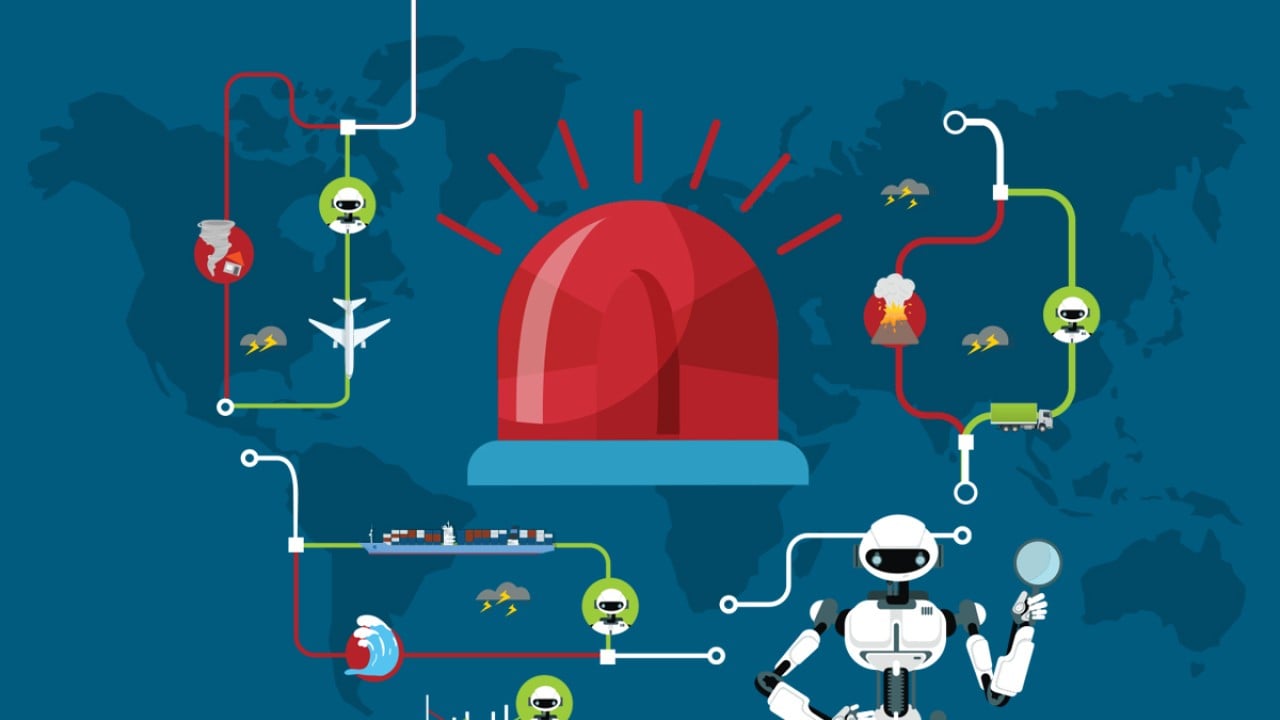
💡Learn why current AI strategies fail during market turbulence and how to build more resilient enterprise systems.
⚡ 30-Second TL;DR
What Changed
Corporate AI investment historically favors competitive advantage over resilience.
Why It Matters
This analysis highlights a strategic gap for AI practitioners to address: building robust, stress-tested AI systems that maintain performance during market volatility.
What To Do Next
Audit your current AI deployment pipelines to identify failure points during high-volatility data scenarios.
Key Points
- •Corporate AI investment historically favors competitive advantage over resilience.
- •AI is highly effective for productivity optimization in stable environments.
- •Businesses struggle to leverage AI for navigating unpredictable market turbulence.
🧠 Deep Insight
AI-generated analysis for this event — not the original article.
🔑 Enhanced Key Takeaways
- •Recent industry data indicates that 'resilience-focused' AI investments—such as supply chain stress testing and predictive risk modeling—currently account for less than 15% of total enterprise AI budgets.
- •The 'productivity paradox' in AI adoption is widening, as firms prioritizing short-term output gains often incur higher technical debt, which paradoxically reduces their long-term operational agility.
- •Emerging 'Agentic AI' frameworks are beginning to shift the paradigm by enabling autonomous decision-making in response to real-time market shocks, moving beyond static optimization models.
- •Regulatory frameworks, such as the EU AI Act and evolving US standards, are forcing companies to integrate 'human-in-the-loop' resilience protocols, which often conflict with pure productivity-driven automation goals.
- •Research shows that organizations utilizing AI for 'scenario planning' rather than just 'process automation' demonstrate a 22% higher recovery rate during unexpected market volatility.
🛠️ Technical Deep Dive
- Resilience-oriented AI architectures increasingly utilize Graph Neural Networks (GNNs) to map complex interdependencies in supply chains, allowing for better impact analysis during disruptions.
- Implementation of Reinforcement Learning from Human Feedback (RLHF) is being adapted for 'stress-testing' simulations, where models are trained to prioritize system stability over throughput in high-entropy environments.
- Digital Twin integration serves as the primary technical bridge, allowing AI models to simulate market turbulence in a sandbox environment before deploying policy changes to production systems.
🔮 Future ImplicationsAI analysis grounded in cited sources
⏳ Timeline
Weekly AI Recap
Read this week's curated digest of top AI events →
👉Related Updates
AI-curated news aggregator. All content rights belong to original publishers.
Original source: SCMP Technology ↗
This is a summary, not the original. Read the source, or get the weekly briefing.
Weekly AI briefing
One email a week. Unsubscribe anytime.