AI's next frontier: Training models on indoor environments

💡Understand the shift toward physical world training data that will define the next generation of robotics and AI.
⚡ 30-Second TL;DR
What Changed
AI training data is expanding beyond digital text to include physical indoor spaces.
Why It Matters
This trend will likely accelerate the development of home-assistant robots and advanced spatial reasoning models. Practitioners should prepare for a surge in demand for multimodal datasets capturing physical world interactions.
What To Do Next
Explore open-source embodied AI datasets like Habitat or Gibson to understand how to integrate spatial data into your training pipelines.
Key Points
- •AI training data is expanding beyond digital text to include physical indoor spaces.
- •The shift signals a focus on spatial intelligence and robotics.
- •Practical application involves mapping and interacting with home environments.
🧠 Deep Insight
Background and context from public sources — not the original article. 23 sources cited.
🔑 Enhanced Key Takeaways
- •The shift to training AI on indoor environments is driven by the necessity for AI systems to operate effectively in dynamic, unstructured real-world settings, moving beyond the limitations of static, traditional datasets.
- •Simulation platforms are critical for embodied AI training, offering scalable and safe environments for learning, though overcoming the 'sim-to-real' gap—where models trained in simulation fail to generalize to physical reality—remains a significant challenge.
- •The development of 'semantic maps' is crucial for complex embodied AI tasks, as these maps capture not just the geometry but also the meaning and context of objects and places within an environment, enabling advanced spatial reasoning and object search.
- •A growing area of focus is human-robot interaction and collaboration within indoor spaces, requiring AI to develop an understanding of human presence, intentions, and actions to interact safely and effectively.
- •Unexpected research findings, termed the 'indoor training effect,' suggest that training AI agents in less noisy, simulated environments can sometimes lead to superior performance when deployed in more uncertain and complex real-world conditions.
🛠️ Technical Deep Dive
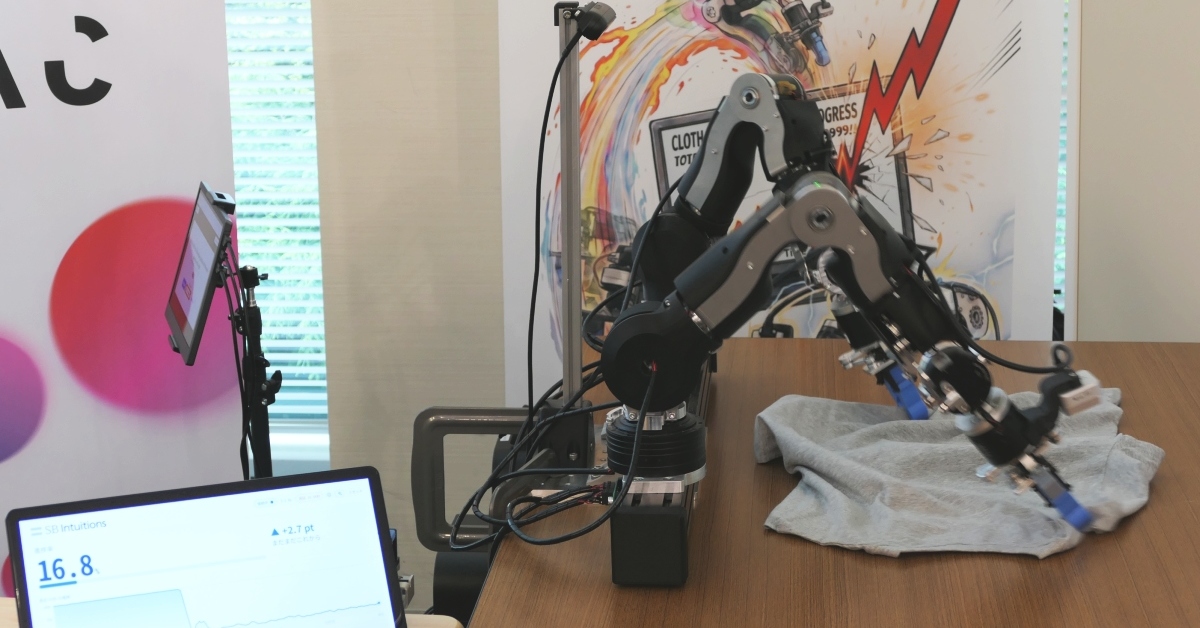
- Data Modalities: Embodied AI systems integrate multi-modal sensor data, including RGB video, depth information, 3D LiDAR point clouds for spatial awareness, time-series data for joint angles and velocities, force and torque sensor readings, and tactile feedback from end-effectors.
- Simulation Platforms: Key platforms for training include Meta AI's Habitat (versions 1.0, 2.0, 3.0), Stanford's iGibson, and the Allen Institute for AI's AI2-THOR, which provide photorealistic and interactive 3D indoor environments.
- Training Paradigms: Reinforcement learning is a common method, despite its computational intensity. Imitation learning, which involves training robots to reproduce actions from human demonstrations, is also crucial, particularly for complex manipulation tasks.
- Model Architectures: Emerging architectures include Vision-Language-Action (VLA) models that process visual input and natural language commands to generate coordinated physical movements. Large Language Models (LLMs) and Multimodal LLMs (MLLMs) are increasingly used as the 'brain' for semantic reasoning, task decomposition, and high-level planning.
- Data Generation: Synthetic data generated from digital twin simulations is used to augment real-world data, with generative AI being explored to create diverse and physically accurate virtual training environments at scale.
- Semantic Mapping: Agents construct and maintain 'semantic maps' that encode rich contextual information about objects and places, going beyond simple geometric representations. These maps can utilize structures like spatial grids, topological graphs, point-clouds, or hybrid approaches.
- Zero-Shot Transfer: A significant technical goal is to enable zero-shot transfer, where models trained entirely in diverse simulations can perform tasks on real robots in unseen physical environments without requiring additional real-world data collection.
🔮 Future ImplicationsAI analysis grounded in cited sources
⏳ Timeline
📎 Sources (23)
Factual claims are grounded in the sources below. Forward-looking analysis is AI-generated interpretation.
Weekly AI Recap
Read this week's curated digest of top AI events →
👉Related Updates
AI-curated news aggregator. All content rights belong to original publishers.
Original source: The Neuron ↗
This is a summary, not the original. Read the source, or get the weekly briefing.
The weekly digest
One email a week. Unsubscribe anytime.