AI's Cognitive Rift Splits Humanity
💡Decode AI's 'cognitive surrender' trap – train to join the elite 1% architects
⚡ 30-Second TL;DR
What Changed
73.2% accept obviously wrong AI answers
Why It Matters
AI accelerates cognitive stratification, marginalizing non-adopters and risking 'reproductive isolation' between skill groups. Practitioners must cultivate override habits to avoid deskilling.
What To Do Next
Daily practice overriding one AI suggestion per task to sharpen critique.
Key Points
- •73.2% accept obviously wrong AI answers
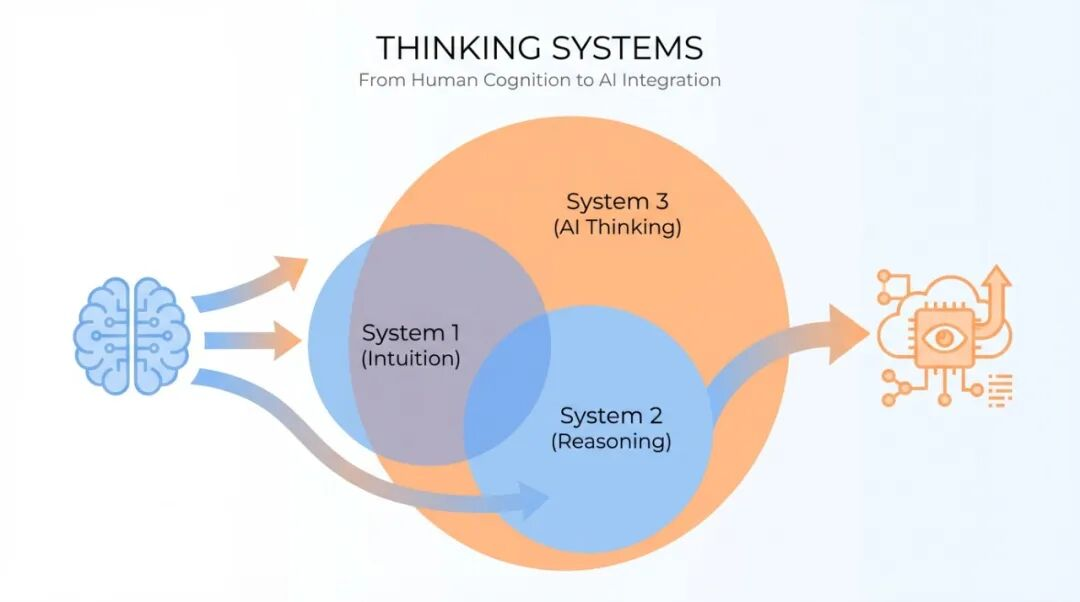
- •System 3 enables automated, data-driven cognition
- •1% master six skills: design, storytelling, empathy, integration, exploration, meaning
- •Independents drop 13.5% accuracy under time pressure
- •High AI trust + low critique leads to 30% accuracy crash
🧠 Deep Insight
Background and context from public sources — not the original article. 2 sources cited.
🔑 Enhanced Key Takeaways
- •Wharton study referenced in 'Thinking—Fast, Slow, and Artificial: How AI is Reshaping Human Reasoning and the Rise of Cognitive Surrender' (posted Feb 2026 on SSRN) documents 73.2% of users accepting obviously erroneous AI outputs, termed 'cognitive surrender'[2].
- •Self-Automators (27% of highly skilled professionals) delegate entire workflows to AI with minimal critique, leading to polished but shallow outputs and risks of expertise erosion, mirroring the article's 99% degeneration warning[1].
- •Cyborgs (60%) engage in iterative 'Fused Knowledge Co-Creation' with AI, blurring human-AI boundaries through dynamic dialogue, contrasting with passive acceptance and aligning with the 1% AI architects[1].
- •Automation complacency observed even among motivated experts under evaluation suggests powerful over-delegation temptation, amplifying feedback loops that widen cognitive skill gaps[1].
- •GenAI paradox: elevates judgment in skilled hands but risks replacing human capabilities entirely, hollowing organizational expertise short-term[1].
🔮 Future ImplicationsAI analysis grounded in cited sources
Rising cognitive surrender and self-automation behaviors may exacerbate K-type divergence, thinning human expertise in organizations while a small elite of cyborg-like AI architects gains dominance, per SSRN preprint and Fortune analysis[1][2].
⏳ Timeline
📎 Sources (2)
Factual claims are grounded in the sources below. Forward-looking analysis is AI-generated interpretation.
Weekly AI Recap
Read this week's curated digest of top AI events →
👉Related Updates


AI-curated news aggregator. All content rights belong to original publishers.
Original source: 虎嗅 ↗
This is a summary, not the original. Read the source, or get the weekly briefing.
Weekly AI briefing
One email a week. Unsubscribe anytime.