Airbus unveils U145 autonomous cargo helicopter
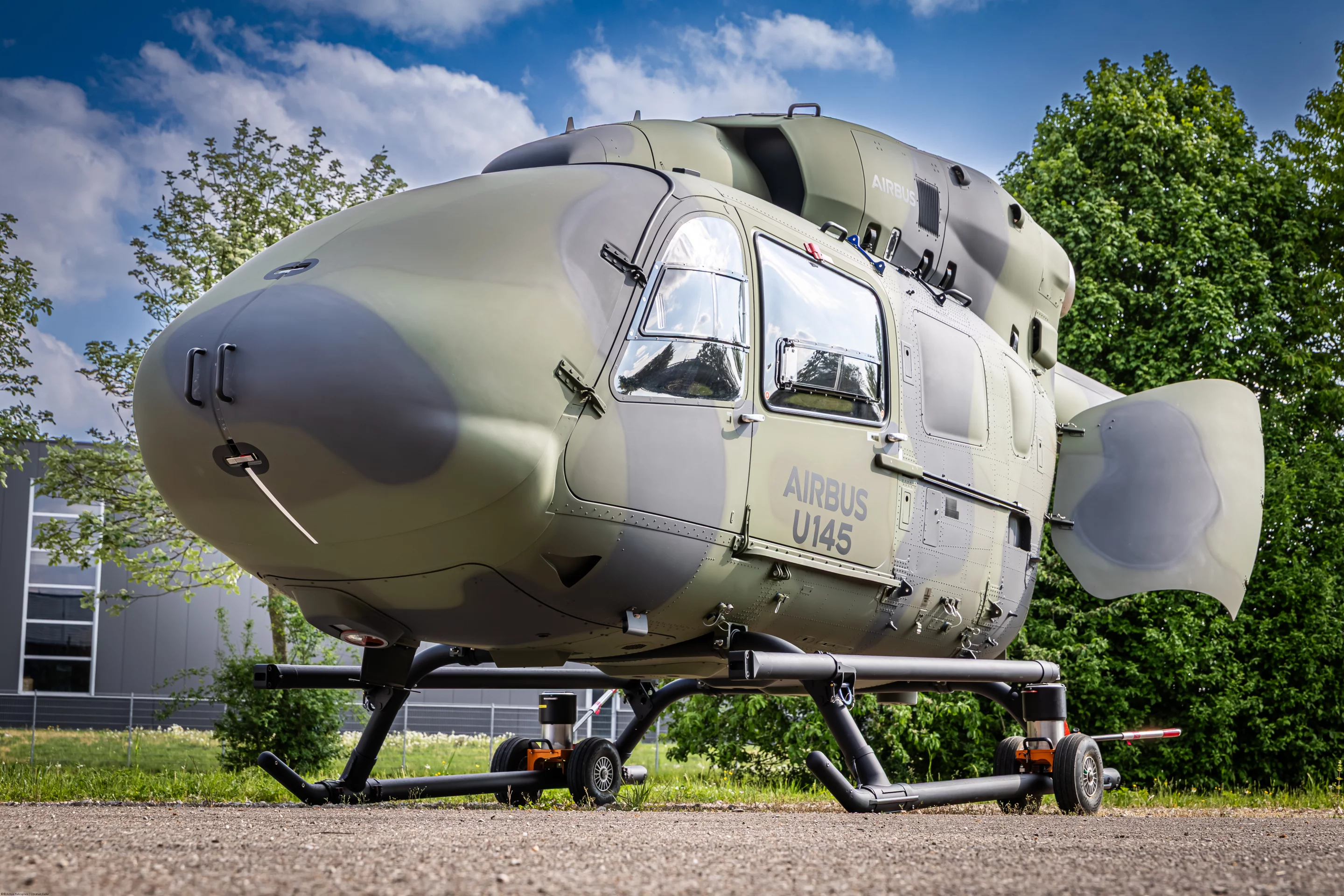
See how autonomous flight technology is being integrated into heavy-duty industrial hardware for logistics.
30-Second TL;DR
What Changed
Based on the existing H145 platform.
Why It Matters
The U145 represents a significant step in autonomous aerial logistics, potentially reducing operational costs for cargo transport.
What To Do Next
Explore autonomous flight control APIs if you are building logistics or robotics software solutions.
Key Points
- •Based on the existing H145 platform.
- •Features fully autonomous flight capabilities.
- •Cockpit area converted into a dedicated cargo bay with split doors.
Deep Insight
AI-generated analysis for this event — not the original article.
Enhanced Key Takeaways
- •The U145 utilizes Airbus's proprietary 'Flightlab' technology demonstrator platform to validate its autonomous navigation and obstacle avoidance systems.
- •The conversion process involves removing the pilot seats and flight controls, which increases the internal cargo volume by approximately 30% compared to the standard H145 configuration.
- •The aircraft is designed to operate in 'optionally piloted' mode, allowing for remote supervision by a ground station operator during complex mission phases.
- •Airbus has integrated a new modular cargo loading system that supports standardized pallets, significantly reducing turnaround times for logistics missions.
- •The U145 incorporates advanced sensor fusion, combining LiDAR, radar, and electro-optical cameras to enable operations in degraded visual environments (DVE).
Competitor Analysis
- Airbus U145
- H145 (Twin-engine)
- Kaman K-MAX TITAN
- K-1200 (Single-engine)
- Northrop Grumman MQ-8C Fire Scout
- Bell 407 (Single-engine)
- Airbus U145
- Cargo/Logistics
- Kaman K-MAX TITAN
- Heavy-lift Cargo
- Northrop Grumman MQ-8C Fire Scout
- ISR/Targeting
- Airbus U145
- Full/Optional
- Kaman K-MAX TITAN
- Full
- Northrop Grumman MQ-8C Fire Scout
- Full
- Airbus U145
- ~1,500 kg
- Kaman K-MAX TITAN
- ~2,700 kg
- Northrop Grumman MQ-8C Fire Scout
- ~300 kg
| Feature | Airbus U145 | Kaman K-MAX TITAN | Northrop Grumman MQ-8C Fire Scout |
|---|---|---|---|
| Base Platform | H145 (Twin-engine) | K-1200 (Single-engine) | Bell 407 (Single-engine) |
| Primary Role | Cargo/Logistics | Heavy-lift Cargo | ISR/Targeting |
| Autonomy Level | Full/Optional | Full | Full |
| Payload Capacity | ~1,500 kg | ~2,700 kg | ~300 kg |
Technical Deep Dive
- Propulsion: Powered by two Safran Arriel 2E turboshaft engines with FADEC (Full Authority Digital Engine Control).
- Navigation: Dual-redundant inertial navigation systems coupled with GNSS and terrain-referenced navigation for GPS-denied environments.
- Communication: Encrypted SATCOM and C-band datalinks for beyond-line-of-sight (BLOS) command and control.
- Structural Modification: Reinforced floor panels and integrated cargo tie-down points to accommodate heavy, non-standardized payloads.
- Safety Systems: Automatic emergency landing capability that identifies suitable landing zones using real-time terrain analysis if communication is lost.
Future ImplicationsAI analysis grounded in cited sources
Timeline
- 2021-04Airbus launches Flightlab to test autonomous flight technologies.
- 2023-09Initial autonomous cargo flight tests conducted using a modified H145 prototype.
- 2026-06Official unveiling of the U145 autonomous cargo helicopter at ILA Berlin.
Weekly AI Recap
Read this week's curated digest of top AI events →
Related Updates

AI-curated news aggregator. All content rights belong to original publishers.
Original source: cnBeta (Full RSS) ↗
This is a summary, not the original. Read the source, or get the weekly briefing.
The weekly digest
One email a week. Unsubscribe anytime.