Air-Ground Sync Unlocks Drone Urban Boom
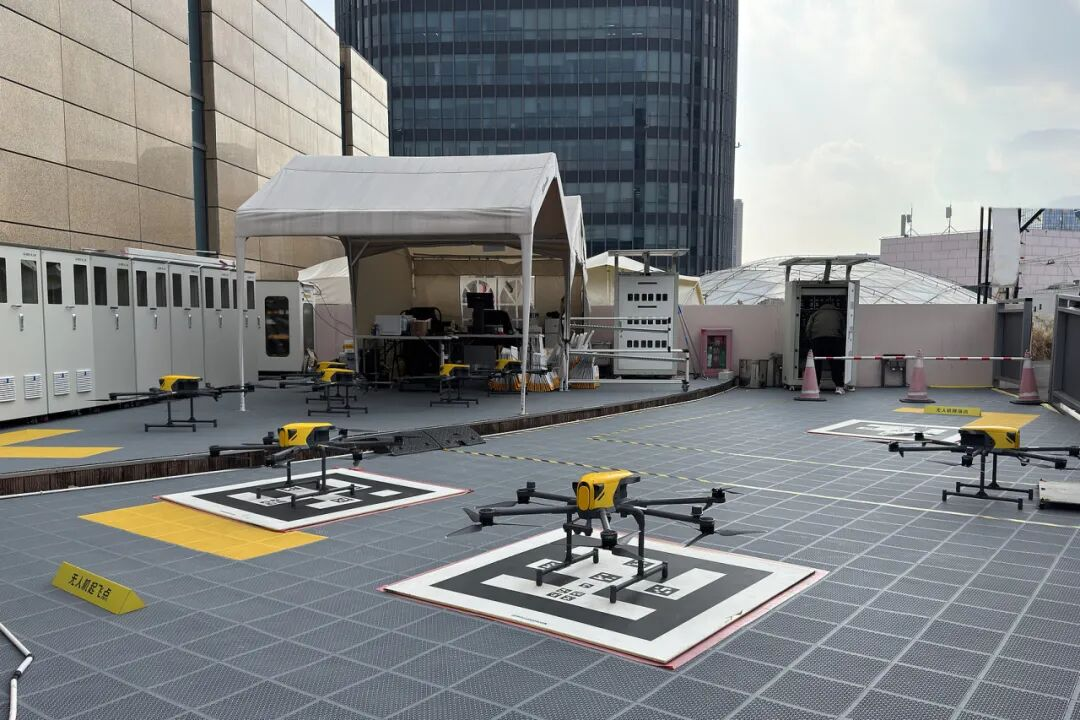
💡Drone infra blueprint for AI embodied systems in smart cities
⚡ 30-Second TL;DR
What Changed
Urban renewal supplies idle spaces for drone pads, avoiding land scarcity.
Why It Matters
Solves 'air-heavy' bias, accelerates drone economy in cities; boosts efficiency via shared smart infra key for AI autonomy.
What To Do Next
Prototype AI drone navigation on simulated urban rooftops using open vertiport data.
Key Points
- •Urban renewal supplies idle spaces for drone pads, avoiding land scarcity.
- •Core principles: scene-first, safety-bottom, air-ground-unified, industry-linked.
- •Flattened two-level: hubs by demand/function, embed in hospitals/fire stations.
- •Rooftop + indoor robot delivery; unify standards/data platforms like Hefei model.
🧠 Deep Insight
Background and context from public sources — not the original article. 8 sources cited.
🔑 Enhanced Key Takeaways
- •UK regulatory framework for urban drone delivery is advancing rapidly, with Direct Remote ID requirements and collision-avoidance technology mandates coming into force by January 2026, enabling Low-Level Urban BVLOS operations in cities by 2027-2028[1].
- •Integrated aerial-ground autonomous systems are emerging as critical infrastructure, with unmanned ground vehicles (UGVs) paired with small unmanned aerial systems (sUAS) to overcome terrain blind spots, reduce false positives, and maintain mission continuity in contested environments[3].
- •Urban counter-drone systems require fundamentally different approaches than military solutions, prioritizing safety compliance and controlled operation within dense airspace rather than adapting battlefield hardware, creating a distinct civilian C-UAS market segment[2].
🔮 Future ImplicationsAI analysis grounded in cited sources
⏳ Timeline
📎 Sources (8)
Factual claims are grounded in the sources below. Forward-looking analysis is AI-generated interpretation.
- coptrz.com — How Will Drones Disrupt Urban Last Mile Delivery in 2026
- parazero.com — Drone Defense Is Leaving the Battlefield and Entering the City
- militaryembedded.com — The Future of Autonomy Will Integrate Aerial and Ground Systems
- aerospaceamerica.aiaa.org — 2026 Will Test U S Air Forces Bet on Drone Wingmen
- faa.gov — Nextgen
- defenseone.com — 411211
- policeandsecuritynews.com — Drone Deployment Policies and Training in Law Enforcement a Tactical Evolution
- youtube.com — Watch
Weekly AI Recap
Read this week's curated digest of top AI events →
👉Related Updates



AI-curated news aggregator. All content rights belong to original publishers.
Original source: 虎嗅 ↗
This is a summary, not the original. Read the source, or get the weekly briefing.
Weekly AI briefing
One email a week. Unsubscribe anytime.