AI帶動3D列印與綠色製造
💡AI is turning 3D printing into a bridge from generated designs to physical products and data-center cooling.
⚡ 30-Second TL;DR
What Changed
7月與 AI 相關的電子元件及設備製造業增加值增長 24.7%,智能設備製造業增長 15.1%。
Why It Matters
AI demand is expanding beyond model training into physical production, thermal management, robotics, and energy storage. Founders and infrastructure teams should expect competitive advantage to shift toward reliable, high-quality manufacturing capacity rather than raw product volume.
What To Do Next
Prototype one AI-generated liquid-cooling or hardware enclosure design with a 3D-printing workflow, then benchmark print time, defect rate, thermal performance, and unit cost.
Key Points
- •7月與 AI 相關的電子元件及設備製造業增加值增長 24.7%,智能設備製造業增長 15.1%。
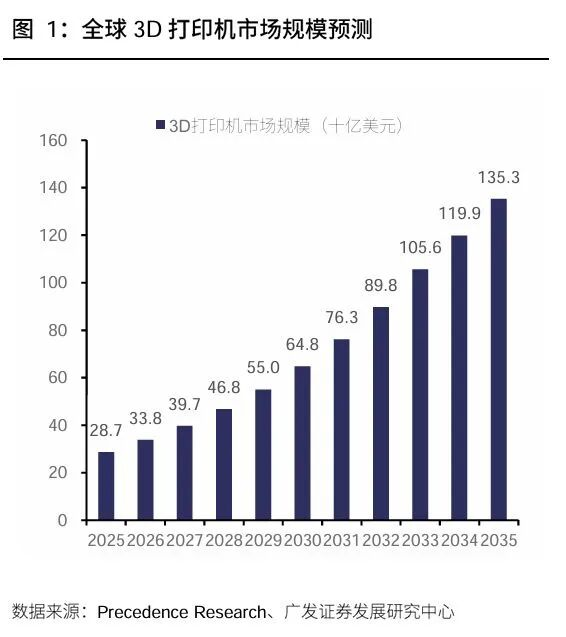
- •3D 列印設備產量增長 65.7%,AI 可協助建模、切片、路徑規劃與缺陷識別,擴大消費與工業應用。
- •3D 列印可製造 AI 液冷系統中的複雜微通道與異形流道,縮短 AI 硬體研發及散熱部件製造週期。
- •儲能市場的主要問題是結構性供給不足,高安全性、長壽命且適配 AI 資料中心的產品仍然供不應求。
🧠 Deep Insight
AI-generated analysis for this event.
🔑 Enhanced Key Takeaways
- •China's Ministry of Industry and Information Technology (MIIT) has identified 'New Quality Productive Forces' as a core strategy, specifically targeting the integration of AI and additive manufacturing to reduce industrial energy consumption by an estimated 15-20% in pilot programs.
- •The surge in 3D printing output is heavily driven by the adoption of metal powder bed fusion (PBF) technologies, which are increasingly utilized to create topology-optimized heat sinks that traditional CNC machining cannot replicate.
- •Major Chinese industrial hubs, including Shenzhen and Suzhou, have launched specific subsidies for 'AI+Manufacturing' integration, aiming to reduce the R&D cycle for AI-server cooling components from months to weeks.
- •Generative AI models are now being deployed in 'closed-loop' 3D printing systems, where real-time sensor data from the print bed is fed back into the AI to adjust laser power and scan speed dynamically to prevent defects.
- •The structural supply gap in energy storage is being addressed through the development of 3D-printed battery electrodes, which allow for complex internal geometries that increase surface area and improve ion transport rates for high-density AI data center power supplies.
🛠️ Technical Deep Dive
- AI-Driven Generative Design: Utilizes topology optimization algorithms to minimize material usage while maintaining structural integrity for cooling manifolds.
- Real-time Defect Detection: Employs Convolutional Neural Networks (CNNs) to analyze high-speed camera feeds of the melt pool during metal 3D printing, identifying porosity and thermal stress in milliseconds.
- Path Planning Optimization: AI models calculate non-linear toolpaths to reduce thermal accumulation, critical for printing complex micro-channels in liquid cooling plates.
- Digital Twin Integration: Synchronizes physical 3D printer performance with virtual models to predict maintenance needs and optimize print parameters for specific material batches.
🔮 Future ImplicationsAI analysis grounded in cited sources
⏳ Timeline
Weekly AI Recap
Read this week's curated digest of top AI events →
👉Related Updates



AI-curated news aggregator. All content rights belong to original publishers.
Original source: 虎嗅 ↗