Source虎嗅•Stalecollected in 15m
AI Storage Boom Amid Geopolitical Risks
#storage-cycle#ai-investing#china-aimicron-storagemicrontencentalibaba
💡Micron's 196% growth confirms AI storage supercycle despite wars.
⚡ 30-Second TL;DR
What Changed
Micron Q4 revenue +196%, EPS beat by 33%; Q1 guidance +239% revenue.
Why It Matters
Validates AI storage supercycle, signaling sustained demand for high-bandwidth memory; supports investing in AI infra amid volatility.
What To Do Next
Evaluate Micron NAND for your AI training cluster's storage upgrade needs.
Who should care:Enterprise & Security Teams
Key Points
- •Micron Q4 revenue +196%, EPS beat by 33%; Q1 guidance +239% revenue.
- •DRAM/NAND tight supply for Agentic AI through 2026; first 5-year client deal.
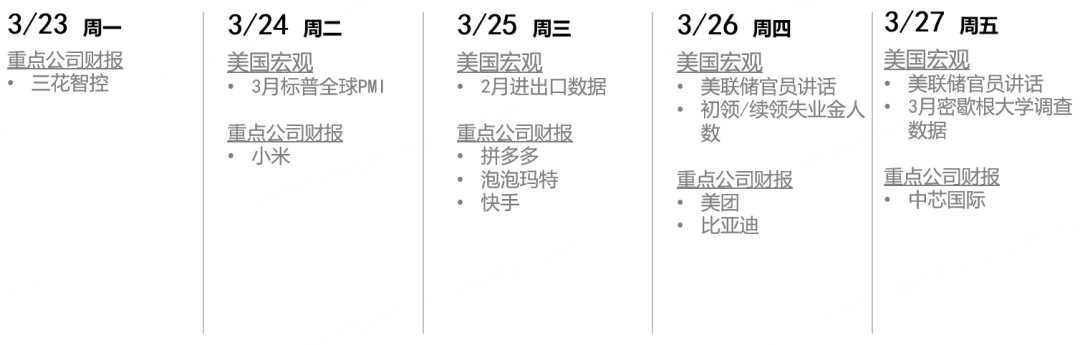
- •Tencent boosts AI capex in 2026, shrinking buybacks; Alibaba cloud +36% AI-led.
- •Market overprices Fed hawkishness; AI assets undervalued post-dip.
🧠 Deep Insight
AI-generated analysis for this event — not the original article.
🔑 Enhanced Key Takeaways
- •Micron's growth is heavily tied to the transition to High Bandwidth Memory (HBM3E), which is now a critical bottleneck for NVIDIA's Blackwell GPU production cycles in 2026.
- •The surge in Chinese cloud AI capex is driving a localized supply chain shift, with Alibaba and Tencent increasingly prioritizing domestic HBM alternatives to mitigate potential US export control tightening.
- •The 'Agentic AI' demand mentioned is specifically driving a shift in storage architecture toward 'Near-Memory' computing, where storage controllers are being integrated directly into the memory stack to reduce latency for real-time inference.
📊 Competitor Analysis▸ Show
| Feature | Micron (HBM3E) | SK Hynix (HBM3E) | Samsung (HBM3E) |
|---|---|---|---|
| Market Position | Aggressive capacity expansion | Market leader (NVIDIA primary) | Rapidly scaling production |
| Architecture | 12-high stack focus | 12-high/16-high stack | 12-high stack focus |
| Key Advantage | Power efficiency | Yield maturity | High-volume manufacturing |
🛠️ Technical Deep Dive
- •HBM3E (High Bandwidth Memory 3 Extended) utilizes Through-Silicon Vias (TSVs) to vertically stack DRAM dies, achieving bandwidths exceeding 1.2 TB/s per stack.
- •Agentic AI workloads require massive random read/write IOPS, necessitating the shift from traditional NAND to CXL (Compute Express Link) attached memory pools to allow for cache coherency across distributed AI clusters.
- •Micron's 2026 production ramp utilizes 1-gamma (1γ) node technology, which provides a 15-20% improvement in power efficiency compared to the previous 1-beta (1β) node, critical for thermal management in dense AI server racks.
🔮 Future ImplicationsAI analysis grounded in cited sources
HBM supply will remain in deficit through Q4 2026.
The complexity of TSV packaging yields remains the primary constraint on total industry output despite aggressive capex spending.
Cloud providers will move toward proprietary storage-compute integration.
To reduce reliance on general-purpose hardware, hyperscalers are increasingly designing custom silicon that integrates storage controllers directly into the AI accelerator die.
⏳ Timeline
2024-02
Micron begins mass production of HBM3E for NVIDIA's H200 GPUs.
2025-05
Micron announces expansion of HBM production facilities in Boise and Japan.
2025-11
Micron achieves qualification for 12-high HBM3E stacks with major cloud service providers.
📰
Weekly AI Recap
Read this week's curated digest of top AI events →
👉Related Updates



AI-curated news aggregator. All content rights belong to original publishers.
Original source: 虎嗅 ↗
This is a summary, not the original. Read the source, or get the weekly briefing.
The weekly digest
One email a week. Unsubscribe anytime.