🐯Freshcollected in 33m

Frontier tech funding surges with Hefei as a hub
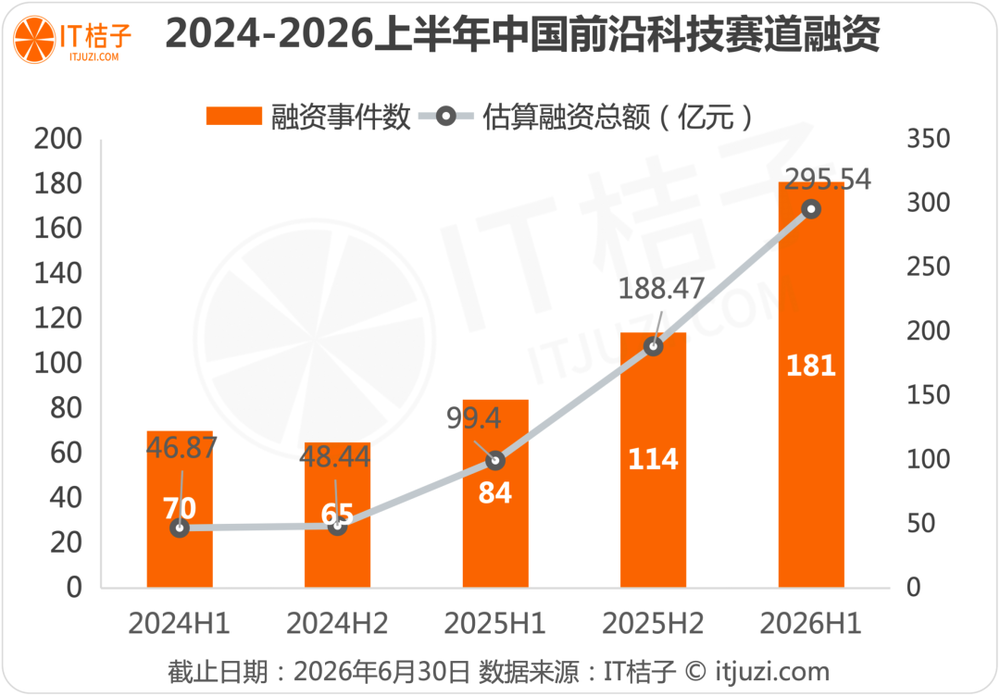
Frontier tech funding surges with Hefei as a hub
PostLinkedIn
🐯Read original on 虎嗅

💡Discover where the next generation of deep-tech capital is flowing.

⚡ 30-Second TL;DR

What Changed

Quantum computing and nuclear fusion are the top-funded frontier tech sectors.

Why It Matters

The massive capital influx into quantum and fusion indicates a long-term shift in the tech landscape toward high-barrier, deep-tech infrastructure.

What To Do Next

Monitor the 'top scientist + original tech' startups in your sector to identify potential long-term R&D partners or acquisition targets.

Who should care:Researchers & Academics

Key Points

  • Quantum computing and nuclear fusion are the top-funded frontier tech sectors.
  • Hefei has become the third-largest hub for frontier tech investment in China.
  • Funding for frontier tech reached the 10-billion-RMB scale in H1 2026.
  • Investment strategy is shifting toward 'top scientists + original technology' with high valuation premiums.

🧠 Deep Insight

AI-generated analysis for this event.

🔑 Enhanced Key Takeaways

  • Hefei's rise is anchored by the 'Hefei Model,' a government-led investment strategy that leverages state-owned capital to de-risk early-stage deep tech ventures before private capital enters.
  • The Hefei Comprehensive National Science Center serves as the primary institutional engine, integrating research from the University of Science and Technology of China (USTC) directly into commercialization pipelines.
  • Recent funding rounds in Hefei have increasingly prioritized 'hard tech' infrastructure, specifically focusing on superconducting materials and cryogenic cooling systems essential for quantum hardware scalability.
  • The 2026 surge is partially attributed to the 'New Quality Productive Forces' policy directive, which incentivizes local governments to shift capital away from traditional real estate and toward strategic frontier sectors.
  • Unlike Beijing and Shanghai, which rely heavily on venture capital clusters, Hefei's ecosystem is characterized by 'industrial chain investment,' where the city builds entire supply chains around a single anchor research project.

🛠️ Technical Deep Dive

  • Quantum Computing: Focus on superconducting qubits and topological quantum computing architectures, with significant investment in dilution refrigerator manufacturing to reduce reliance on imported cooling hardware.
  • Nuclear Fusion: Development of the Experimental Advanced Superconducting Tokamak (EAST) and the Comprehensive Research Facility for Fusion Technology (CRAFT), focusing on high-temperature superconducting magnets and plasma control algorithms.
  • Industrial Integration: Implementation of 'Foundry-style' models for quantum chips, allowing startups to utilize shared fabrication facilities to lower the barrier to entry for prototype testing.

🔮 Future ImplicationsAI analysis grounded in cited sources

Hefei will surpass Shenzhen in total frontier tech patent filings by 2028.
The concentration of state-backed research institutes and the rapid commercialization of USTC-originated IP creates a faster patent-to-market cycle than Shenzhen's consumer-electronics-focused model.
The 'Hefei Model' will be formally adopted by at least three other provincial-level governments by 2027.
The success of Hefei's high-risk, high-reward investment strategy is being touted by central regulators as the blueprint for regional economic transformation.

Timeline

2017-01
Hefei Comprehensive National Science Center is officially approved by the State Council.
2020-09
Hefei establishes the Quantum Information Science National Laboratory to centralize research efforts.
2023-05
Hefei launches a dedicated 10-billion-RMB 'Hard Tech' guidance fund to support fusion and quantum startups.
2025-12
Hefei reports a record-breaking year for deep-tech spin-offs from local academic institutions.
📰

Weekly AI Recap

Read this week's curated digest of top AI events →

👉Related Updates

AI-curated news aggregator. All content rights belong to original publishers.
Original source: 虎嗅