AI Agents Move From Browsers to Desktops
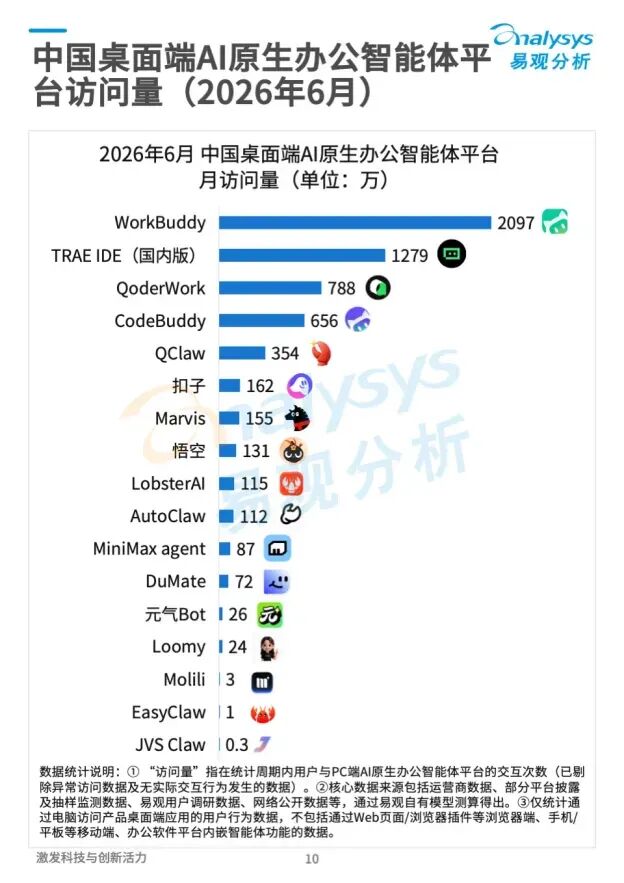
💡Desktop agents are turning AI from a chat tool into software that can actually operate your computer.
⚡ 30-Second TL;DR
What Changed
Desktop environments are becoming the next testing ground for task-executing AI agents.
Why It Matters
Desktop agents could change software distribution by operating across applications instead of staying inside a single chat window. Developers may need to optimize for agent-driven workflows, permissions, and cross-application interoperability.
What To Do Next
Prototype a desktop workflow with OpenClaw or Hermes and measure permissions, cross-application control, and task-completion reliability.
Key Points
- •Desktop environments are becoming the next testing ground for task-executing AI agents.
- •OpenClaw and Hermes are using open-source positioning to compete for ecosystem standards.
- •WorkBuddy, Kimi Work, QwenWork, and Trae Work are rapidly entering the Chinese market.
- •The competitive shift is from conversational assistance toward directly performing office tasks.
🧠 Deep Insight
AI-generated analysis for this event.
🔑 Enhanced Key Takeaways
- •Desktop AI agents are increasingly utilizing OS-level accessibility APIs and screen-parsing capabilities to interact with non-web applications, moving beyond the limitations of browser-based DOM manipulation.
- •The shift toward desktop integration is driven by the need for 'contextual awareness,' where agents require access to local file systems, clipboard history, and cross-application data flows to perform complex workflows.
- •Security and privacy concerns have emerged as a primary barrier, leading to the development of local-first execution models where sensitive data processing occurs on-device rather than in the cloud.
- •Major Chinese tech firms are integrating these agents into existing productivity suites (like office document editors and communication tools) to leverage pre-existing user bases and enterprise data silos.
- •The industry is seeing a convergence between traditional Robotic Process Automation (RPA) and Large Language Model (LLM) agents, with newer desktop agents offering natural language control over legacy software that lacks modern APIs.
📊 Competitor Analysis▸ Show
| Feature | OpenClaw/Hermes | Chinese Market Agents (WorkBuddy/Kimi/Qwen/Trae) |
|---|---|---|
| Primary Focus | Open-source ecosystem/Standards | Enterprise productivity/Local integration |
| Deployment | Cross-platform (Linux/macOS/Win) | Primarily Windows/macOS (China-optimized) |
| Data Privacy | Local-first/Self-hosted focus | Cloud-hybrid/Enterprise-managed |
| Pricing | Free/Open-source (Apache/MIT) | Freemium/Enterprise subscription |
🛠️ Technical Deep Dive
- Desktop agents utilize Vision-Language Models (VLMs) to perform screen-parsing, converting visual UI elements into actionable coordinates for mouse and keyboard simulation.
- Implementation often involves a 'Controller-Worker' architecture where a central LLM orchestrates sub-agents specialized in specific desktop tasks (e.g., file management, window manipulation).
- Integration with OS-level accessibility frameworks (such as Windows UI Automation or macOS Accessibility API) allows agents to read text and identify buttons within legacy applications that do not expose standard web-like DOM structures.
- Many of these agents employ 'Chain-of-Thought' (CoT) prompting combined with local vector databases to maintain long-term memory of user preferences and file history across sessions.
🔮 Future ImplicationsAI analysis grounded in cited sources
⏳ Timeline
Weekly AI Recap
Read this week's curated digest of top AI events →
👉Related Updates


AI-curated news aggregator. All content rights belong to original publishers.
Original source: 钛媒体 ↗