Mianbi AI’s 20B Valuation Faces Questions
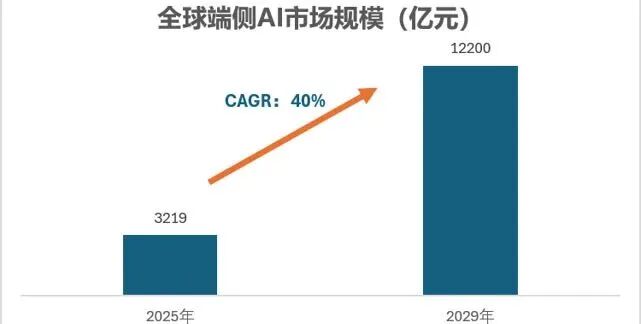
💡A fast-rising edge-AI unicorn faces the harder question: can commercial results justify its valuation?
⚡ 30-Second TL;DR
What Changed
Mianbi AI raised more than 5 billion in financing within six months.
Why It Matters
Large private valuations can accelerate hiring, compute investment, and product expansion, but they also raise the bar for revenue and deployment evidence. AI founders should distinguish financing momentum from validated customer demand.
What To Do Next
Benchmark Mianbi AI’s publicly available edge models, if accessible, against your current on-device model on latency, memory use, and task accuracy before considering partnership.
Key Points
- •Mianbi AI raised more than 5 billion in financing within six months.
- •Its valuation has surpassed 20 billion, positioning it as a major edge-AI unicorn.
- •The company still needs stronger commercial validation to support its valuation.
- •The article questions who is funding the company and who is setting its price.
🧠 Deep Insight
AI-generated analysis for this event.
🔑 Enhanced Key Takeaways
- •Mianbi AI (面壁智能) originated from the Natural Language Processing Group at Tsinghua University, leveraging deep academic ties to the Beijing Academy of Artificial Intelligence (BAAI).
- •The company's core strategy focuses on 'Agent-based' models, specifically optimizing Large Language Models (LLMs) for deployment on mobile devices and edge hardware to reduce latency and cloud dependency.
- •Key investors in recent funding rounds include major Chinese tech conglomerates and state-backed investment funds, reflecting strategic interest in domestic AI infrastructure.
- •Mianbi AI has actively pursued open-source initiatives, such as the 'MiniCPM' series, to establish developer ecosystem dominance and compete with larger proprietary models.
- •The company's commercialization path relies heavily on partnerships with smartphone manufacturers and automotive companies to integrate edge-AI capabilities directly into consumer hardware.
📊 Competitor Analysis▸ Show
| Feature | Mianbi AI (MiniCPM) | Moonshot AI (Kimi) | 01.AI (Yi) |
|---|---|---|---|
| Primary Focus | Edge/On-device AI | Long-context Cloud LLM | Open-weights/General LLM |
| Model Architecture | Efficient Small Models | Long-context Transformer | Mixture-of-Experts (MoE) |
| Deployment | Mobile/Edge-first | Cloud API/Web App | Cloud/Enterprise API |
🛠️ Technical Deep Dive
- Model Architecture: Utilizes advanced model compression techniques including weight quantization and knowledge distillation to fit 2B-7B parameter models on mobile chipsets.
- Agentic Framework: Implements a proprietary 'Agent-as-a-Service' architecture that allows models to execute multi-step tasks (e.g., tool use, web browsing) with minimal memory overhead.
- Training Methodology: Employs curriculum learning and high-quality synthetic data generation to enhance the reasoning capabilities of smaller parameter models to match larger counterparts.
- Hardware Optimization: Deep integration with NPU (Neural Processing Unit) acceleration layers for major mobile SoC providers to ensure real-time inference performance.
🔮 Future ImplicationsAI analysis grounded in cited sources
⏳ Timeline
Weekly AI Recap
Read this week's curated digest of top AI events →
👉Related Updates



AI-curated news aggregator. All content rights belong to original publishers.
Original source: 钛媒体 ↗